Highlighted reviews from other travelers
Reviews from GetYourGuide, Google and Tripadvisor
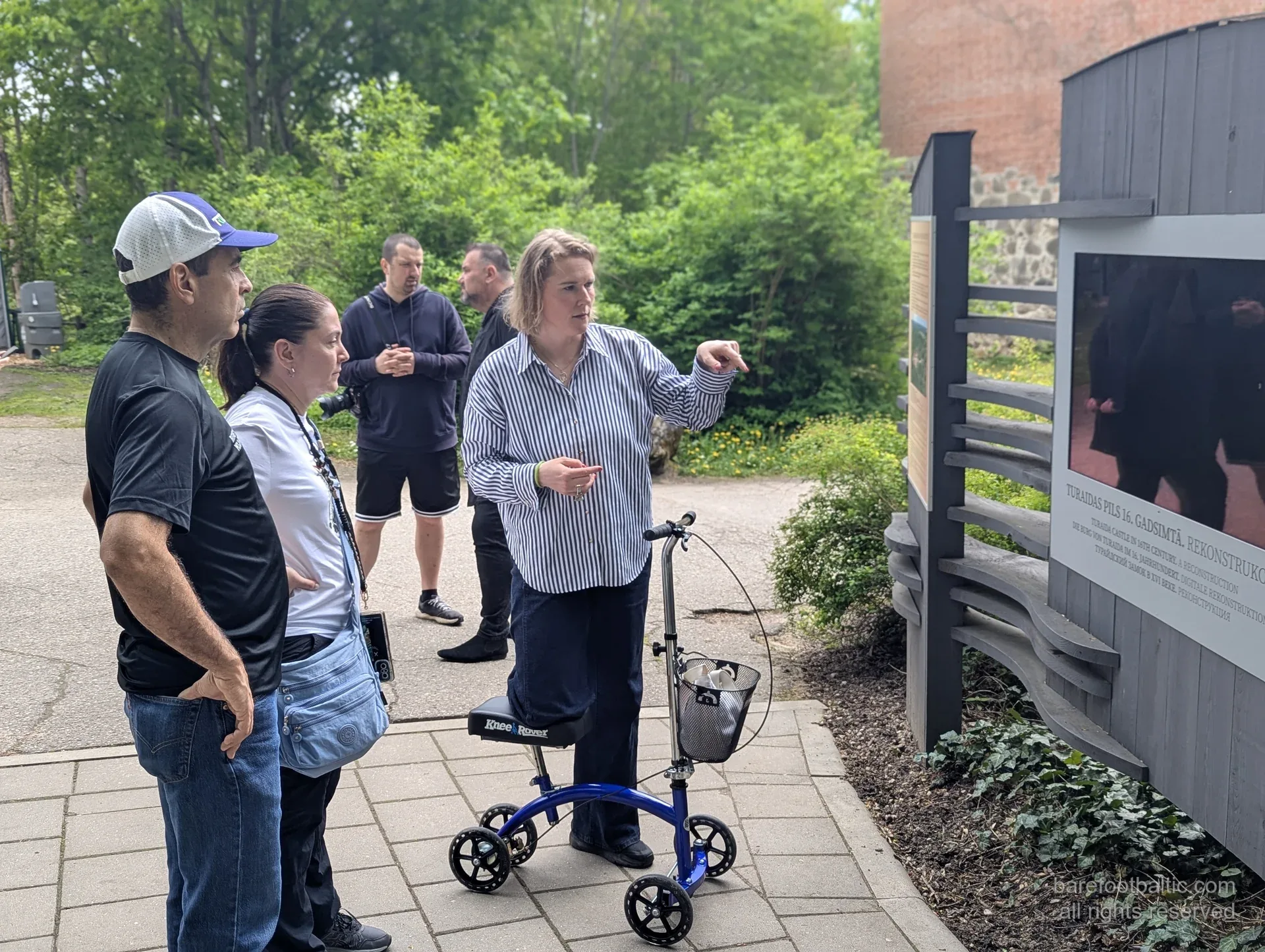
Sevgili Daiga ile tanıştığımızda talihsiz bir kaza yaşamıştı, ayağı kırık olmasına rağmen geziyi iptal etmedi ve bize şahane bir gezi düzenledi. Güler yüzü, hoş sohbeti ve şahane küçük ikramlarıyla çok güzel bir gezi oldu. Çok teşekkür ederim Daiga.
Jól összeállított, rugalmasan lebonyolitott program, figyelmes, lelkes és felkészült túravezetőkkel. Nagy élmény volt, érdemes élni e lehetőséggel, ha az ország szépségei, kultúrája és történelme kapcsán mélyebb ismeretekre vágyunk.
It was a wonderful trip, special thanks to Daiga and her team that went all out to make this trip a memorable one. Not a single boring moment I had during the journey. An enriching trip that perfectly blended exploration, culture, and learning together.
What a great day! It was a full day, which was just what we wanted. We really liked all the activities. Our guide, Daiga, was extremely knowledgeable. As a Latvian, Daiga has an excellent knowledge base about the history, culture, current events, flora and fauna—everything— about Latvia, and readily shared information. She also shared her experiences about growing up in Latvia, which made the tour far more meaningful for us. Additionally, we appreciated that Daiga was solicitous about our welfare throughout the day. We had an additional guide at Cesis who was also quite informative. The lunch spot was well chosen; the food was good and inexpensive. This tour allowed us to see sites we would otherwise have been unable to see, and we highly recommend it!
Izlet je bil fantastičen od začetka do konca. Daiga in njena ekipa so zelo dobro poskrbeli za naju, naju pričakali ob dogovorjeni uri s prostornim kombijem in suvereno vodili skozi dan. Če si želite pristnega stika z domačini in odkrivanja tudi malo bolj skritih kotičkov države, kot je na primer obisk pekarne v kraju Cesis ali razgledne točke, kjer ni gneče, potem je ta izlet dobra izbira. Vsekakor ga midva priporočava. Hvala vam za nepozaben dan, Mojca in Jani iz Slovenije
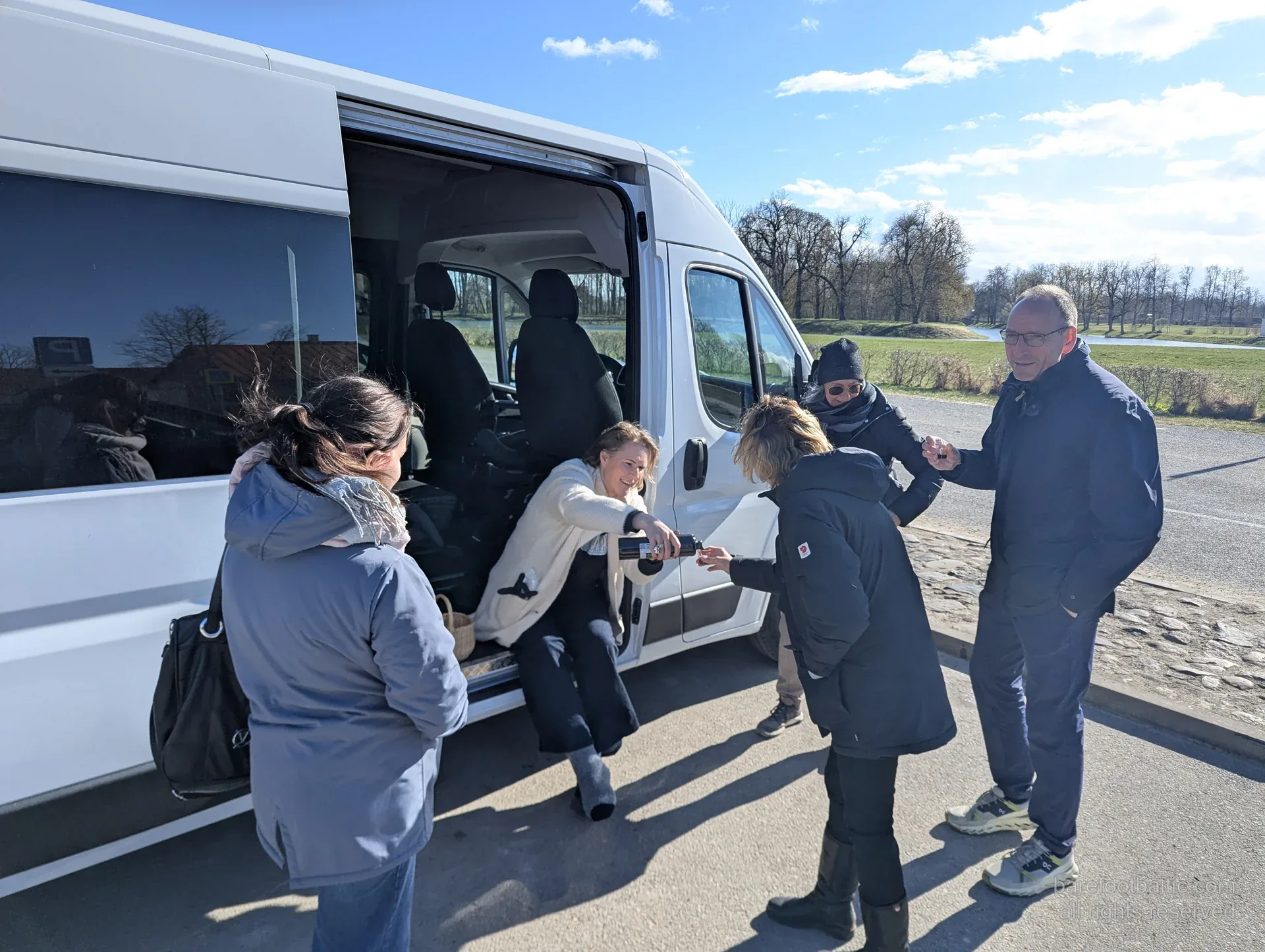
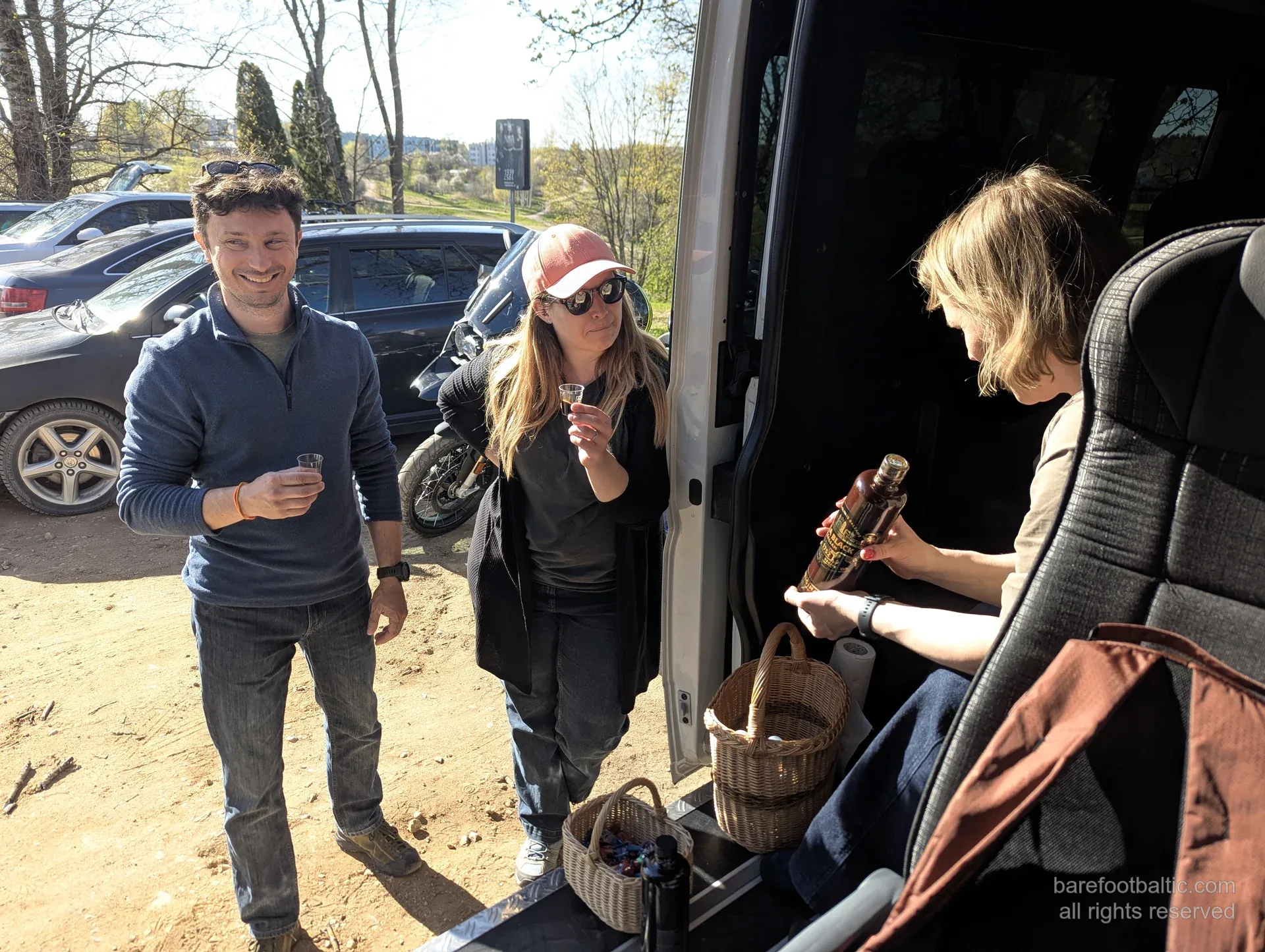
What a great day out. We had the three promised castles, dived into a lot of fascinating history, saw rivers and “mountains” with ski slopes and more. Our guide and driver were knowledgeable and great company leading us through the bakery and introducing us to local (alcoholic) spirits. We would really recommend this company and suggest you look no further for, as I said, a great day out.
Prachtige trip! Start bij schitterenf uitzichtpunt in Sigulda. Ruïnes van Sigulda castle. Wij hadden mazzel dat we met kleine groep waren, dus konden in Turaida ook langs badhuis met traditioneel gedroogde kruiden&planten voor we naar het kasteel gingen. Laatste stop van de dag is Cēsis, wat wij het mooiste kasteel vonden. Gids legt super veel uit over Letland en de bezienswaardigheden. Extreem behulpzaam. Telefoon cashte aan eind vd trip. Zijn naar 2 telefoon winkels gereden om het probleem te fixen. Super lieve mensen en mooie bezienswaardigheden, echt een aanrader!
Sehr schöner Tag mit Daiga. Sigulda und Cēsis sind beide wunderschön und Daiga kennt sich wirklich gut aus, erzählt viel und beantwortet alle Fragen. Die kleine Gruppe war angenehm, kein Stress, kein Gehetze. Die Verkostungen unterwegs waren auch lecker. Können wir nur empfehlen.
Really fun activities and the guides are really friendly and interesting! Had a great time
What a day. Three castles (from the last thousand years), spectacular river and countryside views and a guide in Daiga who is worth many times the tour price. In fact if you are going to book, demand her guiding. She knows a lot, not only because this was her birthplace and the areas visited her backyard, but also she’s made an effort to learn the missing pieces in her knowledge and so can answer a variety of questions you want answers to which might have nothing to do with the trip. And, having said all that, she doesn’t force feed you, she understands that part of learning is quiet contemplation and absorbing the many spectacular views. For instance, who knew in a country with a radio tower higher than its tallest hill, that there were ski slopes and an area known as little Switzerland? She did, and perhaps you should discover some of these gems too.
Excellent tour! We set off from Riga and visited Sigulda along with the Cesis and Turaida castles. It was a full-day tour that lets you explore several history-packed spots in the Latvian countryside. Our guide Daiga was incredibly knowledgeable about the history and truly embodies the country’s culture. Highly recommended if you want a 100% authentic Latvian experience.
Three castles and so much more Don’t bother looking at other trips with other operators. Daiga makes the Sigulda, Cēsis & Gauja National Park trip special. Why? She has organised an almost ideal tour - okay you have to forgive Riga’s peak hour traffic - but you are quickly out in the countryside and into 1,000 years of Latvia’s history as told by the castles and countryside. Daiga knows her facts and shares only the interesting ones at the various stops and in between times. And not just about castles, her knowledge is broad - test her. Lunch is at your own expense - but when Daiga asks you what you want choose Cēsis ‘Buffet’. It’s where the locals eat, there’s a good choice, it’s all very tasty and the only shock is the price (cents and pence, not pounds and dollars). No wonder the locals like it.
Excellent tour! Enjoyable day, led by the touring company’s knowledgeable owner, in which we toured a castle and saw the ruins of two others. We ate (a delicious) lunch at an authentic restaurant, and spoke with a bakery owner and sampled her wares. We also walked a bit in the national park. Daiga provided a running commentary on topics including Latvia’s history, the natural flora, fauna, and environment, life under the Soviet occupation, and current issues in Latvia. We highly recommend this tour!
I thoroughly enjoyed this trip from Riga and would highly recommend this tour company. Daiga was an exceptional guide with an impressive depth of knowledge about Latvian history, providing fascinating insights at every site we visited. Having taken numerous tours through GetYourGuide, I can confidently say this was by far the most engaging experience I’ve had. The itinerary offered an excellent balance of castles, charming small-town experiences, and beautiful natural scenery, with a pace that felt comfortable and well-planned throughout the day. An outstanding tour that exceeded my expectations.
It was an excellent experience, traveling with the barefootbaltics team of Madhu, Daiga and Catherine. They went above and beyond the normal tour guides norms, when my wife had a sudden bout of coughing while traveling in the van. Madhu personally took it upon himself to get my wife some soothing herbal tea and cough lozenges at the next stop. So, I would say that they are not just competent, but also caring. That to me makes for a great company to travel with.
一切都很棒....导游很专业...同时又有一定的人文关怀....sigulda那家自助餐很好吃...可能是我最满意的欧洲餐厅...导游几乎全程陪同参观...这一点我很满意...任何问题也可以随便问...反馈很好....这家旅行社目前规模很小...所以能够做出一些不那么常规的事...我是指好事...比如说没有最低发团人数的限制....总的来说,会回购:)
What an awesome day with Madhu and Daiga of Barefoot Baltic. It was a lovely tour and we learned so much. We visited three castles in a day: Sigulda, Cēsis & Turaida. It was helpful to do this on a guided tour that takes care of the logistics and can explain how the three locations tie together and how the different buildings at each site reflect different eras. We selected a full day tour, so the pace at each location would not be rushed. We enjoy climbing the towers and looking at the exhibits. Daiga was very flexible with adjusting to the areas where we had the greatest interests. Daiga, shared a lot of Latvia's history and culture, including a dance and black balsam tasting. In the car rides in between locations, we had some very interesting discussions on more recent Latvian history and the current environment. The travel time passed quickly. Daiga also helped us with so many nice pictures for our memories. We had a great time and highly recommend this tour.
Our Sigulda day with barefootbaltic team was great fun. Thanks so much for the unscheduled photo stop near the rapeseed field, the pictures will soon go up in my living room mantle :) Lovely day out and a real highlight of our trip. Thanks so much.
We are so pleased to have taken this trip with Daiga and Barefoot Baltic. The communication before our trip was clear with an easy pick up in Riga. During the drive Daiga shared much about the history and rich culture of Latvia. We learned so much! The small group size meant the experience was intimate and engaging. The knowledge and care that was placed into planning the trip was clear. Daiga and staff were warm and friendly so it felt like we were traveling with dear friends! We were not expecting to learn a Latvian folk dance but we did! Something that will be a much shared memory! The sights were memorial, and Daiga shared which vendors sold locally made items so we felt we were supporting local artists and artisans with our purchases and bringing back unique souvenirs. We also appreciate the answers to our questions and recommendations for other experiences and restaurants in the area. An amazing trip that we are so glad we took!
Wow - I cannot recommend Barefoot Baltic enough. I was fortunate enough to experience the Cēsis - Sigulda - Turaida castle tour with Daiga.
Daiga was very informative, explaining the history of Latvia. I was provided context to the places of interest we visited, their significance and to the country of Latvia/region overall. If you are in Rīga and want a beautiful tour outside of the city then this is an excellent option for you. Thank you for an excellent day. Thank you from New Zealand
Wir waren eine Gruppe von 9 Personen und Daiga organisierte uns eine deutschsprachige Reiseleitung. Bei jedem Stopp führte uns ein weiterer deutsch sprechender Guide. Der gesamte Ausflug war perfekt organisiert, Daiga und ihre Kollegin waren sehr gut vorbereitet - auch über Österreich. Der krönende Abschluss war die Black-Balsam-Verkostung von Daiga im Schlosspark Sigulda. Sehr empfehlenswert!
친절한 가이드와 드라이버 덕분에 너무 즐겁게 보냈습니다
Fabulous trip to Cesus, Sigulda and Turaida castles with Daiga, Sofia and Madhu as Drivers and Guides. By far one of the best tours we've been on. Extremely informative and with additional extras like a tour to a bakery and a taster of black balsam. We couldn't have asked for more. I suggest booking with Barefoot Baltic and experiencing for yourselves.
This was a very well coordinated trip. We were collected from meeting point promptly and introduced to our driver and guides, Daiga, Sofia and Madhu. We were made to feel at ease from start and a comprehensive itinerary was explained. This could be adjusted to our needs. Our guides were very knowledgeable and informative and we learnt much about Latvian culture and history as well as visiting wonderful sites. The team went a ove and expectations. We highly recommend.
We had a fantastic day visiting Cēsis (+castle), and Turaida and Sigulda castles. The sites were visually stunning and allowed opportunity to learn about Latvia's history all the way back to 1200. Daiga and Sofia were fantastic. Both were extremely friendly and knowledgeable, and answered our questions with great detail. Even during the minibus journey Daiga gave us lots of insight into many of Riga's buildings and Latvian traditions. The latvian bread and liqueur we got to try was also impressive and a nice addition to the day. Overall I would absolutely recommend this tour if you have any interest in Latvian history or medieval sites in general.
Super journée plongée dans l’aire médiévale ... Daiga notre guide a été géniale, un puit de connaissances et d’infos, plus un picnic avec dégustation improvisé dans un château... bref une expérience exceptionnelle
La guía Diga excelente, dió explicaciones muy completas y claras, nos acompaño a todos los lugares, tuvo muy buena disposición. Alcira y Dino. Argentina.
This was a wonderful way to see more of Latvia, getting out of the city and into the beautiful countryside. We had a few stops, all designed to show us wonderful vistas, lovely towns and ancient castles. Daiga was informative and entertaining, adding her local perspective to what we were seeing. It was just the 2 of us this day and we enjoyed close personal attention ( and a delicious lunch!) Thanks Daiga- it was lovely meeting you both. I would thoroughly recommend taking this trip!
Awesome!! Daiga was amazing and super knowledgeable. Transportation was clean and smooth. Lots of history and a unique Latvian experience. Great value overall. Highly recommend!
The trip was very well planned and intentional. And Daiga and Sofija were amazing guides - very friendly, knowledgeable, and flexible. They were an absolute joy to explore the area with.
Wir waren eine Gruppe von 9 Pers., Daiga organisiert uns eine zus. deutschsprachige Reiseleitung, welche perfekt vorbereitet war - auch zu Österreich und immer wieder den Vergleich Lettland-Österreich zog!! In Cesis und Turaida wurden wir auch von einer deutschspr. Guide durch die Schlösser geführt. Die Brotverkostung ausgezeichnet. Der krönende Abschluss war in Sigulda die Black Balsam-Verkostung von Daiga. Ein langer, aber sehr beeindruckender Tag.
날씨도 좋지 않았고 혼자 참여하는 투어라 혹시 취소되지 않을까 걱정했는데, 예정대로 진행해 주셔서 정말 감사했습니다. 영어가 익숙하지 않아 이동이나 소통도 걱정이 많았지만, 가이드님께서 처음부터 끝까지 친절하게 설명해 주시고 세심하게 배려해 주신 덕분에 불편함 없이 편안하게 투어를 즐길 수 있었습니다. 체시스성, 투라이다성, 시굴다성을 둘러보며 정말 환상적인 하루를 보냈습니다. 아름다운 중세 성들을 방문하며 라트비아의 역사와 문화를 쉽고 흥미롭게 배울 수 있었고, 이동하는 동안에도 리가의 건물과 현지 전통, 다양한 이야기까지 들려주셔서 여행이 더욱 뜻깊었습니다. 혼자 참여했음에도 전혀 외롭거나 어색하지 않았고, 오히려 더욱 세심한 배려를 받으며 처음부터 끝까지 기대 이상으로 만족스러운 시간을 보냈습니다. 라트비아의 역사와 중세 유적에 관심이 있는 분들이라면 자신 있게 추천하고 싶은 최고의 투어입니다. 잊지 못할 최고의 추억을 선물해 주셔서 진심으로 감사합니다!
This was one of the highlights of my time in Latvia. From the smooth logistics to Daiga’s warm and knowledgeable guidance, everything was well organized from start to finish. Visiting Sigulda, Turaida, and Cēsis on a guided tour made it easy to appreciate the history and how the three sites are connected. The pace was relaxed, with plenty of time to explore each castle without feeling rushed. I especially enjoyed learning about Latvian history and culture throughout the day. There were so many thoughtful extras, including local tastings and cultural insights, that made the experience feel much more personal than a typical sightseeing tour. I also really appreciated Daiga taking photos throughout the day and sharing them afterward. I highly recommend this tour to anyone visiting Latvia.
As Guias atenciosas e pontuais. Dominam as informações e sempre solicitas para conosco. O Tour foi completo e sem correria, bem dimensionado e planejado, tanto no tempo como no decorrer das atrações. Ratifico a indicação!
bardzo fajna wycieczka, kameralna, dużo informacji, dziewczyny postarały sie aby czas upłynął w przyjemnej atmosferze na zwiedzaniu, tańcu, jedzeniu, brawo
Highlights
What to Expect
I’d love to welcome you on this excursion. My hope is to give you a well-planned day in Latvia, put together for our small group and well worth your ten hours.
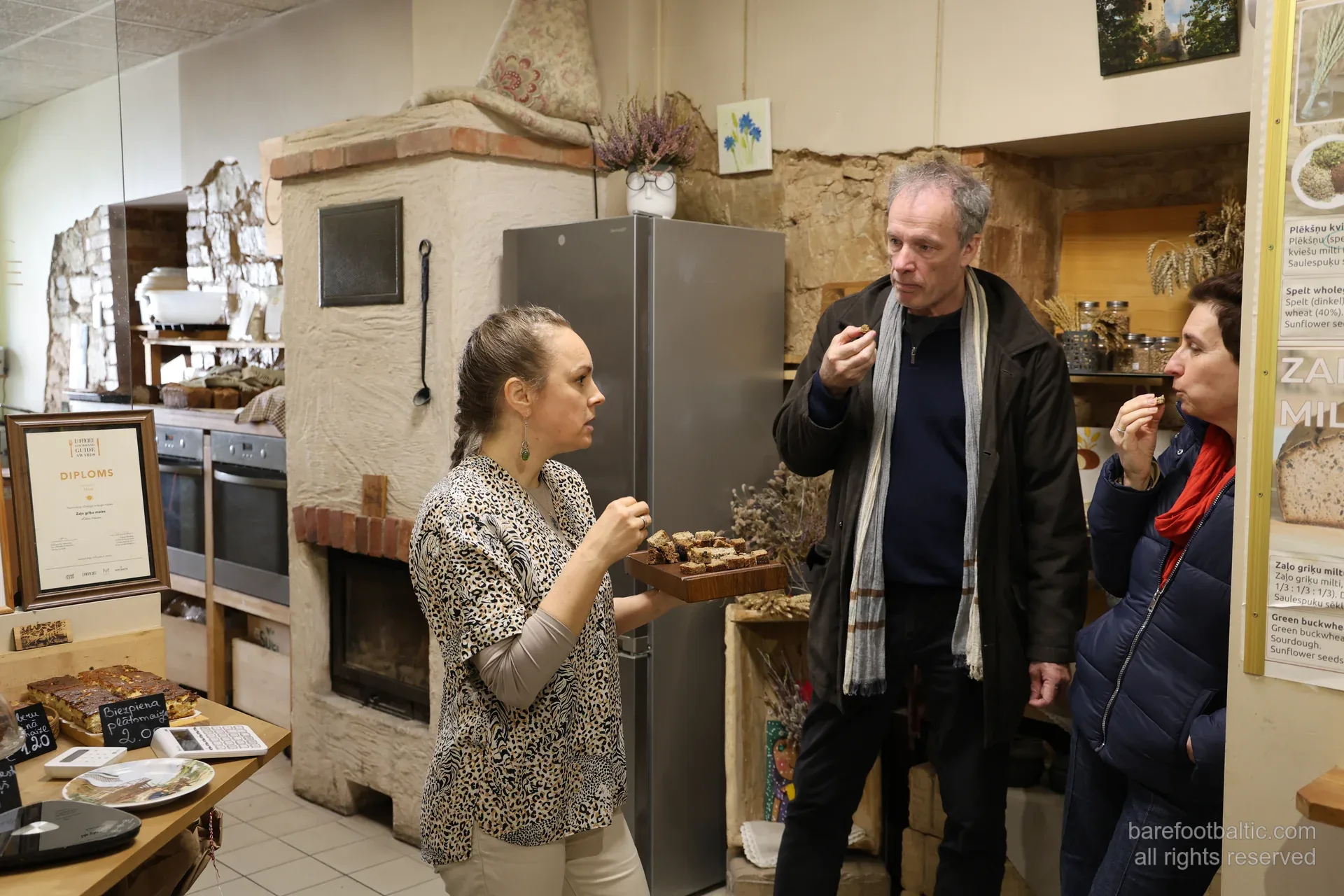
We drive east from Riga to Cēsis. We visit a local bread maker and walk through the old town.
Read more Read less
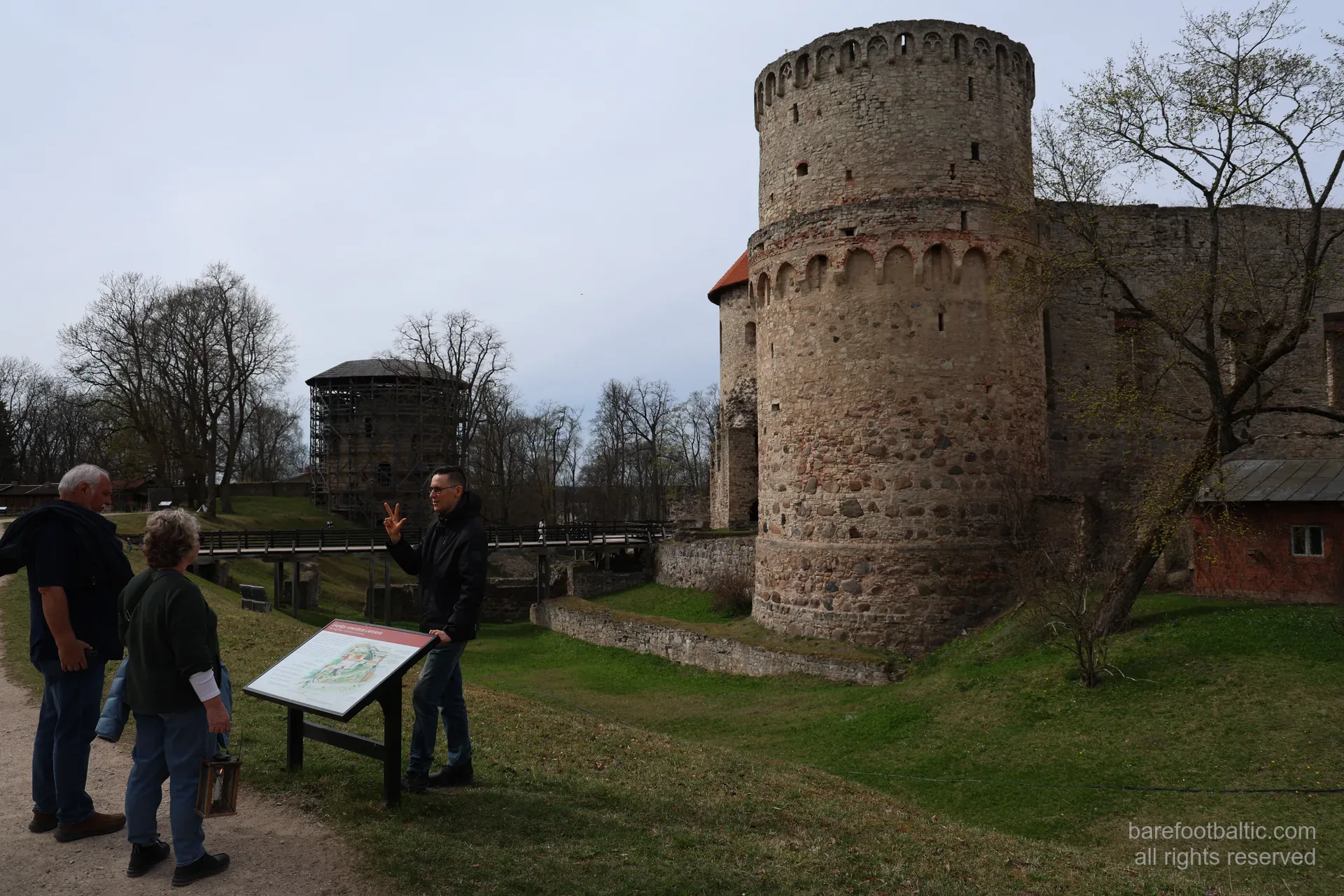
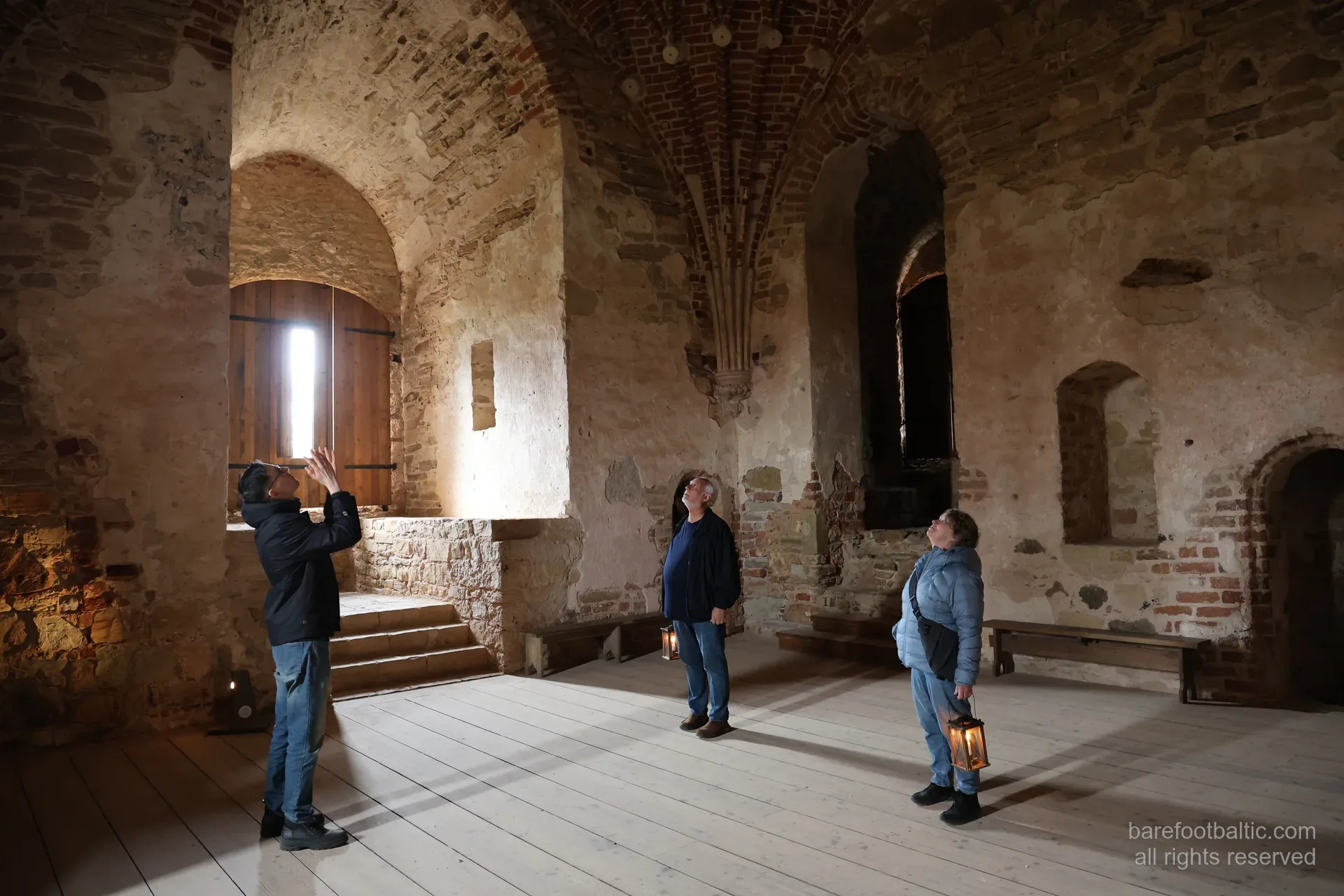
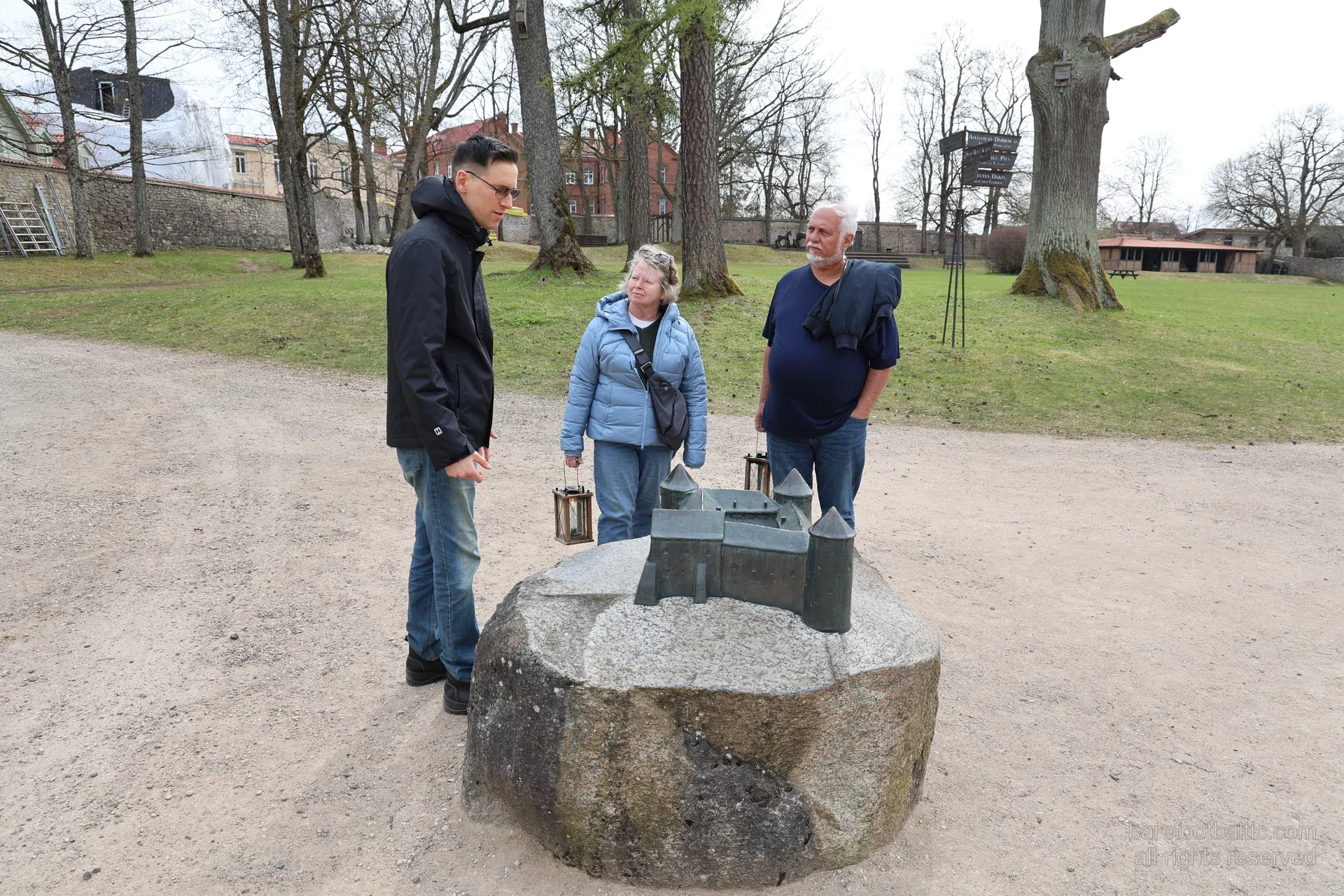
The Cēsis Castle visit itself is about one hour. We explore the medieval part of the castle, each of us carrying a candlelit lantern. I give a running commentary on the history of the castle, from the Northern Crusades that brought the Livonian Order warrior-monks to this region all the way to the arrival of Ivan the Terrible. During the summer months there are additional activities in the castle grounds.
We break for lunch at a local buffet restaurant (you pay for your order directly to the restaurant). If required, I offer assistance in choosing dishes and explain local delicacies on the menu. I’ll also talk about my favourite Latvian drinks and snacks in the van and suggest what to try during your stay in Latvia. When possible, I bring a small complimentary sample of a favourite Latvian sweet or drink for tasting. It isn’t part of the tour price.
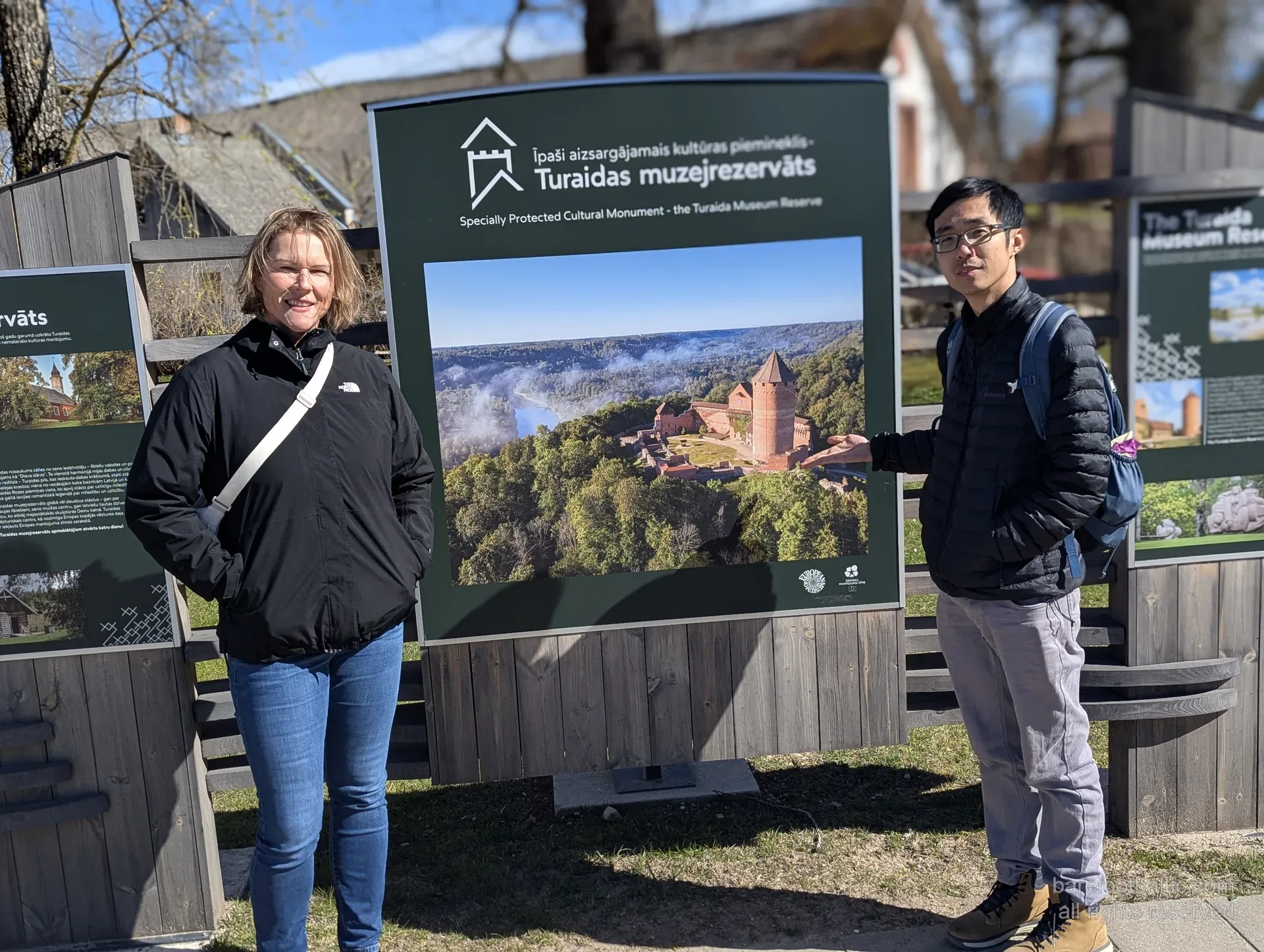
After lunch we take a short drive to Turaida Castle, where you can climb the tower for a wide view of the Gauja valley and surrounding area. I tell you about the museum complex and the legend of Roze and Gutman’s Cave. Behind the castle is the Folk Song Hill, a hillside set with 25 granite sculptures by Indulis Ranka, opened in 1985 on the 150th birthday of Krišjānis Barons. Barons collected and published over 200,000 Latvian dainas, short four-line folk verses that hold the memory of an entire culture. This hillside became one of the gathering points of the late-1980s Singing Revolution that led to Latvia’s restored independence in 1991.
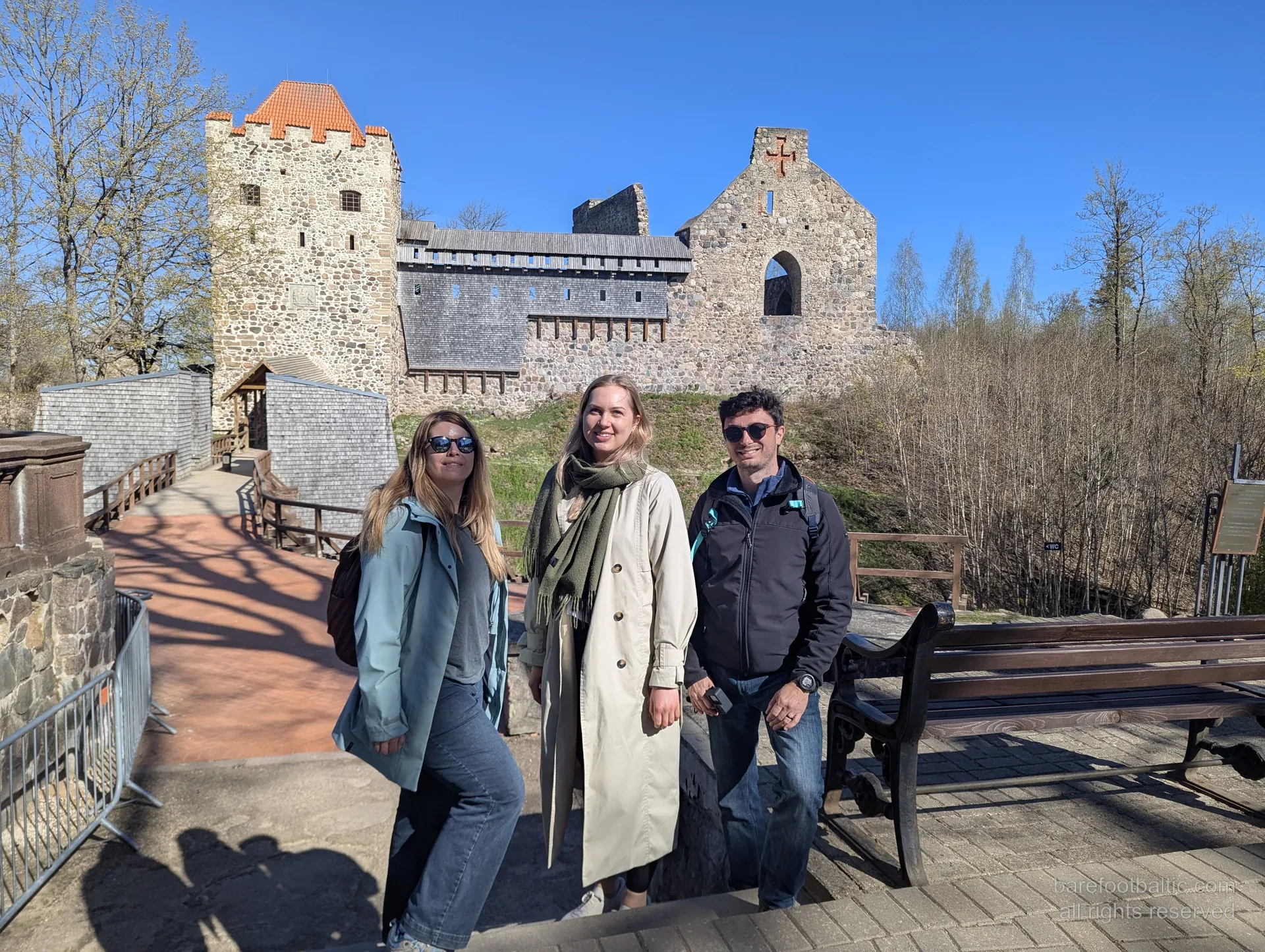
Then we make our way to the Sigulda Castle ruins, which are simpler than Turaida. For those who like, there are plenty of souvenir shops in the castle complex, including a cafe that does a cacao ceremony, which has become popular in Riga this year.
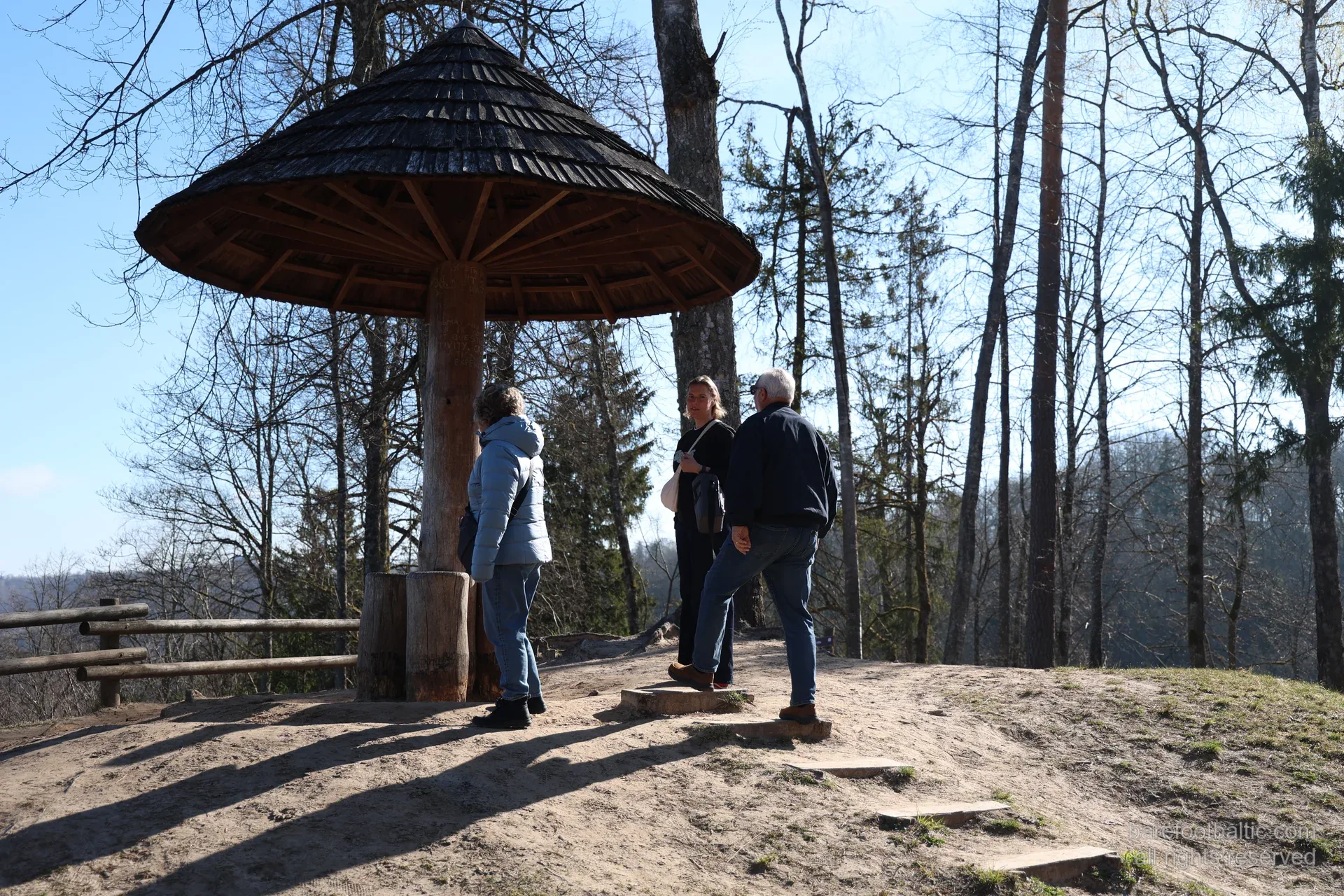
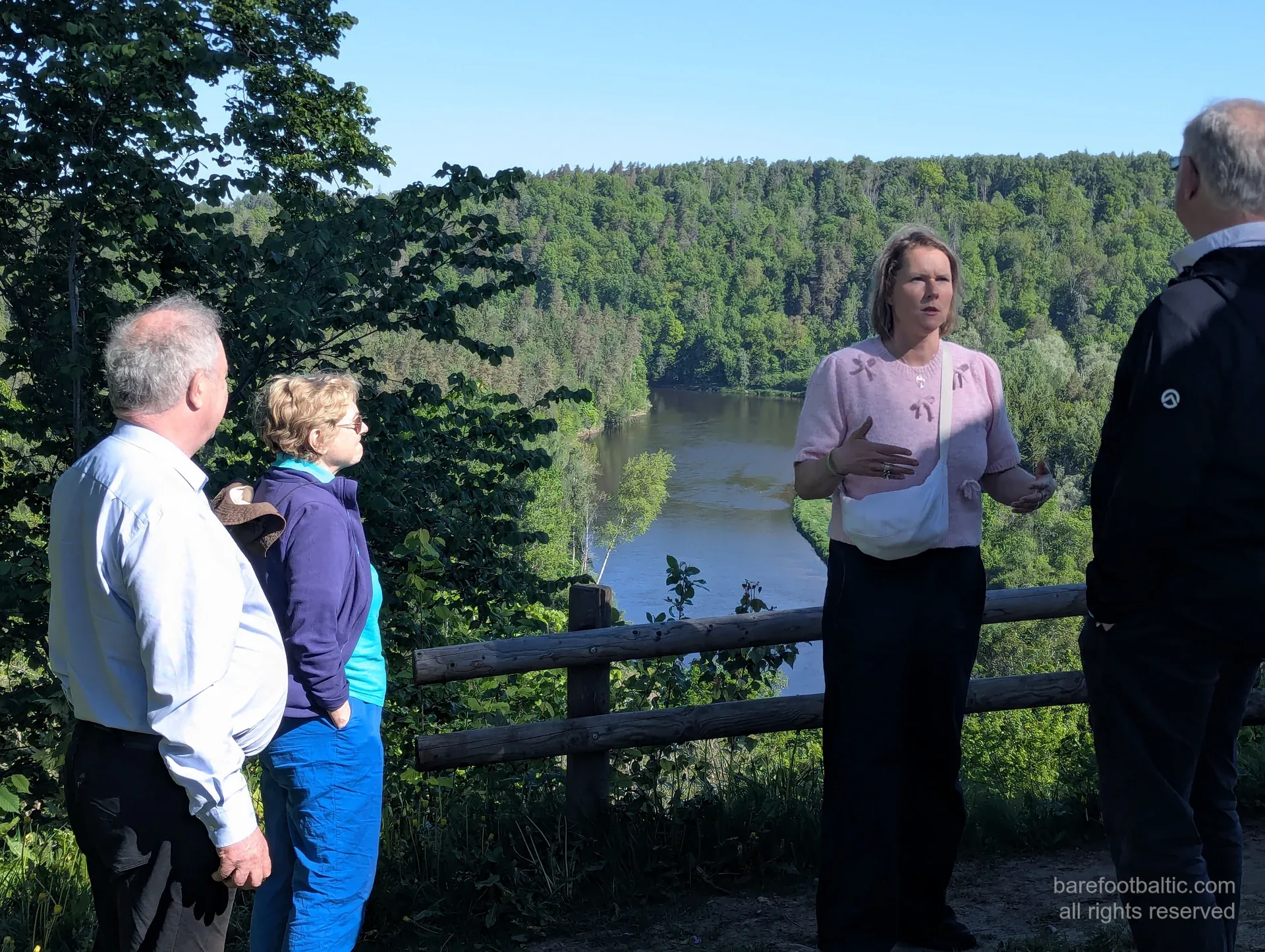
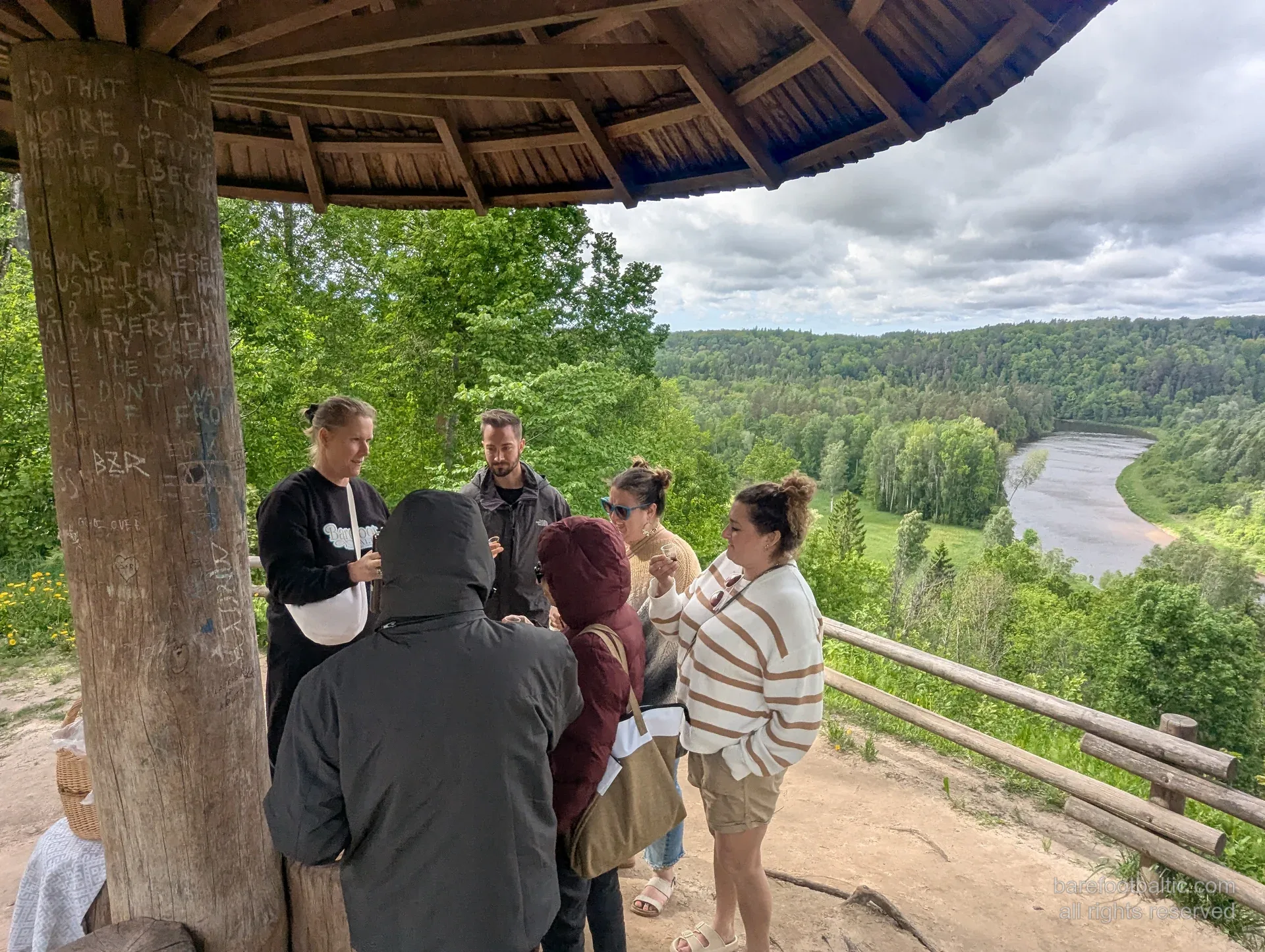
Finally we make it to the Emperor’s View, where Russian Tsar Alexander II stood in 1862 and looked out over the River Gauja as it winds through the valley. The viewing point was installed that year for his visit, 67 metres above the river. This is the main photography vantage point, the view that earned this landscape its “Switzerland of Latvia” nickname. We finish the day here.
We arrive back in Riga by early evening. By then, I hope you leave feeling you’ve used your day well, seen something special, and made warm memories of Latvia.
The route, on the map
The day's stops, in the order we usually run them. The exact sequence shifts a little day to day, depending on the weather and our timed slot at Cēsis castle.
Around 200 km round trip · 8 stops · Plus the occasional seasonal stop when there's a local market, festival, or something worth pulling in for
A few clips from our recent tours
13 clipsYour Day, Hour by Hour
8:30, Depart Riga
Pickup at the designated central-Riga meeting point (Triangular Bastion or Grand Hotel Kempinski). About 90 minutes east into Vidzeme, the upland region of Latvia. Live commentary on the drive covers the Livonian Order, the Hanseatic League, and the regional history of the Gauja Valley.
10:00, Local bread maker
We visit a local bread maker.
10:45, Cēsis Old Town walking tour & Castle
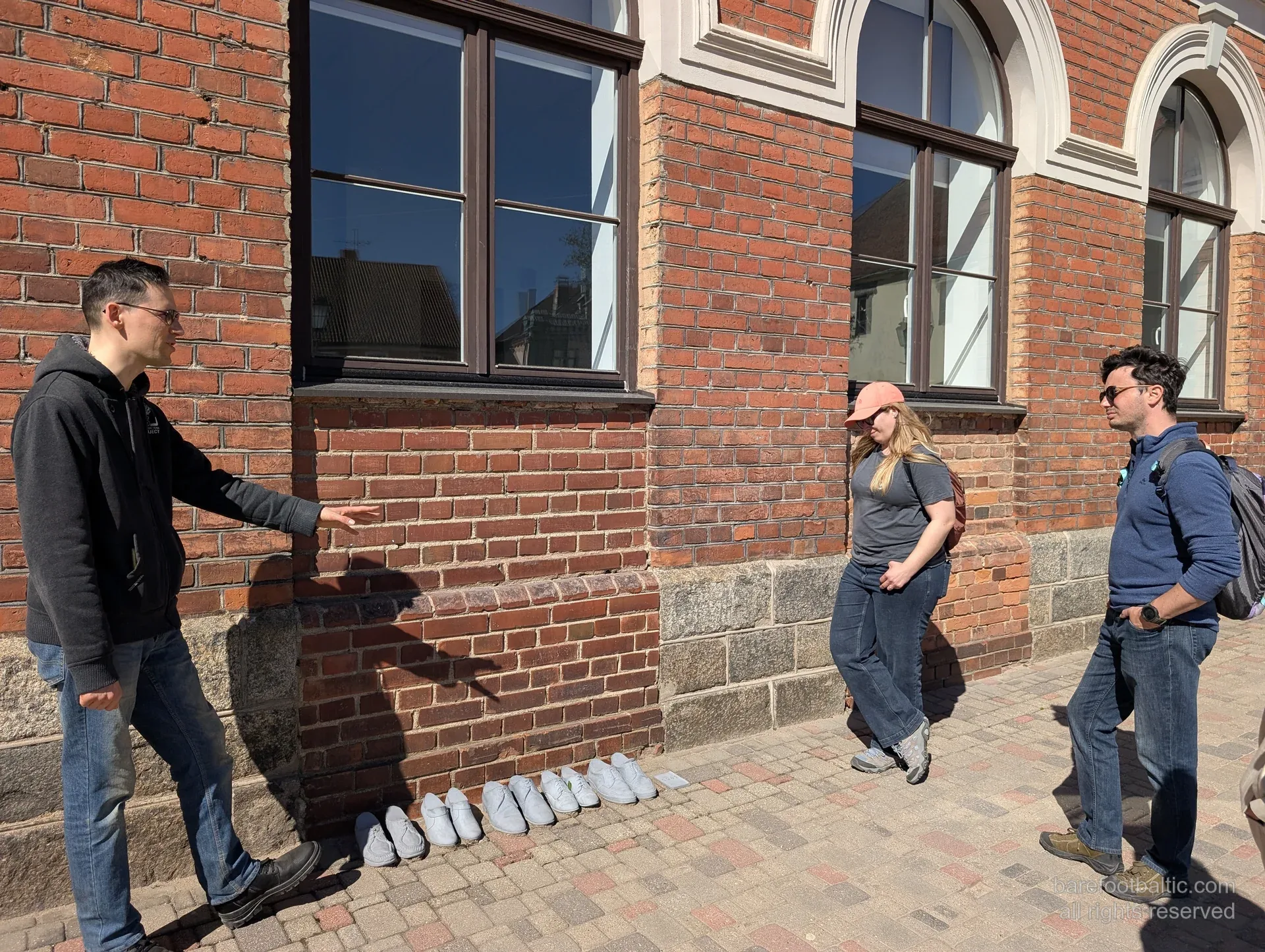
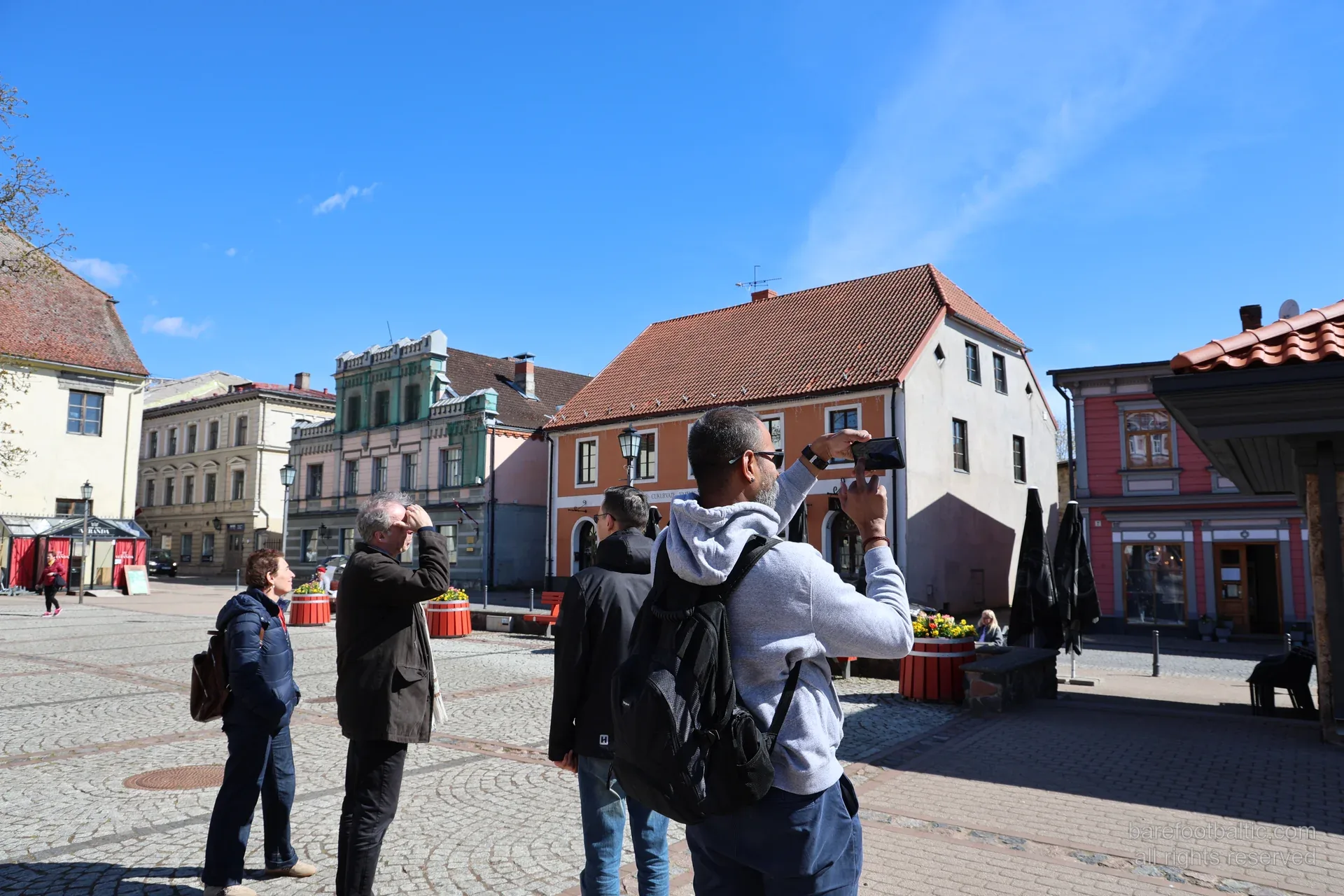
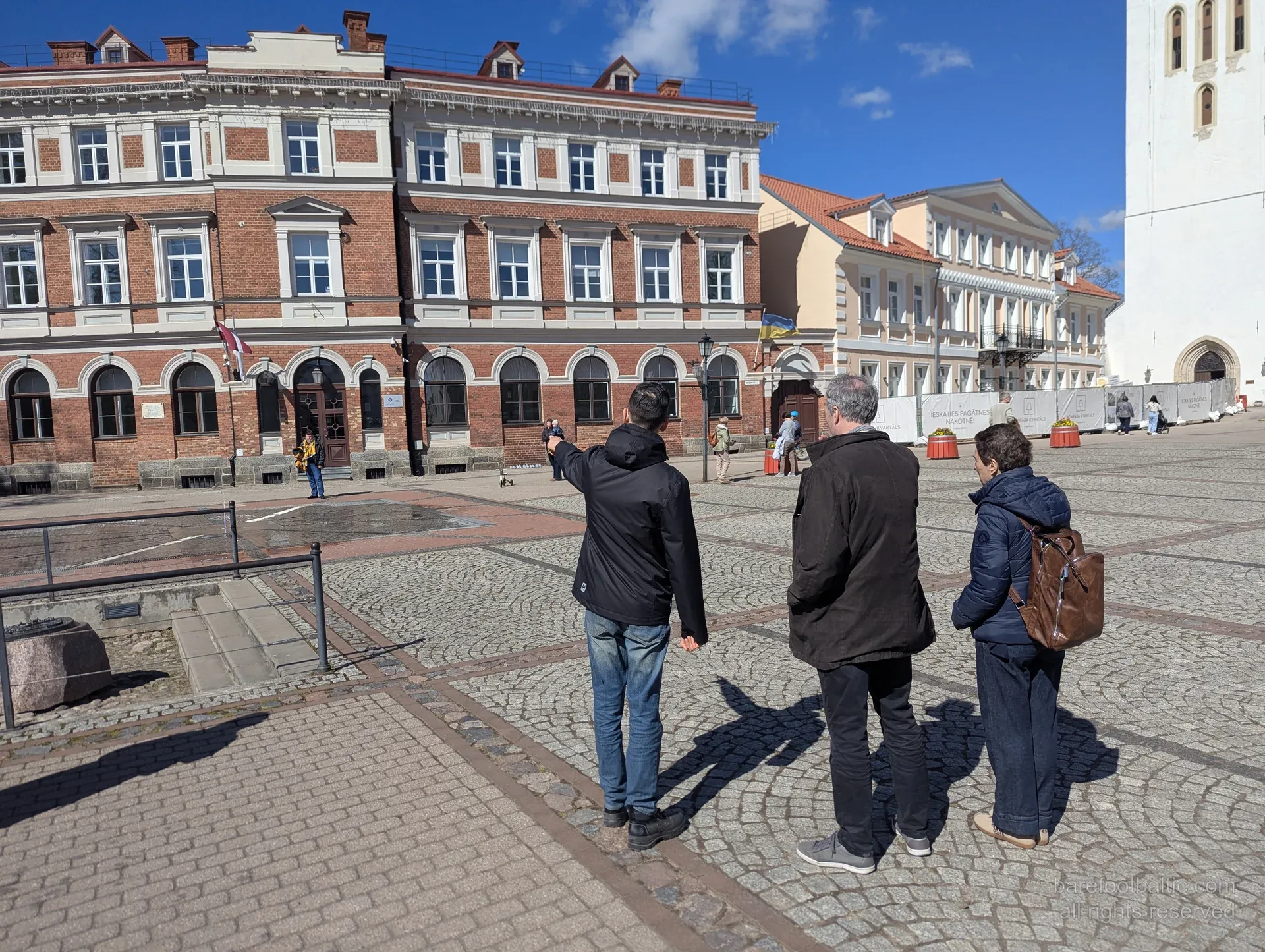
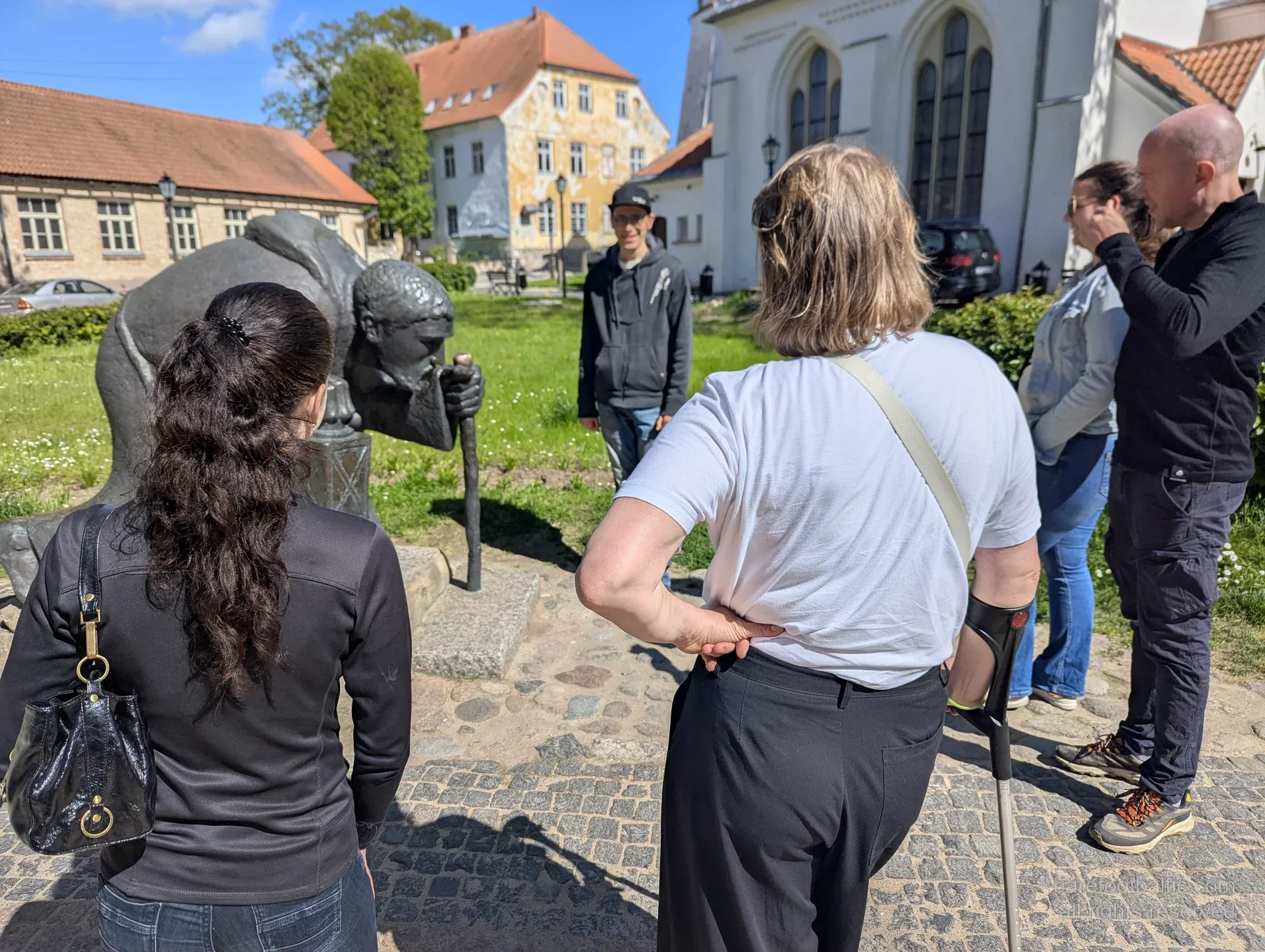
A guided walk through Hanseatic Cēsis Old Town, about thirty minutes. Vienības laukums, the wooden lanes around it, St John’s Church (early 13th century, one of the oldest medieval churches in Latvia, Livonian Order build), and the surviving guild streets. Daiga points out which buildings go back to the Hanseatic merchants and which are reconstructions, and where the German guild marks are. Then about one hour inside the 13th-century Cēsis Medieval Castle, where you walk the towers by candlelight with a real lantern in your hand, the way the residents of the castle would have moved around inside.
Show all 8 stops Show less
12:45, Latvian Buffet Lunch in Cēsis
Lunch at Pasēdnīca, a Latvian buffet cafeteria a short walk from the castle. Daiga walks you down the line and explains the dishes, the smoked items, pickles, salads, and traditional Latvian dishes such as grey peas with bacon (pelēkie zirņi ar speķi). You order at the counter and pay directly, at local prices. See our guide to Latvian food for context on the menu.
14:00, Emperor’s View & Sigulda Medieval Castle ruins
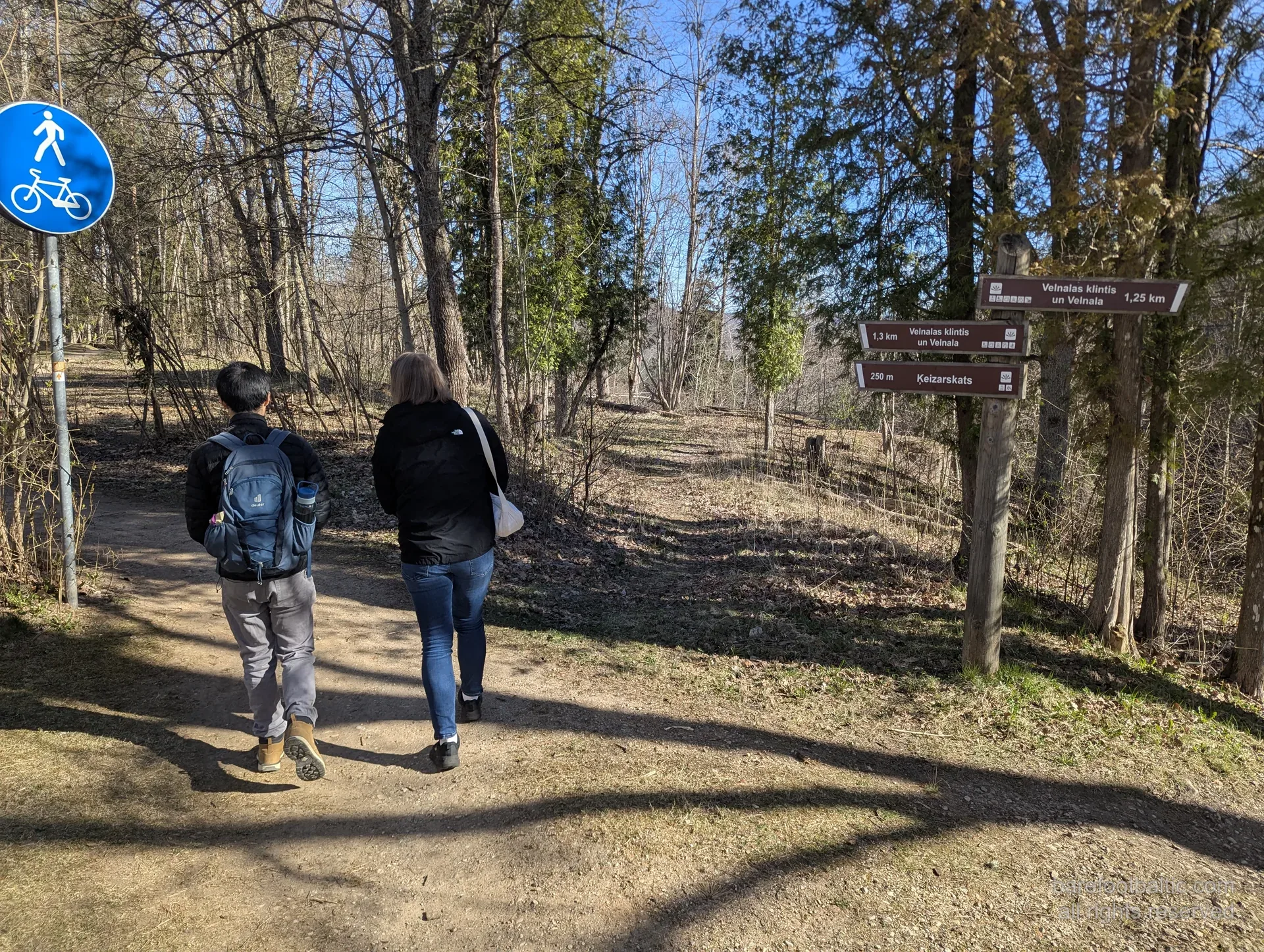
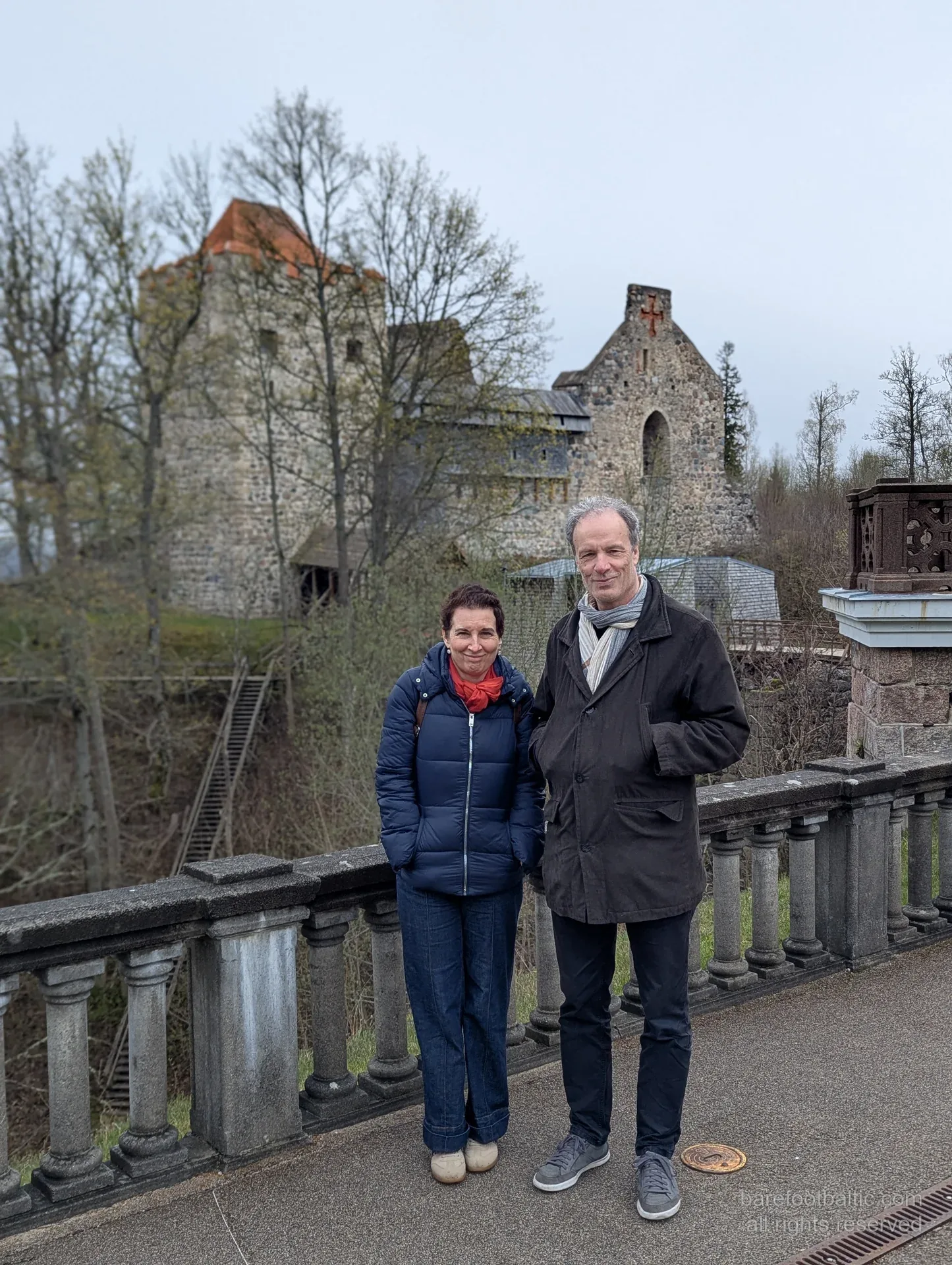
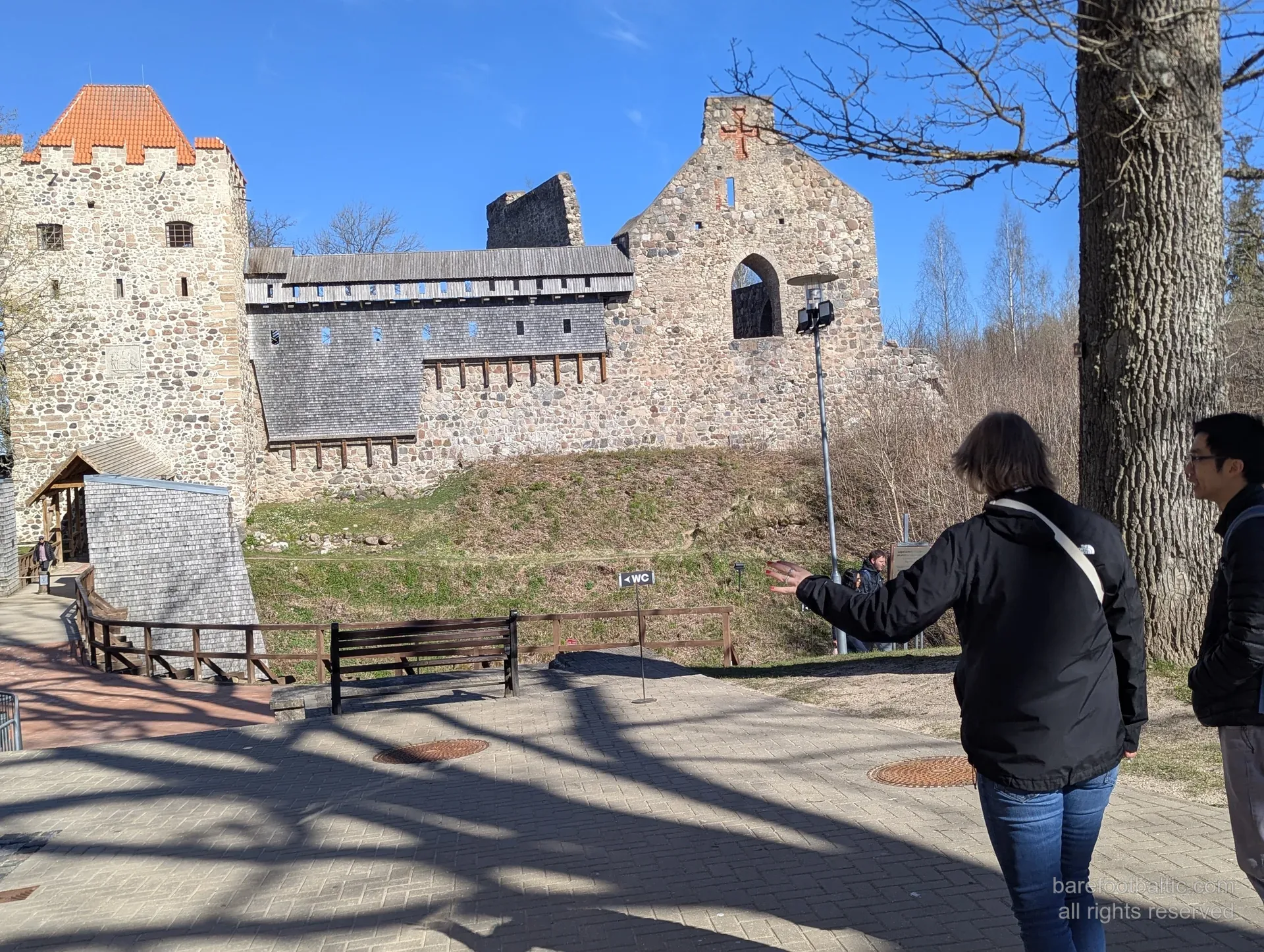
We start at Emperor’s View (Ķeizarskats in Latvian), the cliff-edge viewpoint where Russian Tsar Alexander II stopped in 1862. The viewing point was installed that year, 67 metres above the river. From there we walk to the 13th-century ruins of Sigulda Medieval Castle, a Livonian Brothers of the Sword stone fortress (1207), partially destroyed in the Great Northern War, with a view back across the Gauja valley toward Turaida.
15:15, Turaida Castle & Reserve
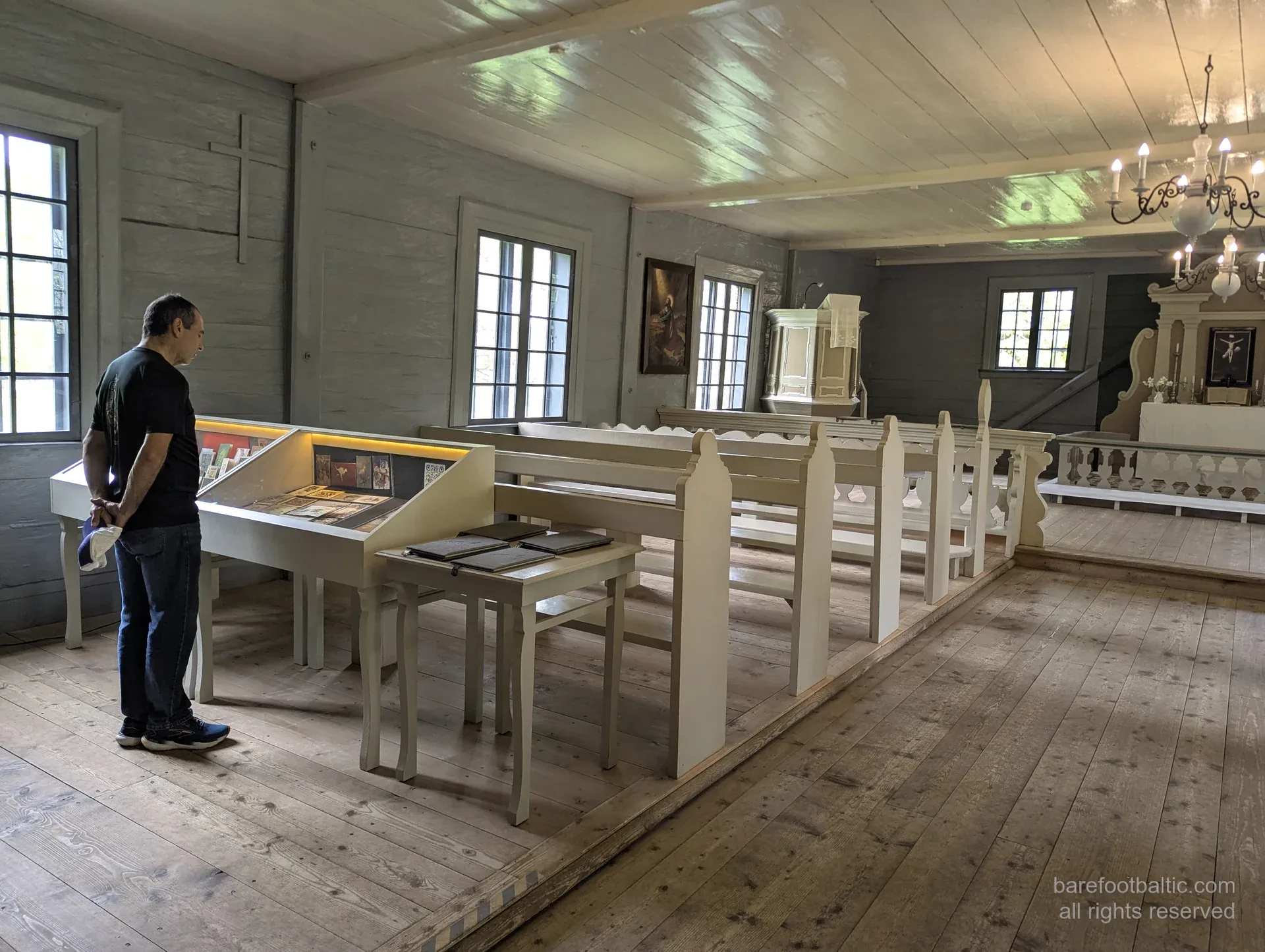
The red-brick Turaida Castle (1214), on a ridge above the Gauja. We climb the main tower for the view, walk the Folk Song Hill sculpture garden behind it (25 granite sculptures by Indulis Ranka, opened 1985 on the 150th birthday of Krišjānis Barons), and visit the wooden church and the restored folk buildings. The estate also has the “Nature’s Pearls” outdoor conservation trail, an interactive walk through the forest park with an insect hotel, heritage-tree markers, and a station on the hermit beetle (Latvia’s “umbrella species” for old-growth forests). Daiga tells the full Rose of Turaida legend by the wooden church here. We spend 90 minutes to two hours at Turaida. Gūtmaņa ala (Gutman’s Cave) is the largest cave in Latvia (10 m tall, 12 m wide, 19 m deep), with 350-year-old graffiti in the sandstone. We point it out from the bus as we drive through the valley. We don’t normally stop and walk down. If we’re running ahead of schedule, we can make the short visit.
16:45, "Switzerland of Latvia" Viewpoint
A photography stop at one of the named viewpoints along the valley rim, either Artists’ Hill (Gleznotāju kalns) or Paradise Hill (Paradīzes kalns), depending on the season and light. Back at the van, before we set off for Riga, Daiga talks about her favourite Latvian drinks and snacks and suggests what to try during your stay. When possible, she brings a small complimentary sample of a favourite Latvian sweet or drink for tasting. It isn’t part of the tour price.
~18:30, Return to Riga
About 90 minutes back to Riga. Drop-off at the same central-Riga points (Triangular Bastion or Grand Hotel Kempinski) by early evening.
What's Included
Included
Not Included
Good to Know
Meeting Point
We meet at 8:30 AM at a designated point in central Riga, and the exact details are shared when you book. Hotel pickup is available for most central Riga hotels with bus-accessible parking. Let us know where you’re staying and we’ll confirm.
What to Wear
Comfortable walking shoes are essential. Cēsis Castle has uneven medieval stone and stairs, and Turaida involves hillside walking. Dress in layers, especially in spring and autumn. Cēsis castle interior is deliberately unheated (you’re walking it as a 13th-century visitor, candle lantern and all), which is the point but not warm.
Accessibility
Some parts of the day involve stairs and uneven terrain, the Cēsis castle towers and the Turaida castle mound and tower. Please let us know in advance if you have mobility concerns and we’ll plan the best route. This is a moderate walking day, roughly 4 to 6 km total, spread across the day. For guests who can’t manage stairs at all, our Rundāle Palace day is the better pick.
Children
Kids of any age are welcome on this day. The candle lanterns at Cēsis, the bread tasting, and the Rose of Turaida story are usually the parts they remember. It’s a long day, so do tell us your children’s ages when you book and Daiga will plan pace, snack stops, and seating in the van with the group in mind. Child price is €70.
Cancellation
Free cancellation up to 24 hours before the excursion for a full refund. Cancellations within 24 hours are non-refundable. If we have to cancel for weather or vehicle reasons, you get a full refund or free reschedule, your choice.
Not Suitable For
This day involves moderate walking on medieval-castle surfaces, uneven stone, and a tower stair at Turaida. Not suitable for guests with mobility impairments or wheelchair users. Please message Daiga before booking with any mobility concerns to confirm the day will work for you.
What to Bring
Comfortable walking shoes. Weather-appropriate clothing (the Cēsis castle interior is unheated, and the Gauja viewpoints can be windy). Reusable water bottle (refills available through the day). Bring any snacks or drinks you know you will need. The castle candle lantern is provided. Any small tasting sample Daiga brings is complimentary, when available, and is not part of the tour price.
House Rules
No smoking in the vehicle. No outside alcohol or drugs. No littering in the castle grounds or national park.
Frequently Asked Questions
Book This Excursion
Book Direct with Daiga
Same tour, same guide, same experience, just a better price when you book directly.