Ask ten people in Riga where to send a first-time visitor with a free day, and a good number will say the same thing. Aizbrauc uz Brīvdabas muzeju. Go out to the Open-Air Museum.
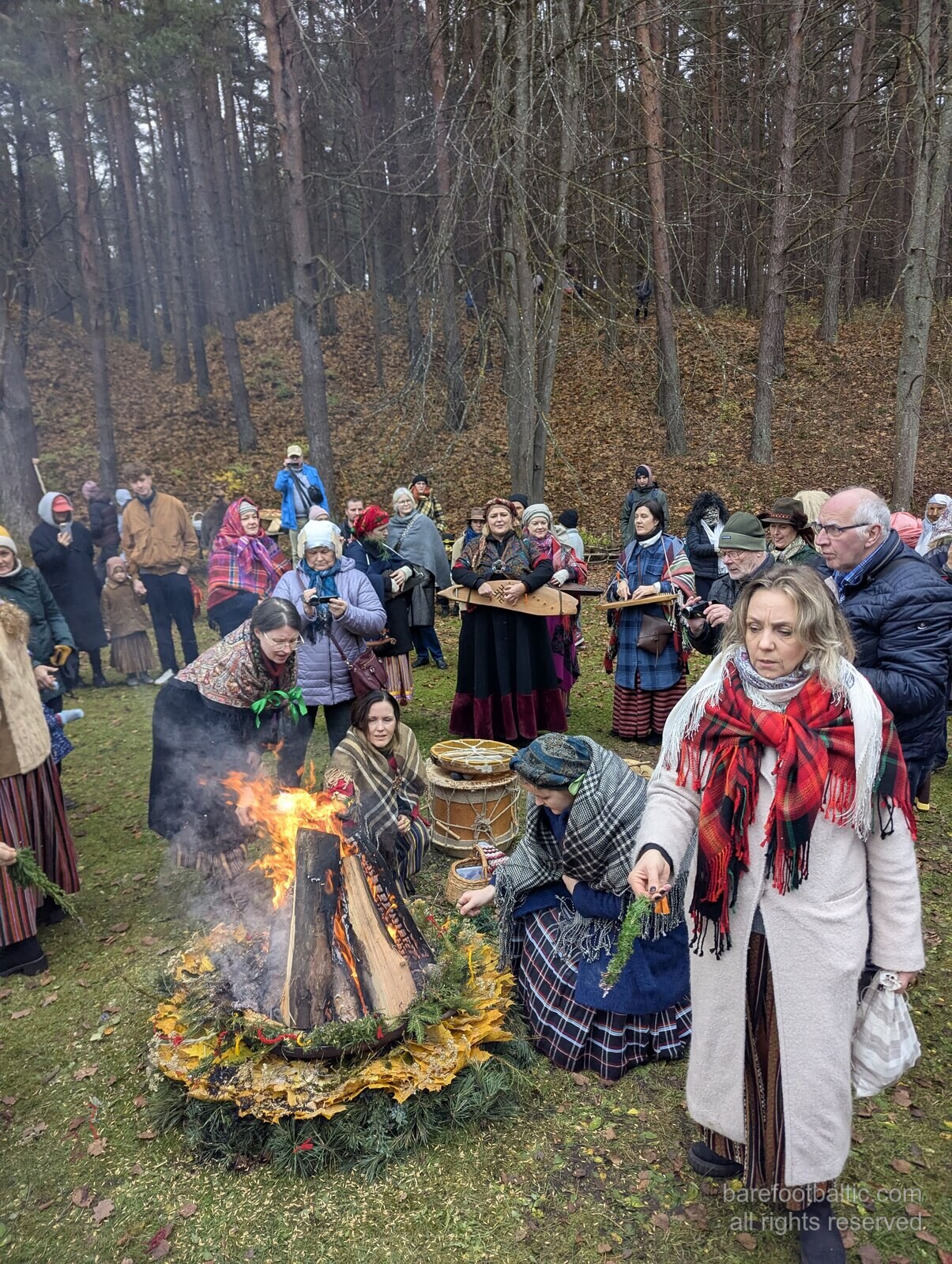
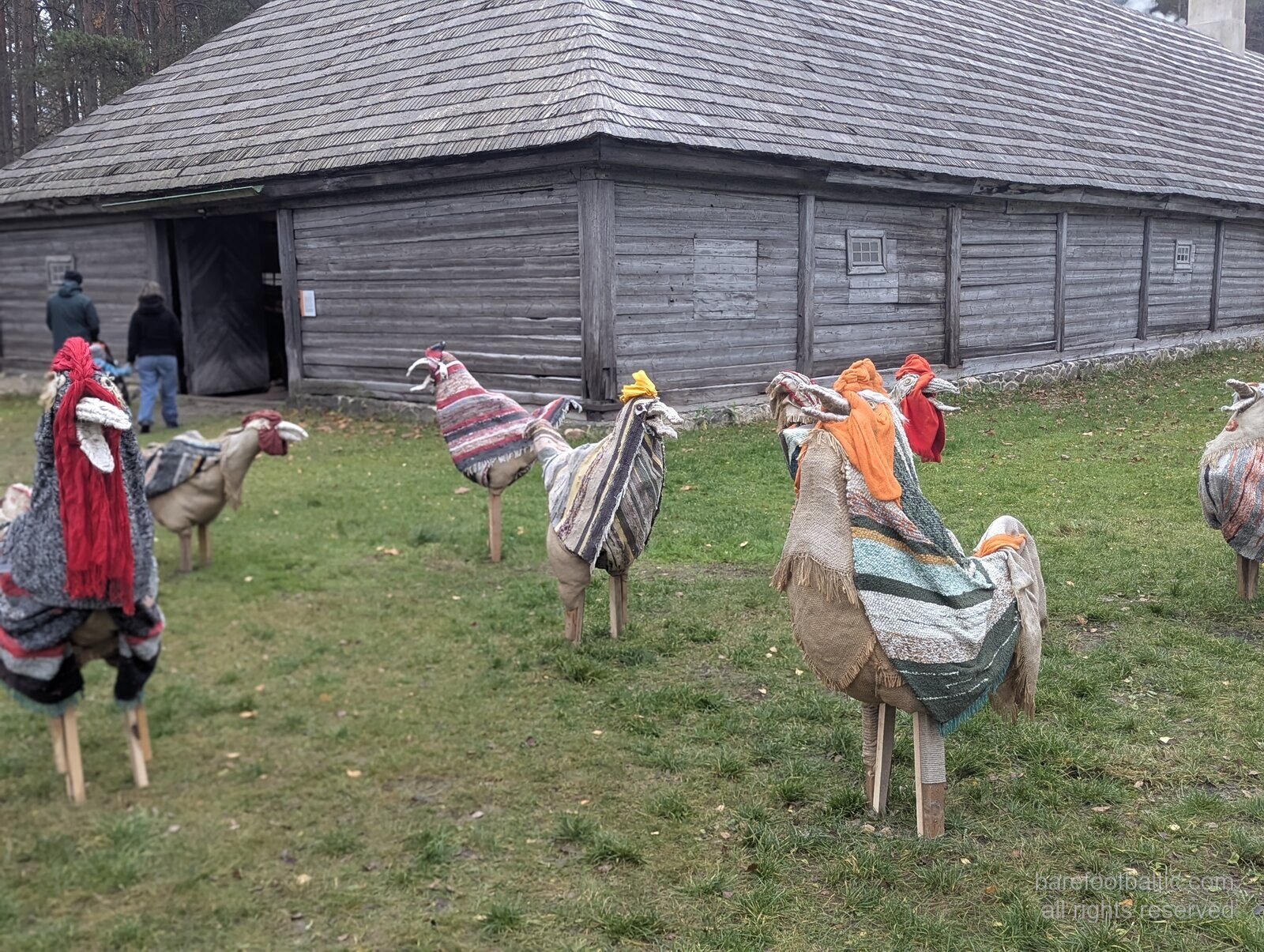
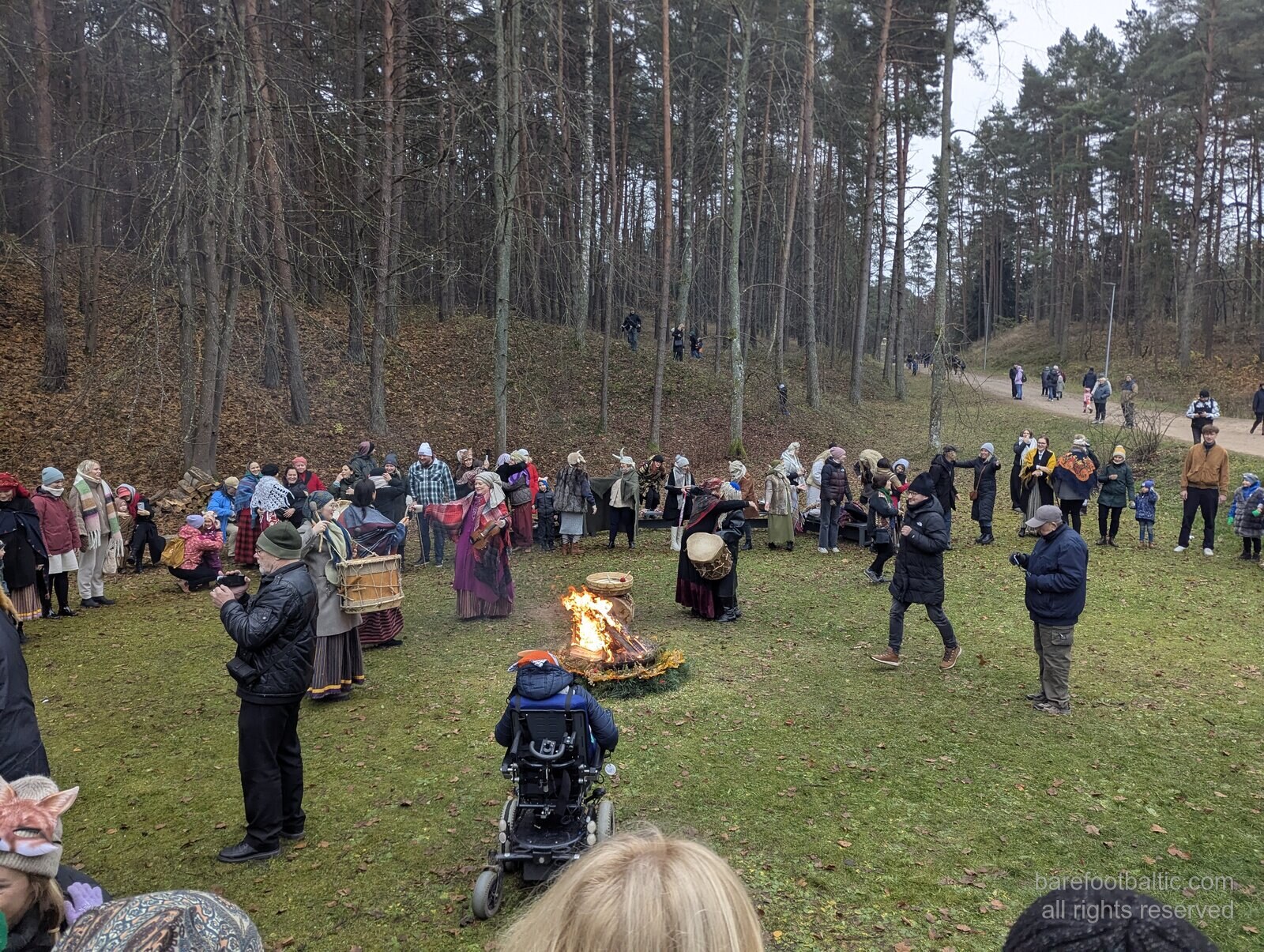
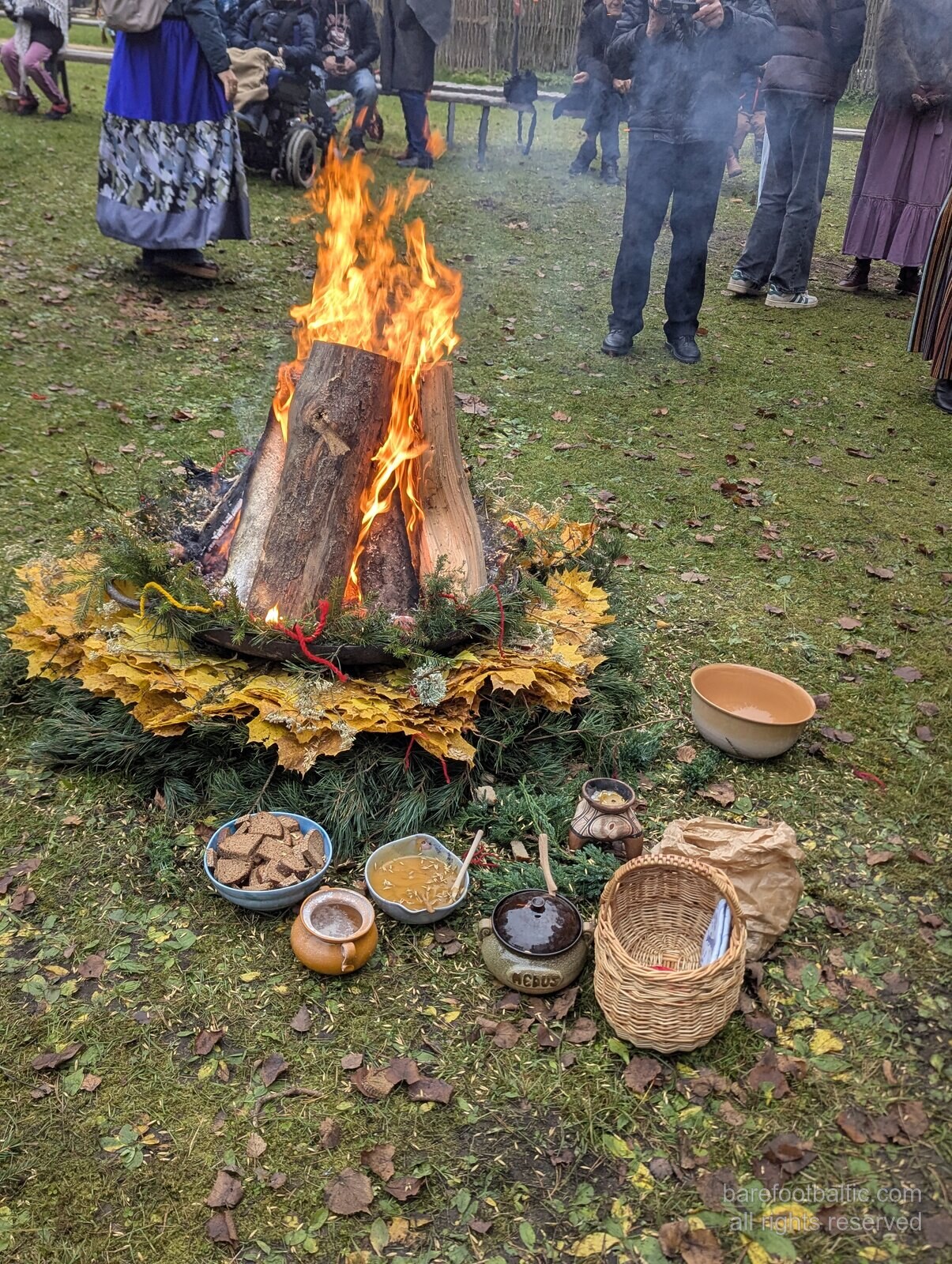
Photos. The gallery below opens as a clickable lightbox. These are from two visits, Jāņi (Midsummer) in June and Mārtiņdiena (St Martin's Day) in November.
Officially it’s the Latvian Ethnographic Open-Air Museum (Latvijas Etnogrāfiskais brīvdabas muzejs), founded in 1924. One of the oldest open-air museums in Europe. Eighty-seven hectares of pine forest on the shore of Lake Jugla. 118 historic buildings. Farmsteads, windmills, churches, a tavern, fishermen’s huts, blacksmiths’ forges. Every one was built somewhere else, by the people who lived in it, and carefully dismantled and rebuilt here, piece by piece, since the 1920s. None of it is reconstruction. It’s all the real thing, moved.
What you’ll find in there
Latvia has four historical regions, Kurzeme, Vidzeme, Zemgale, and Latgale, and each has its own architectural language. A Latgale farmstead does not look like a Kurzeme one. A Liv fisherman’s hut from the Baltic coast does not resemble a Russian Old Believer’s house from the eastern lakes. The museum lets you walk between them in an afternoon and feel the differences in your hands. Doorways at different heights, hearths at different angles, roofs thatched in entirely different ways.
The workmanship is extraordinary. Hand-cut timber joints that have held for 200 years. Dovetailed log corners. Hearths that still draw properly. Whoever built these buildings wasn’t building for a hundred years. They were building for their grandchildren’s grandchildren, and you can feel that in the walls.
Inside many of the huts you’ll find a saimniece, a hostess in full traditional costume, often weaving or spinning or tending the fire. They are unfailingly warm, and they will gladly show you how a loom works or what’s in the pot. Most speak Latvian, a few speak English, and almost all of them will manage a conversation with you using their hands and yours regardless. Bring a smile and a question. They have been waiting all morning to be asked.
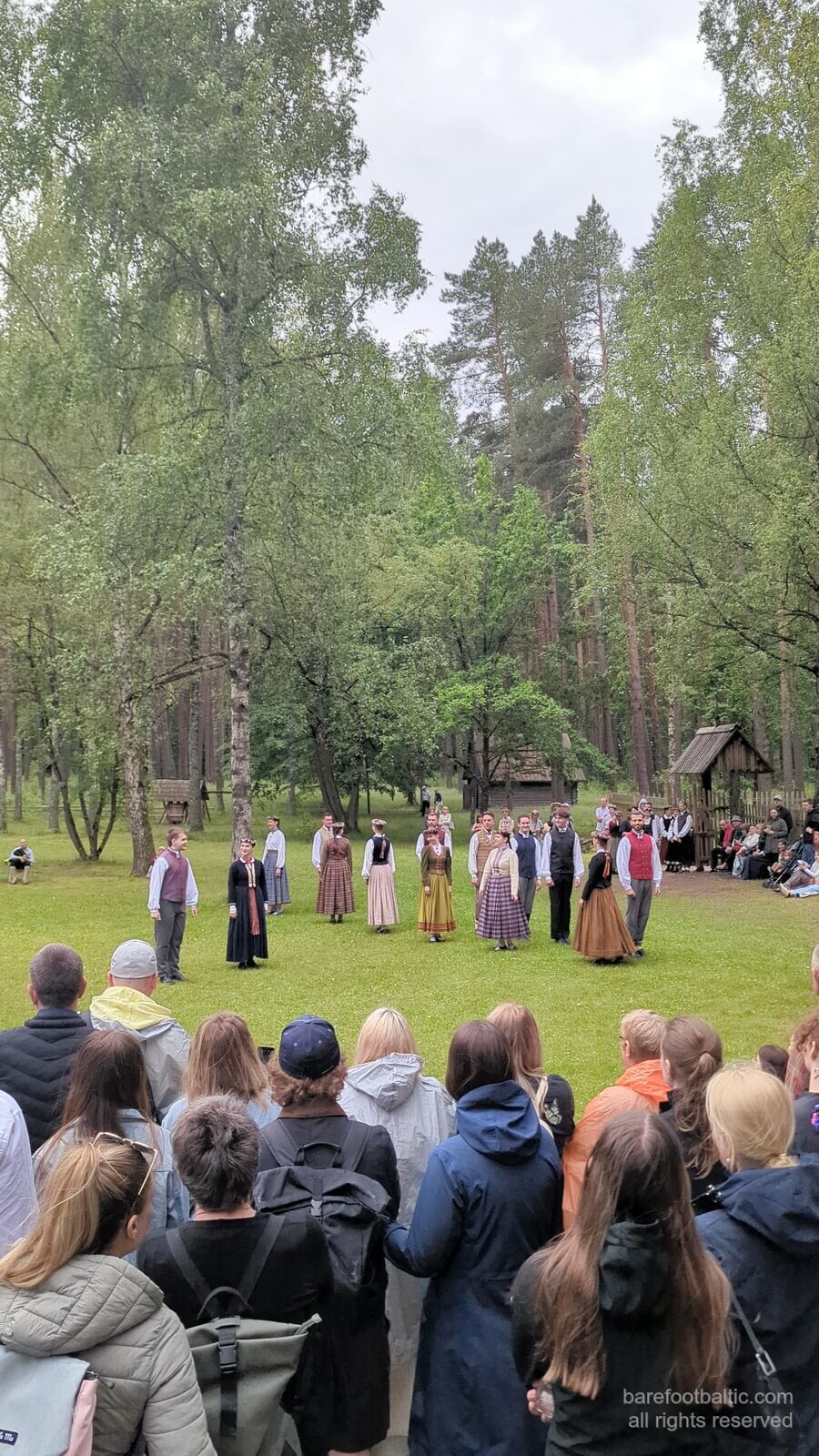
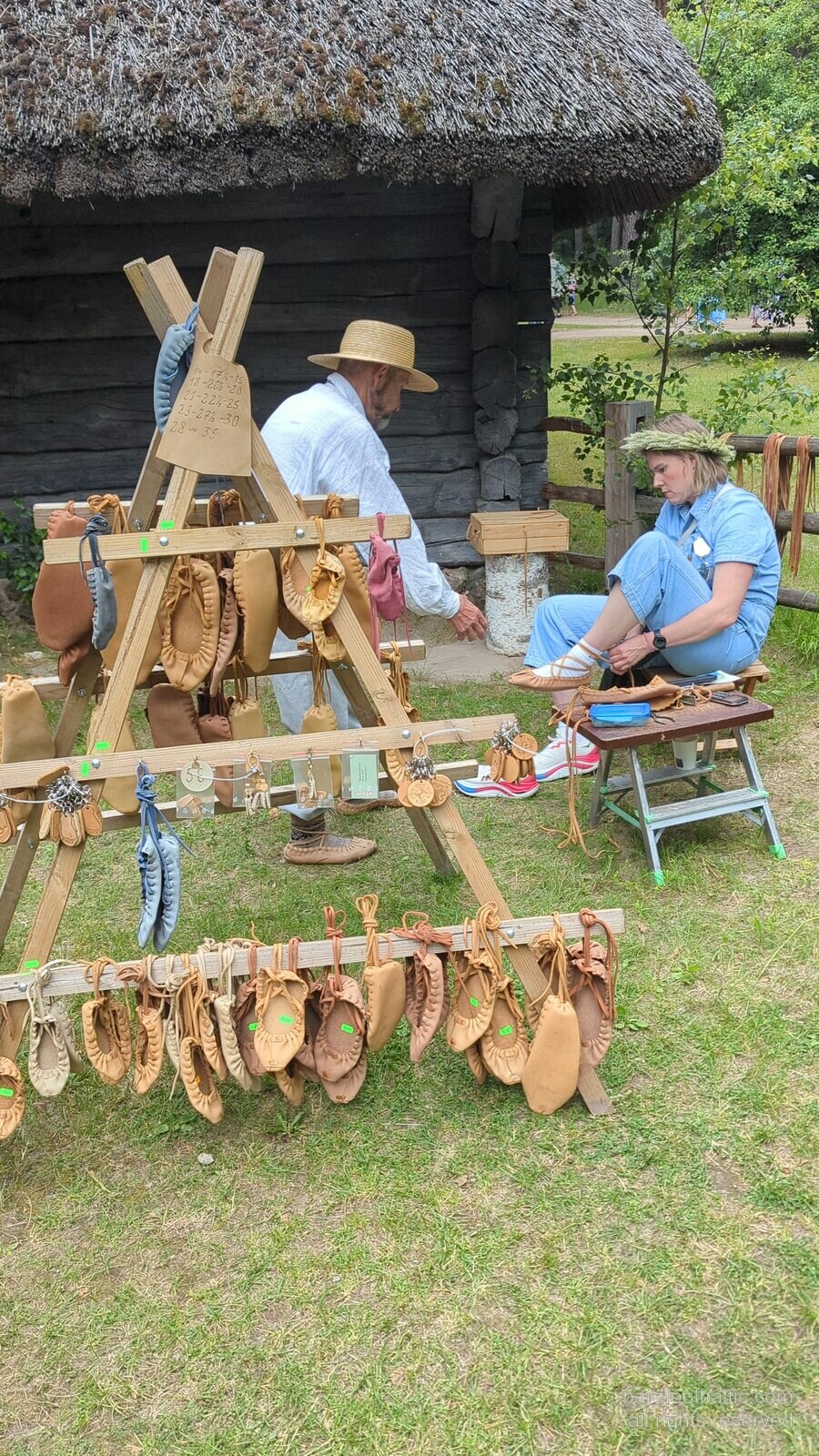
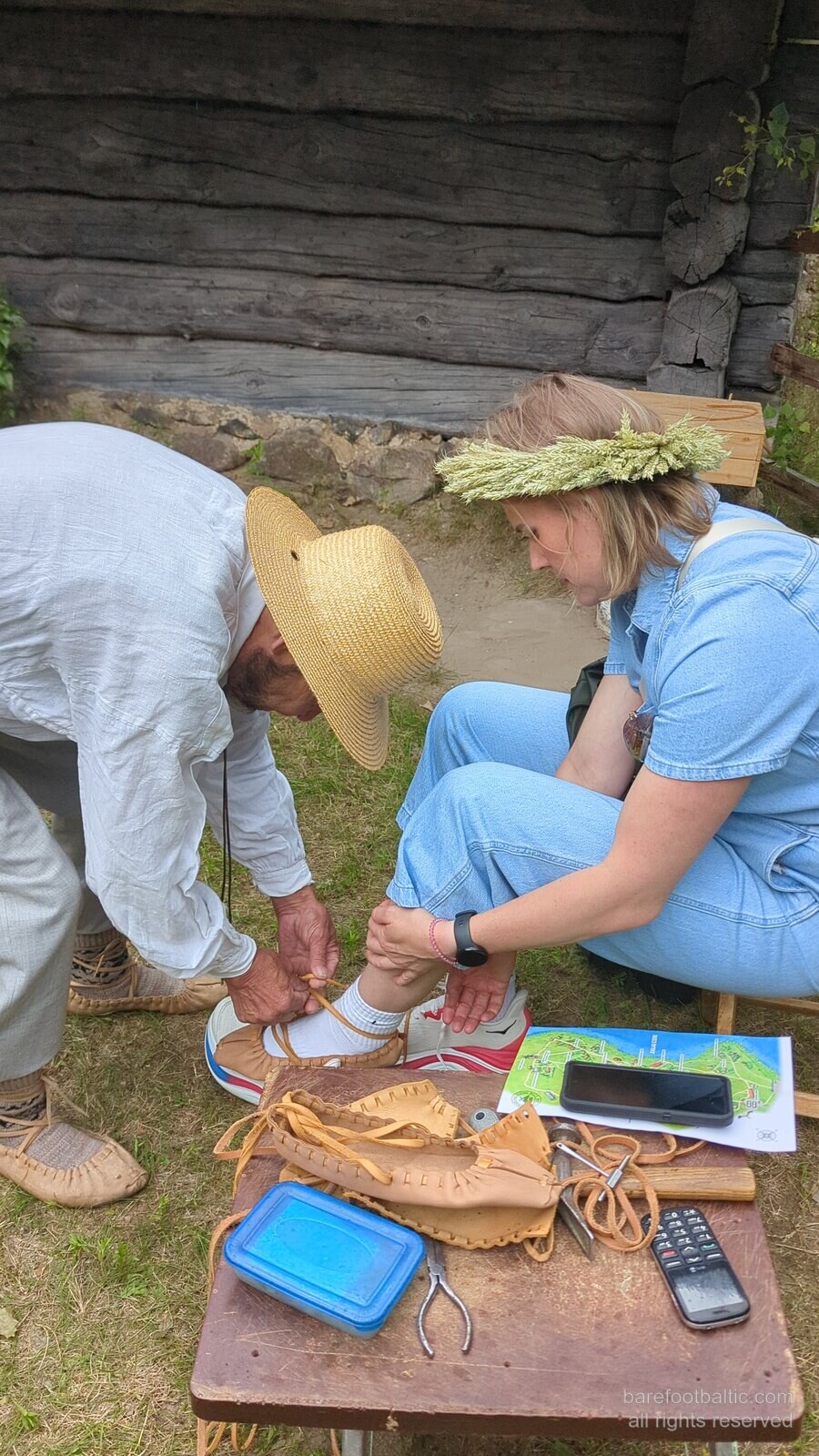
The events are the real reason to plan ahead
The museum is beautiful any day. But it comes alive on event days, and the calendar is busy from spring through late autumn.
- Easter in April, with traditional egg-rolling, swing-building, and choirs that sing the spring in.
- Jāņi preparations and Midsummer-adjacent events in mid-June.
- The Nationwide Traditional Arts and Crafts Fair on the first weekend of June, the biggest of its kind in Latvia, running for over forty-five years. Thousands of artisans from every region. Linen, ceramics, leatherwork, beeswax, smoked fish, beer brewed properly. This one is worth planning your trip around.
- Harvest Day in late September.
- Mārtiņi in early November.
- The Meteņi light trail and winter celebrations in early February.
Folk dance ensembles, choirs, and traditional musicians appear at most of these. Check the events page on the museum’s site before you book your day.
The walk
One thing the brochures undersell. This is a serious walk. The grounds are 87 hectares, the paths are forest paths, and if you want to actually go inside every building it is easy to do 15,000 steps before lunch. Wear shoes you can walk all day in. Bring water. In summer, bring something for mosquitoes. It’s a lakeshore forest and they know their job.
The reward is real. You’re walking through a pine forest, with lake views, between buildings that have absorbed the smell of woodsmoke for centuries. There are benches. Take them.
Eating there
There’s a tavern (Krodziņš) near the entrance and a small café deeper in the grounds, both serving good Latvian food. Grey peas with bacon, sklandrausis (the saffron-yellow Latgale pastry), warm rye bread with curd cheese, herring, kvass.
Two warnings. In summer, especially on event weekends, the queue at the tavern can be punishing, easily an hour at peak times. The smaller café gets hit just as hard. If you’re going on an event day, either eat early (arrive at opening, eat by 11:30), eat late (after 14:30), or pack something. There’s plenty of forest to picnic in.
Getting there is half the day
The museum is about 13 kilometres from the Old Town, in the Bergi district just past Lake Jugla. You can take a taxi or drive, and there’s free parking, but I’d recommend public transport. Watching Riga unspool past the window is part of the day. Soviet-era housing blocks giving way to wooden suburbs, pine forest, the lake.
The way I’d do it is tram 6 to its terminus at Jugla, then trolleybus 31. The tram is its own pleasure, slow and rattling, threading through quiet residential districts and ending right by the lake. From Jugla you transfer to trolleybus 31, which runs past the lake to Bergi and stops at Brīvdabas muzejs, right at the entrance. Two systems on one ticket. A useful midpoint to stretch your legs.
The alternative is trolleybus 31 the whole way from Centrāltirgus (Central Market) to Berģuciems, about 24 kilometres in roughly an hour. Worth it for one detail. Somewhere along the route, the trolleybus runs out of overhead wires. You’ll feel the driver slow, hear a clunk, and watch the twin power-collection poles retract from the catenary into resting position on the roof. From that point the bus continues under its own onboard power, on battery, or in the older vehicles, an auxiliary diesel generator that hums to life. Riga is one of the few cities in Europe where you can experience this hybrid catenary-and-autonomous mode on a regular passenger route. The city also runs Europe’s only fleet of hydrogen fuel-cell trolleybuses, though those are on route 4, not 31.
If neither option appeals, buses 28 and 29 also stop at the museum, as do the regional Ekspress Ādaži coaches (routes 6821, 6822, 6824, 6826) heading toward Ādaži, Garkalne, Carnikava, and Vangaži.
A 90-minute ticket from Rīgas Satiksme costs €1.50 and covers any combination of tram, trolleybus, and bus within that window, transfers included, which is exactly why the tram-and-trolleybus combo works on a single ticket. Buy it in advance at any Narvesen kiosk, at the green ticket machines, or via the Mobilly or Rīgas Satiksme apps. Validate it (touch it to the reader) every time you board a new vehicle. You can’t buy from the driver, and inspectors do check, with a €15 to €30 fine if you’re caught without one.
For the return, cross the road from the museum entrance and the same routes will bring you back into town.
Listen for the announcement
One small pleasure of riding public transport in a language you don’t speak is the recorded stop announcements. On every Rīgas Satiksme tram, trolleybus, and bus, a calm female voice reads out the next stop before each one.
Nākamā pietura, Brīvdabas muzejs.
Rīgas Satiksme, before every stopIt means “Next stop, Open-Air Museum.” The word to listen for is pietura, roughly PEE-eh-too-rah. Catch it once and you’ll hear it everywhere, and you’ll start to recognise stop names by sound before you read them on the sign.
It’s the same small pleasure as catching prochain arrêt on the Paris Métro, or mind the gap between the train and the platform on the Underground. The kind of phrase that lodges in your head from a trip. The Latvian rhythm settles into your ear in about three stops. By the time you reach Bergi you’ll be calling it out before the recording does.
Practical information
Latvian Ethnographic Open-Air Museum, Brīvības iela 440, Bergi, Riga
| Detail | Information |
|---|---|
| Hours (summer, 1 May – 31 October) | Daily 10:00–18:00. |
| Hours (April) | Daily 10:00–17:00. |
| Hours (winter, 1 Nov – 31 Jan) | Daily 10:00–16:00. |
| Hours (1 Feb – 31 March) | Tuesday to Sunday, 10:00–16:00. Closed Mondays. |
| Closed | 1 January, 23–24 June (Jāņi), 18 November, and 24, 25, and 31 December. Last admission 30 minutes before closing. |
| Tickets (summer, May–Sep) | €8 adults, €6 seniors, €4 students and schoolchildren, €14 family ticket (1–2 adults with up to 4 children). |
| Tickets (winter, Nov–April) | €6 adults, €4 seniors, €3 students and schoolchildren, €10 family ticket. |
| Free entry | Preschool children, persons with 1st or 2nd level disability and their attendant, ICOM card holders, and on national holidays including 18 November. |
| How to get there | Tram 6 to Jugla, then trolleybus 31 to Brīvdabas muzejs, or trolleybus 31 the whole way from Centrāltirgus. Buses 28 and 29 also stop at the museum. About 30 to 40 minutes, €1.50 with a 90-minute ticket. Driving takes 20 minutes from the centre on the A1 / E67 toward Tallinn, with free parking on site. |
| Plan for | A minimum of 3 hours. Ideally 4 to 5 if you want to see most of the buildings and stop for food. On event days, longer. |
| Bring | Comfortable shoes, water, mosquito repellent in summer, a layer in spring and autumn (the forest stays cool). |
The official site is brivdabasmuzejs.lv. Check the events calendar before you go. Half the day is in catching a folk dance or a craft fair you didn’t know was happening.
On our excursions
We don’t include Brīvdabas on our day trips out of Riga. It deserves a slow day to itself, the kind you can’t give it in a rushed couple of hours. But if you have a free day in the city and you want to feel what Latvia was, and to some degree still is, out in the countryside, this is where we send people.
Pack a light bag and take the tram. Walk slowly, eat what the saimnieces are cooking, and leave time to sit by the lake before you head back.
Brīvdabas is one of the easiest add-ons to a Riga day, twenty minutes by tram and a quiet morning under the pines. We can fold it into a guided Riga day on request. Get in touch.