Highlighted reviews from other travelers
Reviews from GetYourGuide, Google and Tripadvisor
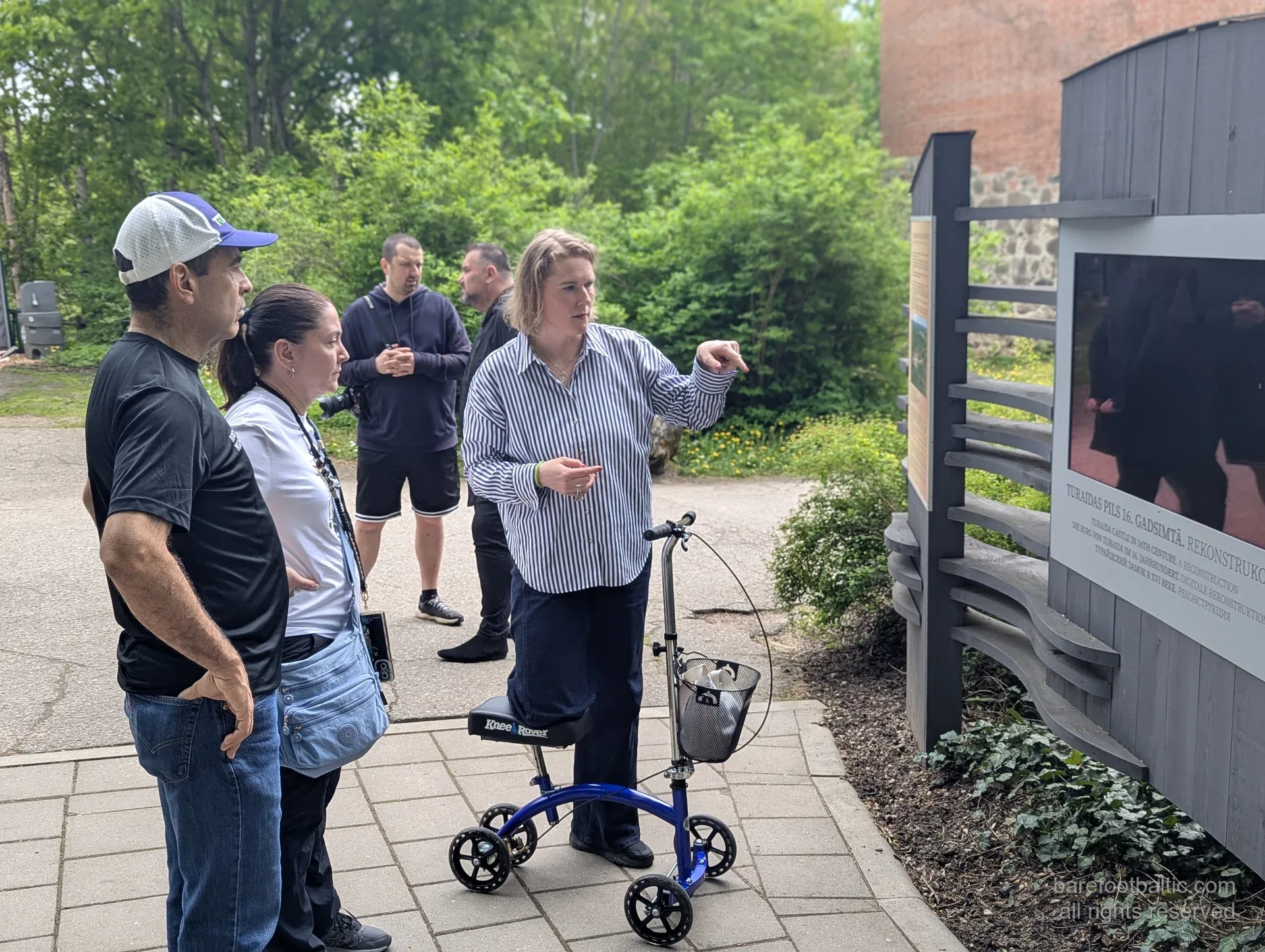
Sevgili Daiga ile tanıştığımızda talihsiz bir kaza yaşamıştı, ayağı kırık olmasına rağmen geziyi iptal etmedi ve bize şahane bir gezi düzenledi. Güler yüzü, hoş sohbeti ve şahane küçük ikramlarıyla çok güzel bir gezi oldu. Çok teşekkür ederim Daiga.
Jól összeállított, rugalmasan lebonyolitott program, figyelmes, lelkes és felkészült túravezetőkkel. Nagy élmény volt, érdemes élni e lehetőséggel, ha az ország szépségei, kultúrája és történelme kapcsán mélyebb ismeretekre vágyunk.
It was a wonderful trip, special thanks to Daiga and her team that went all out to make this trip a memorable one. Not a single boring moment I had during the journey. An enriching trip that perfectly blended exploration, culture, and learning together.
What a great day! It was a full day, which was just what we wanted. We really liked all the activities. Our guide, Daiga, was extremely knowledgeable. As a Latvian, Daiga has an excellent knowledge base about the history, culture, current events, flora and fauna—everything— about Latvia, and readily shared information. She also shared her experiences about growing up in Latvia, which made the tour far more meaningful for us. Additionally, we appreciated that Daiga was solicitous about our welfare throughout the day. We had an additional guide at Cesis who was also quite informative. The lunch spot was well chosen; the food was good and inexpensive. This tour allowed us to see sites we would otherwise have been unable to see, and we highly recommend it!
Izlet je bil fantastičen od začetka do konca. Daiga in njena ekipa so zelo dobro poskrbeli za naju, naju pričakali ob dogovorjeni uri s prostornim kombijem in suvereno vodili skozi dan. Če si želite pristnega stika z domačini in odkrivanja tudi malo bolj skritih kotičkov države, kot je na primer obisk pekarne v kraju Cesis ali razgledne točke, kjer ni gneče, potem je ta izlet dobra izbira. Vsekakor ga midva priporočava. Hvala vam za nepozaben dan, Mojca in Jani iz Slovenije
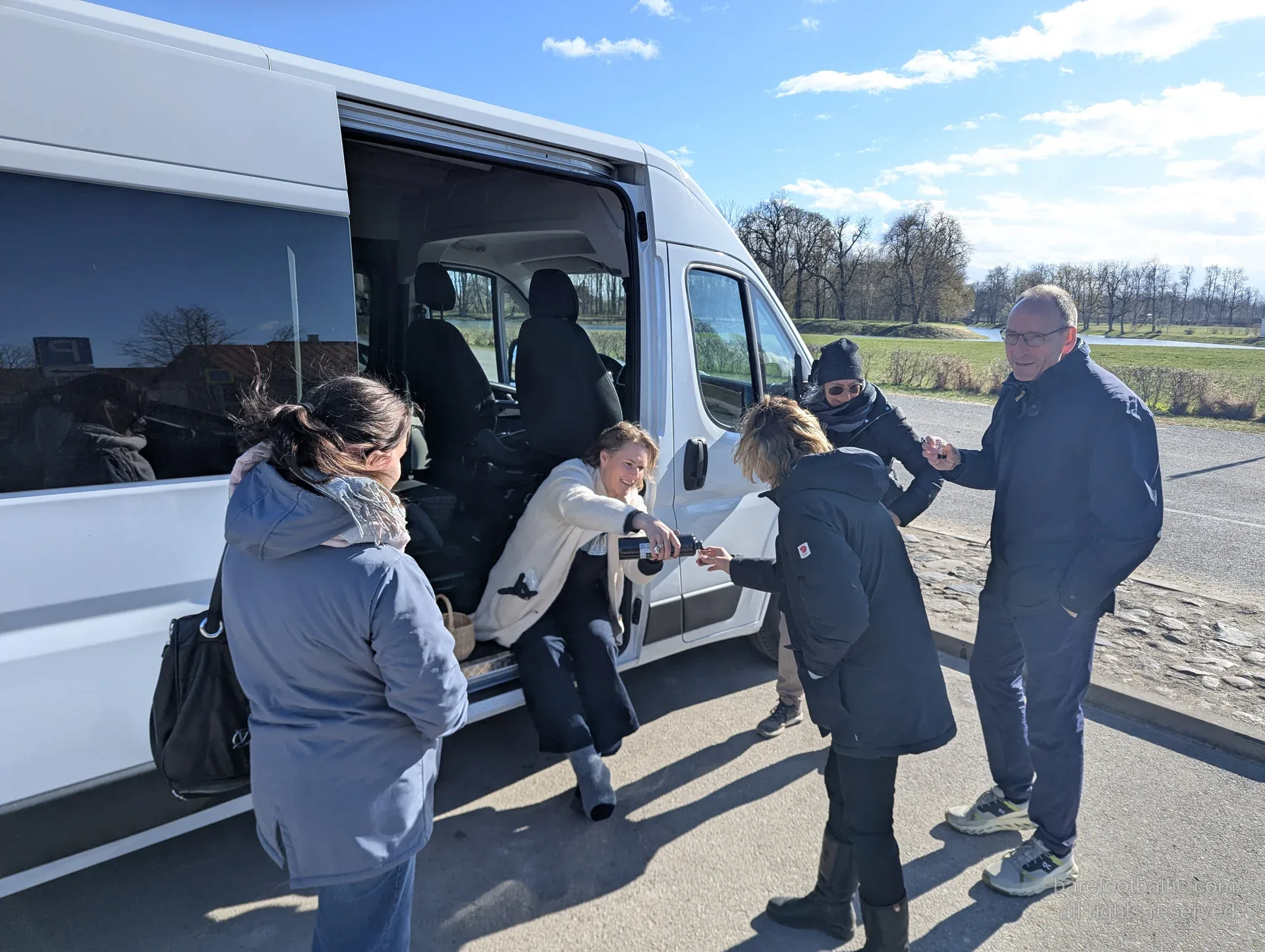
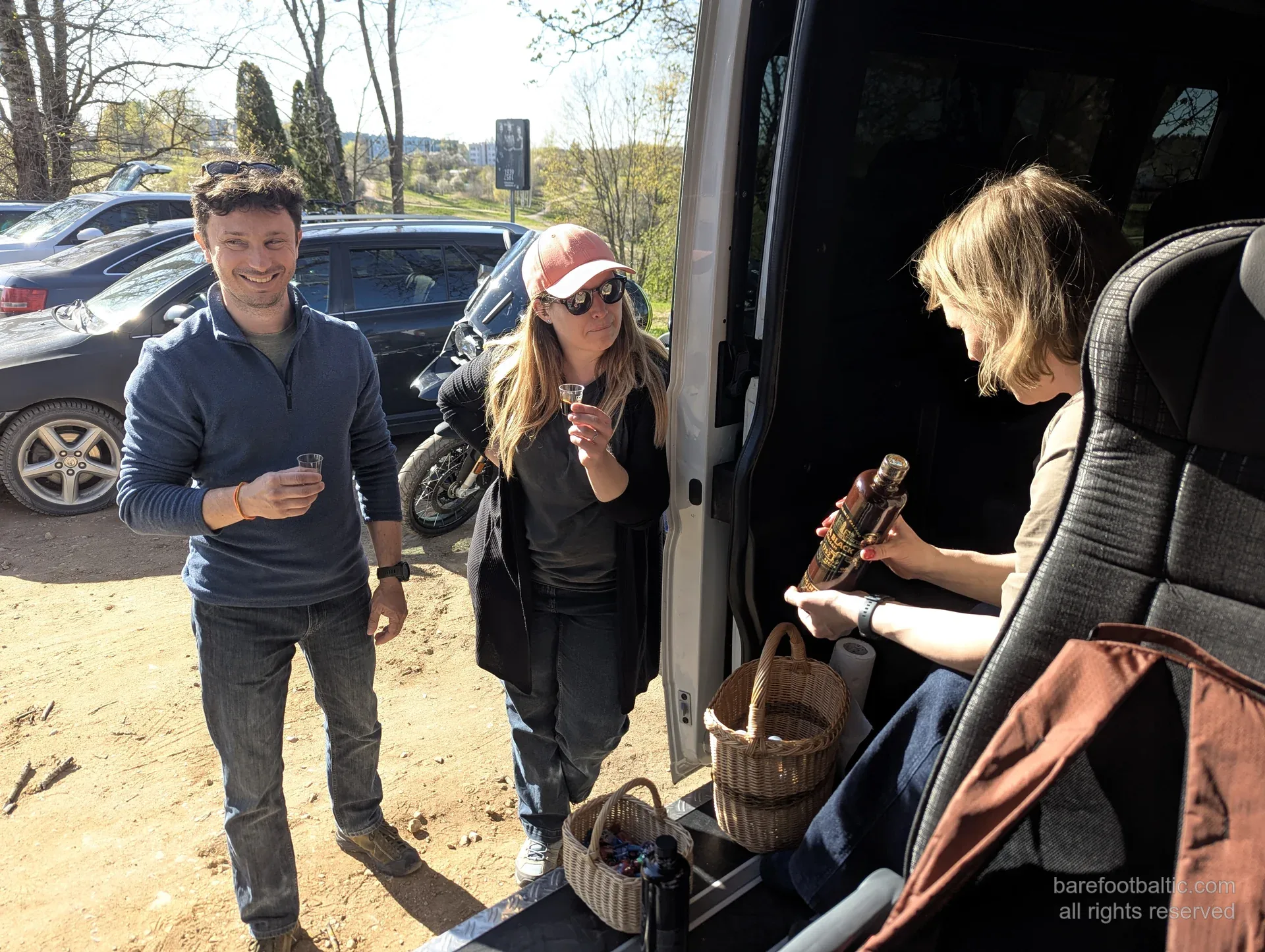
What a great day out. We had the three promised castles, dived into a lot of fascinating history, saw rivers and “mountains” with ski slopes and more. Our guide and driver were knowledgeable and great company leading us through the bakery and introducing us to local (alcoholic) spirits. We would really recommend this company and suggest you look no further for, as I said, a great day out.
Prachtige trip! Start bij schitterenf uitzichtpunt in Sigulda. Ruïnes van Sigulda castle. Wij hadden mazzel dat we met kleine groep waren, dus konden in Turaida ook langs badhuis met traditioneel gedroogde kruiden&planten voor we naar het kasteel gingen. Laatste stop van de dag is Cēsis, wat wij het mooiste kasteel vonden. Gids legt super veel uit over Letland en de bezienswaardigheden. Extreem behulpzaam. Telefoon cashte aan eind vd trip. Zijn naar 2 telefoon winkels gereden om het probleem te fixen. Super lieve mensen en mooie bezienswaardigheden, echt een aanrader!
Sehr schöner Tag mit Daiga. Sigulda und Cēsis sind beide wunderschön und Daiga kennt sich wirklich gut aus, erzählt viel und beantwortet alle Fragen. Die kleine Gruppe war angenehm, kein Stress, kein Gehetze. Die Verkostungen unterwegs waren auch lecker. Können wir nur empfehlen.
Really fun activities and the guides are really friendly and interesting! Had a great time
What a day. Three castles (from the last thousand years), spectacular river and countryside views and a guide in Daiga who is worth many times the tour price. In fact if you are going to book, demand her guiding. She knows a lot, not only because this was her birthplace and the areas visited her backyard, but also she’s made an effort to learn the missing pieces in her knowledge and so can answer a variety of questions you want answers to which might have nothing to do with the trip. And, having said all that, she doesn’t force feed you, she understands that part of learning is quiet contemplation and absorbing the many spectacular views. For instance, who knew in a country with a radio tower higher than its tallest hill, that there were ski slopes and an area known as little Switzerland? She did, and perhaps you should discover some of these gems too.
Excellent tour! We set off from Riga and visited Sigulda along with the Cesis and Turaida castles. It was a full-day tour that lets you explore several history-packed spots in the Latvian countryside. Our guide Daiga was incredibly knowledgeable about the history and truly embodies the country’s culture. Highly recommended if you want a 100% authentic Latvian experience.
Three castles and so much more Don’t bother looking at other trips with other operators. Daiga makes the Sigulda, Cēsis & Gauja National Park trip special. Why? She has organised an almost ideal tour - okay you have to forgive Riga’s peak hour traffic - but you are quickly out in the countryside and into 1,000 years of Latvia’s history as told by the castles and countryside. Daiga knows her facts and shares only the interesting ones at the various stops and in between times. And not just about castles, her knowledge is broad - test her. Lunch is at your own expense - but when Daiga asks you what you want choose Cēsis ‘Buffet’. It’s where the locals eat, there’s a good choice, it’s all very tasty and the only shock is the price (cents and pence, not pounds and dollars). No wonder the locals like it.
Excellent tour! Enjoyable day, led by the touring company’s knowledgeable owner, in which we toured a castle and saw the ruins of two others. We ate (a delicious) lunch at an authentic restaurant, and spoke with a bakery owner and sampled her wares. We also walked a bit in the national park. Daiga provided a running commentary on topics including Latvia’s history, the natural flora, fauna, and environment, life under the Soviet occupation, and current issues in Latvia. We highly recommend this tour!
I thoroughly enjoyed this trip from Riga and would highly recommend this tour company. Daiga was an exceptional guide with an impressive depth of knowledge about Latvian history, providing fascinating insights at every site we visited. Having taken numerous tours through GetYourGuide, I can confidently say this was by far the most engaging experience I’ve had. The itinerary offered an excellent balance of castles, charming small-town experiences, and beautiful natural scenery, with a pace that felt comfortable and well-planned throughout the day. An outstanding tour that exceeded my expectations.
It was an excellent experience, traveling with the barefootbaltics team of Madhu, Daiga and Catherine. They went above and beyond the normal tour guides norms, when my wife had a sudden bout of coughing while traveling in the van. Madhu personally took it upon himself to get my wife some soothing herbal tea and cough lozenges at the next stop. So, I would say that they are not just competent, but also caring. That to me makes for a great company to travel with.
一切都很棒....导游很专业...同时又有一定的人文关怀....sigulda那家自助餐很好吃...可能是我最满意的欧洲餐厅...导游几乎全程陪同参观...这一点我很满意...任何问题也可以随便问...反馈很好....这家旅行社目前规模很小...所以能够做出一些不那么常规的事...我是指好事...比如说没有最低发团人数的限制....总的来说,会回购:)
What an awesome day with Madhu and Daiga of Barefoot Baltic. It was a lovely tour and we learned so much. We visited three castles in a day: Sigulda, Cēsis & Turaida. It was helpful to do this on a guided tour that takes care of the logistics and can explain how the three locations tie together and how the different buildings at each site reflect different eras. We selected a full day tour, so the pace at each location would not be rushed. We enjoy climbing the towers and looking at the exhibits. Daiga was very flexible with adjusting to the areas where we had the greatest interests. Daiga, shared a lot of Latvia's history and culture, including a dance and black balsam tasting. In the car rides in between locations, we had some very interesting discussions on more recent Latvian history and the current environment. The travel time passed quickly. Daiga also helped us with so many nice pictures for our memories. We had a great time and highly recommend this tour.
Our Sigulda day with barefootbaltic team was great fun. Thanks so much for the unscheduled photo stop near the rapeseed field, the pictures will soon go up in my living room mantle :) Lovely day out and a real highlight of our trip. Thanks so much.
We are so pleased to have taken this trip with Daiga and Barefoot Baltic. The communication before our trip was clear with an easy pick up in Riga. During the drive Daiga shared much about the history and rich culture of Latvia. We learned so much! The small group size meant the experience was intimate and engaging. The knowledge and care that was placed into planning the trip was clear. Daiga and staff were warm and friendly so it felt like we were traveling with dear friends! We were not expecting to learn a Latvian folk dance but we did! Something that will be a much shared memory! The sights were memorial, and Daiga shared which vendors sold locally made items so we felt we were supporting local artists and artisans with our purchases and bringing back unique souvenirs. We also appreciate the answers to our questions and recommendations for other experiences and restaurants in the area. An amazing trip that we are so glad we took!
Wow - I cannot recommend Barefoot Baltic enough. I was fortunate enough to experience the Cēsis - Sigulda - Turaida castle tour with Daiga.
Daiga was very informative, explaining the history of Latvia. I was provided context to the places of interest we visited, their significance and to the country of Latvia/region overall. If you are in Rīga and want a beautiful tour outside of the city then this is an excellent option for you. Thank you for an excellent day. Thank you from New Zealand
Wir waren eine Gruppe von 9 Personen und Daiga organisierte uns eine deutschsprachige Reiseleitung. Bei jedem Stopp führte uns ein weiterer deutsch sprechender Guide. Der gesamte Ausflug war perfekt organisiert, Daiga und ihre Kollegin waren sehr gut vorbereitet - auch über Österreich. Der krönende Abschluss war die Black-Balsam-Verkostung von Daiga im Schlosspark Sigulda. Sehr empfehlenswert!
친절한 가이드와 드라이버 덕분에 너무 즐겁게 보냈습니다
Fabulous trip to Cesus, Sigulda and Turaida castles with Daiga, Sofia and Madhu as Drivers and Guides. By far one of the best tours we've been on. Extremely informative and with additional extras like a tour to a bakery and a taster of black balsam. We couldn't have asked for more. I suggest booking with Barefoot Baltic and experiencing for yourselves.
This was a very well coordinated trip. We were collected from meeting point promptly and introduced to our driver and guides, Daiga, Sofia and Madhu. We were made to feel at ease from start and a comprehensive itinerary was explained. This could be adjusted to our needs. Our guides were very knowledgeable and informative and we learnt much about Latvian culture and history as well as visiting wonderful sites. The team went a ove and expectations. We highly recommend.
We had a fantastic day visiting Cēsis (+castle), and Turaida and Sigulda castles. The sites were visually stunning and allowed opportunity to learn about Latvia's history all the way back to 1200. Daiga and Sofia were fantastic. Both were extremely friendly and knowledgeable, and answered our questions with great detail. Even during the minibus journey Daiga gave us lots of insight into many of Riga's buildings and Latvian traditions. The latvian bread and liqueur we got to try was also impressive and a nice addition to the day. Overall I would absolutely recommend this tour if you have any interest in Latvian history or medieval sites in general.
Super journée plongée dans l’aire médiévale ... Daiga notre guide a été géniale, un puit de connaissances et d’infos, plus un picnic avec dégustation improvisé dans un château... bref une expérience exceptionnelle
La guía Diga excelente, dió explicaciones muy completas y claras, nos acompaño a todos los lugares, tuvo muy buena disposición. Alcira y Dino. Argentina.
This was a wonderful way to see more of Latvia, getting out of the city and into the beautiful countryside. We had a few stops, all designed to show us wonderful vistas, lovely towns and ancient castles. Daiga was informative and entertaining, adding her local perspective to what we were seeing. It was just the 2 of us this day and we enjoyed close personal attention ( and a delicious lunch!) Thanks Daiga- it was lovely meeting you both. I would thoroughly recommend taking this trip!
Awesome!! Daiga was amazing and super knowledgeable. Transportation was clean and smooth. Lots of history and a unique Latvian experience. Great value overall. Highly recommend!
The trip was very well planned and intentional. And Daiga and Sofija were amazing guides - very friendly, knowledgeable, and flexible. They were an absolute joy to explore the area with.
Wir waren eine Gruppe von 9 Pers., Daiga organisiert uns eine zus. deutschsprachige Reiseleitung, welche perfekt vorbereitet war - auch zu Österreich und immer wieder den Vergleich Lettland-Österreich zog!! In Cesis und Turaida wurden wir auch von einer deutschspr. Guide durch die Schlösser geführt. Die Brotverkostung ausgezeichnet. Der krönende Abschluss war in Sigulda die Black Balsam-Verkostung von Daiga. Ein langer, aber sehr beeindruckender Tag.
날씨도 좋지 않았고 혼자 참여하는 투어라 혹시 취소되지 않을까 걱정했는데, 예정대로 진행해 주셔서 정말 감사했습니다. 영어가 익숙하지 않아 이동이나 소통도 걱정이 많았지만, 가이드님께서 처음부터 끝까지 친절하게 설명해 주시고 세심하게 배려해 주신 덕분에 불편함 없이 편안하게 투어를 즐길 수 있었습니다. 체시스성, 투라이다성, 시굴다성을 둘러보며 정말 환상적인 하루를 보냈습니다. 아름다운 중세 성들을 방문하며 라트비아의 역사와 문화를 쉽고 흥미롭게 배울 수 있었고, 이동하는 동안에도 리가의 건물과 현지 전통, 다양한 이야기까지 들려주셔서 여행이 더욱 뜻깊었습니다. 혼자 참여했음에도 전혀 외롭거나 어색하지 않았고, 오히려 더욱 세심한 배려를 받으며 처음부터 끝까지 기대 이상으로 만족스러운 시간을 보냈습니다. 라트비아의 역사와 중세 유적에 관심이 있는 분들이라면 자신 있게 추천하고 싶은 최고의 투어입니다. 잊지 못할 최고의 추억을 선물해 주셔서 진심으로 감사합니다!
This was one of the highlights of my time in Latvia. From the smooth logistics to Daiga’s warm and knowledgeable guidance, everything was well organized from start to finish. Visiting Sigulda, Turaida, and Cēsis on a guided tour made it easy to appreciate the history and how the three sites are connected. The pace was relaxed, with plenty of time to explore each castle without feeling rushed. I especially enjoyed learning about Latvian history and culture throughout the day. There were so many thoughtful extras, including local tastings and cultural insights, that made the experience feel much more personal than a typical sightseeing tour. I also really appreciated Daiga taking photos throughout the day and sharing them afterward. I highly recommend this tour to anyone visiting Latvia.
As Guias atenciosas e pontuais. Dominam as informações e sempre solicitas para conosco. O Tour foi completo e sem correria, bem dimensionado e planejado, tanto no tempo como no decorrer das atrações. Ratifico a indicação!
bardzo fajna wycieczka, kameralna, dużo informacji, dziewczyny postarały sie aby czas upłynął w przyjemnej atmosferze na zwiedzaniu, tańcu, jedzeniu, brawo
Tour meraviglioso alla scoperta della regione lettone dei castelli. Le nostre guide Daiga e Sofia erano preparate, accoglienti e simpatiche. Se siete a Riga prenotate questa escursione.
wszystko bylo super
An amazing experience which was crammed full of lots of different things. A long day and I was tired at the end but it was worth it. Daiga and Sophia were excellent and made sure that the day was well paced. A good mix of places to visit and learning about the history of Latvia while travelling in the minibus. My highlights were the view from the viewpoint and visiting Cēsis. Highly recommended 🥰
Γεια σας! Η εμπειρία μου ήταν απίστευτη όλοι ήταν πολύ φιλικοί και εξυπηρετικοί. Η ξενάγηση έγινε από δυο γυναίκες και ξεκίνησε με πληροφορίες για την Ρίγα. Μετά κάναμε παρά πολλές στάσεις και είδαμε διεξοδικά 3 κάστρα, μια πόλη και επίσης κάναμε και άλλες δραστηριότητες όπως να δούμε θεές δοκιμές ψωμιών και κάτι σαν μικρό πικ-νικ. Σίγουρα αξιζε τα χρήματα του και οι κοπέλες ήταν διαθέσιμες να μας εξηγήσουν τα πάντα. Πολύ ομορφη εμπειρία συνιστω ανεπιφύλακτα να πάτε, και είναι κάτι που σίγουρα θα μου μεινει από την Λετονία🇬🇷🇱🇻💕💕
this was one of the best trips I've ever done. the guides were timely and very personal. I enjoyed myself so much bc of that. each stop had small local additions like bread or balsam tasting or a latvian traditional dance and really made the trip meaningful. Time was taken at each stop, we were not rushed and got a thorough explanation of what we were seeing. I could not recommend more.
Прекрасный солнечный день только украсил замечательный тур с нашим гидом милой Софией. Мы получили от нее очень много интересной информации об исторических местах, что мы посетили, узнали о традициях, фольклоре, обычной жизни местных народов в разные периоды существования Латвии. Мы искренне рады, что нашли турфирму именно Дайги и Софии. Они - молодцы
I had a wonderful time during the 10-hour tour visiting Sigulda’s Old and New Castles, Cēsis Castle, and Turaida Castle. Our two guides, Daiga and Sofia, were incredibly knowledgeable; they constantly engaged our curiosity and shared a wealth of information with us. Tasting Riga Black Balsam—both the 45% and 30% varieties—was a unique experience; it felt more like taking medicine than drinking alcohol. These two beautiful guides are truly outstanding—they succeeded in making us, visitors from faraway Korea, fall in love with Latvia. I highly recommend this tour to everyone, including Korean travelers; it is a truly worthwhile experience.
Vi deltog 3 generationer på turen. Guiderne var fantastisk hjælpsomme og vidende. Vi fik mange spændende historier og også et ægte Lettisk eventyr på turen. Besøg på bageri var hyggeligt med en god fortælling fra bageren selv, Besøg i den gamle kirke var interessant og gåtur gennem skov til fantastisk udsigt til slot og flod var smuk og grøn og de tre slotte vi så var imponerende og gav en virkeligt god indsigt i områdets historie. Fordi vi kun var 7 deltagere i minibus var der tid til at lære hinanden at kende og guiderne kunne vores navne. Vi mødte gode folk fra Japan, Spanien og Liverpool og naturligvis vores søde lettiske guider og vi tre familiemedlemmer: mormor, mor og søn havde alle tre en dejlig tur. En lang dag med mange indtryk, men der var lagt pauser og køreture ind så vi ikke blev overvældede. Turen blev modificeret lidt så vi nåede det hele inden regnvejr landede - det var super flexibelt. Godt planlagt!
El tour guiado a Sigulda, Cēsis y el Parque Nacional Gauja con las guías Daiga y Sophia fue una gran oportunidad para conocer más sobre la historia y tradiciones de Letonia, y bellos paisajes y castillos fuera de la capital. Las guías tienen un trato muy amable y gran manejo respecto a datos históricos, los que compartieron con el grupo, junto a anécdotas e historias personales que sirvieron para generar confianza y un buen ambiente entre todas las personas que participamos en el tour. La experiencia contempla un tiempo para almorzar -no incluido en el precio del tour- y tuvimos la oportunidad de probar diferentes variedades del Bálsamo de Riga y dulces tradicionales letones. Al final del tour, Daiga y Sophia resolvieron algunas dudas y nos aconsejaron sobre lugares para visitar en Riga. Nos quedamos con una muy buena sensación por la buena experiencia vivida.
Fue una experiencia muy buena. Las guías son excelentes y muy amables. Sin duda repetiría la experiencia. En especial me gustó que nos dieran recomendaciones sobre otros lugares que visitar en la ciudad y también su trato amable y cordial durante todas las actividades; en especial, cuando compartimos la comida.
I thoroughly enjoyed this trip. Daiga and Sofia were very nice guide. They were very friendly, knowledgeable and helpful. During the drive Daiga shared much about the history and culture of Latvia. I had a wonderful day visiting Sigulda, Cesis and Turaida castles. I had a great time and highly recommend this tour.
Ik wilde tijdens mijn verblijf in Riga ook graag de omgeving buiten de stad ontdekken. Na verschillende opties te hebben bekeken uiteindelijk gegaan voor deze tour en daar heb ik zeker geen spijt van. Ik had verwacht dat we met meer zouden zijn omdat er toen ik instapte maar 1 andere toerist was. Doordat het vroeg in het seizoen was bleek dat niet het geval en had ik bijna een privé tour. Het was een mooie route en we hebben onderweg al veel gesproken over Letland, de geschiedenis en de omgeving waar we reden. De stops op de route waren zeer de moeite waard en doordat we met z'n tweeën waren hadden we de mogelijkheid om veel zelf aan te passen en langer op sommige plekken door te brengen. Bij het kasteel hadden we extra geluk, er was een middeleeuws festival met verschillende activiteiten en gezellige kraampjes. Ik heb een heerlijke dag gehad en kan de tour zeker aanraden!
Totul a fost foarte bine!
It was an action packed day. Our guide Daiga and driver Sophie were amazing. There was a good balance of information, we visited so much and were given plenty of opportunities to explore the places we visited & ask questions to help us gain a better understanding of Latvian culture and history. Daiga was very helpful in making lunchtime meal selections in the canteen style restaurant so we could experience Latvian food with the locals We were a diverse international group and Daiga was very adept in getting us to talk to each other and bond during the day so there was a very nice atmosphere throughout the day. Highly recommended and well worth the money.
Danke für den tollen Ausflug. Cesis hat mit besonders gut gefallen. LG
Une excursion très ludique, parfaitement organisée autour de l'histoire de villes fascinantes. Les explications étaient intéressantes et permettaient de découvrir le patrimoine de manière agréable. La dégustation dans une boulangerie locale apporte une touche authentique et pleine de charme à cette activité. Une très belle expérience que je recommande !
Excursión recomendable. Se visitan muchos sitios en un día. Muchas explicaciones por parte de la guía. La comida no estaba incluida pero pudimos probar platos de la gastronomía letona.
這些地方大眾交通不是到不了,但錯過一班車通常都要等30~60分鐘,在加上交通時間,參團絕對是一個好選擇! Daiga and Sofija非常友善也樂於分享,基本上回答了我們大部分的問題。參觀景點同時認識拉脫維亞的歷史跟風俗,而不是只有拍照打卡!我們也嘗試了當地麵包坊的麵包跟拉脫維亞的地方餐廳。非常棒的一次經驗!非常推薦!
Wonderful!
Ein großartiger vielseitiger Tagesausflug! Mit den tollen Tourguides Daiga und Sofia dürften wir, in eine sehr nette und entspannte Atmosphäre, lettische Geschichte, Kultur, das Essen und Traditionen kennengelernt haben. Wir erhalten auch viele wertvolle Tipps für die Lettland-Reise! Absolute Empfehlung!
Daiga y Sophia fueron muy amables y profesionales. Hicieron de la excursión un día muy divertido e interesante.
Todo fenomenal, buena guía y buena organización.
Ова тура представља апсолутни врхунац организације и теренског обиласка. Наш водич, Даига, убедљиво је најдивнији и најкомпетентнији водич са којим сам до сада имао прилику да путујем. Њено знање је фасцинантно, а начин на који презентује чињенице је изузетно занимљив и инспиративан. Посебну, аутентичну вредност тури дао је тренутак када нас је директно учила традиционалним летонским фолклорним играма. Возач је такође био на највишем нивоу професионализма, омогућивши нам сигуран и беспрекоран транзит током целог дана. Сам темпо екскурзије је прилично интензиван, али је дивно избалансиран и пружа искуство које апсолутно вреди сваког уложеног динара. Као савршен логистички додатак, ресторан у Сигулди у ком смо направили паузу је феноменалан – нуди врхунску, веома укусну храну по изненађујуће ниским ценама. Свеукупно, беспрекорно изведено путовање које најискреније препоручујем.
Our guide Daiga was very knowledgeable about the places we visited and kept us informed along the way. The breads we tasted were very nice and helped us to understand how the local bread is made in Latvia. The added stop which included tastings of the local liqueurs and various chocolates was a surprise and really enjoyable. Lunch included many choices and prices were very reasonable. Wish it hadn’t rained but the weather did not stop us. All in all, a very worthwhile trip and learning was fun!
La guida è stata molto brava, preparata e gentile. Consiglio vivamente l’esperienza, vale assolutamente il costo.
Gostei muito de nossa guia Daiga. Ela é muito competente, agradável e dedicada ao bem estar do grupo
Es war ein toller Tag. Daiga hat uns mit vielen spannenden Informationen das Land und ihre Begeisterung für ihre Heimat näher gebracht. Sie ist auf jeden Teilnehmer eingegangen und hat sich um die Bedürfnisse jedes einzelnen gekümmert, um allen einen unvergesslichen Tag zu ermöglichen. Rundum eine Tour mit garantiertem Wohlfühl—Faktor.
Perfect
One of the best tours from Riga! Our guide, Raiga, was very kind, knowledgeable, and spoke excellent English. The minibus was very comfortable. We had a lovely time and learned a lot of history about the castles. We also enjoyed lunch at a local restaurant, where we experienced authentic Latvian cuisine with a delicious three-course meal.
Беше прекрасно! Благодаря на невероятният ни екскурзовод Daiga,която направи денят ни незабравим. Благодаря, Дaiga!
Our guide for the day, Daiga, was very knowledgeable and keep the day moving along at a great place as we visited many amazing sites. Cesis is such a quaint and beautiful town. The castle there is amazing. Sigulda has many sites to see around its winding river. The town was very informative with Latvian history and facts. I really enjoyed this entire day and I would recommend. Definitely wear goid walking shoes, you will get some exercise in
Everything was even better than expected. Great value and entertaining.
Great tour, great guide and great group:)
Wonderful trip that surpassed our expectations. Daiga is an excellent guide with a great sense of humour and a wealth of knowledge. We are so glad we made this trip and got to see some interesting parts of Latvia outside of Riga. The driver was courteous and helpful. This was definitely a great choice.
I was very happy with this tour and the guide and would highly recommend it!! The guide is very informative and fun! I really like the small group size of this tour and the sites were a must see if you're visiting Riga. The lunch location was delicious and gave you a chance to try many different dishes at very low prices. All in all - a perfect tour!!
First visit to Latvia and we really wanted to see the castles and countryside. Touring with Barefoot Baltic was the perfect way to do this! Our day trip to Sigulda, Cesis and Turaida was a wonderful mix of towns, castles and countryside. Our guides, Daiga and Sofia, were incredibly knowledgeable and we appreciated learning about Latvia through them. We liked the small group size. We brought our 13 year old son, who loved it. We were also joined by a younger couple and a single traveler and the trip was enjoyable for all. There were nice added touches like local treats, a fantastic (optional) coffee stop and a good local lunch stop. We saw a lot in one day but the pace never felt too rushed. It was just right. The logistics were easy too- easy booking and communication, two central Riga pickup options, and a comfortable bus. We thoroughly enjoyed this day adventure.
We had a truly mystical day, castle hunting, sight seeing and bread tasting in the layered historical land surrounding Riga.
Our tour guide Daiga, from Barefoot Baltic, is a local treasure. She's full of energy and a vibrant willingness to share her authentic knowledge of the local history, mythology and cuisine. There was a soft rain falling and a mist rising throughout the day but nothing dampened the spirit of our guide as she motivated us to climb the final medieval tower on our tour to witness the extraordinary beauty of the vista that unfolded.
Slainte 👍 Mog and Bobby from Ireland.
I really enjoyed the full day. It was informative with a lovely pace. The guide (Daiga) was excellent. She was clearly very knowledgeable about the history / geography / heritage of the areas in question. She was also very warm and patient. The visit to the bakery was a highlight (amongst many) for me. The food / coffee stops were also well selected (Good value and tasty). The transport was excellent. I have travelled extensively over 30 + years and I have to say that Barefoot Baltic is a fantastic choice. The Riga Balsam and delicious fudge was the icing on the cake for me. I’ll be back for much more. Thank you!!!! Bobby McCormack
Daiga and Modhu showed us gems of Latvian history from long ago to present day. We learnt a Latvian folk dance on the grounds of Turaida Castle, and about the Turaido Rose,a true story of a woman about to be brutally wronged. She engineered her own death to escape. In Cesis we saw a bread maker, a turner craftsmen and a historian. They all shared their skill and knowledge with passion and clarity. I could go on and on but mostly I want to say we had a full day packed with sights to see which I would thoroughly recommend.
10/10, Absolutely fabulous.
The tour took us around the charming town of cēsis and sigulda, as well as seeing 3 beautiful castles with a genuinely interesting and insightful commentary from two wonderful and pleasent tour guides.
Each of the castles are an amazing must-visit, and the views from Turaida castle (among many other spots on the tour) are breathtaking!
In the town of cēsis there is a lovely coffee shop we stop by, as well as a traditional baker where we tried various breads (all delicious!)
((There are also plenty of opportunities for great pictures!!))
It is without a doubt the highlight of our holiday, and a memory im certain I will hold forever 😁🥰
Thank you Daiga and Sofia!
A fantastic small-group tour of Sigulda, Cēsis & the beautiful Gauja Valley! Booking directly was easy and made the experience even more personal. The scenery was stunning, the history was fascinating, and a special thanks to Diaga for being such a friendly, knowledgeable guide who made the day truly memorable. Highly recommended!
Hicimos una visita de la ciudad y una excursión a Sigulda, Cesis y Turaida. Laura, fue nuestra guía. Ha sido una experiencia fantástica. Lo recomiendo. Nos llevamos un grato recuerdo de Letonia
Una excursión que te permite aprender un poco más de la historia de Latvija. Su época medieval, con paisages, castillos y leyendas, y con una gran guia, que hace que sea una gran experiencia.
El pueblo de Cēsis, la cata de diferentes tipos de pan artesanal, y mucha mucha naturaleza.
No os lo perdais 😉🤗
Tour absolutamente aconsejable aunque no se tenga buen nivel de inglés. Daiga, la guía, tiene gran facilidad para ajustarse al nivel y pasar información muy interesante sobre la historia, las costumbres y otros aspectos prácticos de la vida en Letonia, con especial atención al parque nacional del Gauja. Las 10 horas fueron muy amenas con visitas a los 3 castillos y a una panadería, paseos por el parque, comida rica a buen precio, degustación de licores letones, participación en un baile tradicional y terminar con el descubrimiento del ritual propio de la sauna. Buena organización y trato cercano y amigable por desarrollarse en grupo reducido.
Daiga, labākā gide! Ļoti pozitīva un jauka persona, Cēsīs biju bijusi vairākkārt, bet, pateicoties Daigai, uzzināju ļoti daudz jauna un interesanta. Daigas “tūrē” pa Cēsīm bija iekļauta arī degustācija vietējā maizes ceptuvē, kur sagaidija pati ceptuves saimniece un sīkāk izstāstija par maizes cepšanas procesu un maižu veidiem.
Bija sajūta, ka esam Cēsīs nevis ar gidu, bet ar labu draudzeni :)
Paldies
Der Tagesausflug mit Barefoot Baltic in die Lettische Schweiz (Gauja NP) war eine willkommene Abwechslung zum Stadt Trubel Rigas. Da Barefoot Baltic noch neu am Markt ist wurde die Tour trotzdessen das wir nur zu zweit waren durchgeführt. Neben den schönen mittelalterlichen Burgen und deren Geschichte hat Daiga uns eine gute Einführung in lettische Kultur gegeben. So konnten wir in Cesis beim Bäcker unterschiedliche Roggenbrotsorten probieren oder in Sigulda lettische Snacks und den berühmten Balsam probieren. Madhu hat uns sicher, freundlich und hilfsbereit von Ort zu Ort gebracht, meinen Dank auch an Ihn. Wollt Ihr das etwas ursprünglichere, mittelalterliche Lettland erleben und nebenbei ein Gefühl für Land und Leute bekommen kann Ich eine Tour mit Daiga nur empfehlen!
Abbiamo fatto un bellissimo tour dei castelli medievali della Valle di Gauja. Daiga, la guida, è stata fantastica, non solo preparata ma anche molto gentile, simpatica e dinamica. Per pochi euro ed una giornata intera partite da Riga e vedrete vari luoghi mozzafiato difficili da raggiungere da soli. Esperienza da fare assolutamente!
Grazie Daiga ci vediamo al prossimo tour in Lettonia!
This tour covered lots of ground, taking in Sigulda, Cesis and the Gauja Valley. Both Daiga and Sophia, our guides, were charming, very knowledgeable, and very sensitive to our needs and capabilities. They answered all our queries and gave us the right level of detail. I would strongly recommend this company to give you a fascinating insight into some of the important sights, culture and history of Latvia.
We had a wonderful day tour with Daiga and our driver, Evgeny (I hope I’m spelling his name correctly!), visiting Sigulda, Cēsis, and Gauja National Park.
Evgeny was incredibly kind and attentive throughout the day. He helped us in and out of the van at every stop and always made sure to open and close the doors for us and made us feel like VIPs.
Daiga was a fantastic guide. She took us to three different castles and shared the history behind each of them, along with lots of interesting information about Latvia and Riga more generally.
One of the highlights was stopping at a small local bakery for a bread tasting. We had the chance to try several different types of Latvian bread, including the famous dark rye bread, which was a really fun and authentic experience.
Toward the end of the tour, we also visited a beautiful outdoor sculpture park, where Daiga even taught us a traditional Latvian folk dance. It was such a memorable and unexpected way to finish the day.
Overall, we had a wonderful experience and I would absolutely book another tour with Daiga the next time I visit Latvia. I highly recommend this tour to anyone staying in Riga who wants to get out of the city for a day and experience more of Latvia’s history, culture, and beautiful countryside.
Really enjoyed the Cēsis/Sigulda/Turaida group tour. Daiga was very responsive since the initial contact. She was also very informative and provided lots of information about the history of Latvia and the castles during the tour, and more. The itinerary was thoughtfully designed and very efficient. We visited 3 castles and the towns in a single day with an easy pace, and still had time for a sitdown lunch, bread tasting and a mini Riga Black Balsams picnic. So delightful. These places are the must see places if visiting Latvia and this tour is the best way to do it. Highly recommended.
We had a brilliant day with Daiga and Sofija doing the '3 castles' tour. It was a really well planned day, including the walk around the town of Cesis, with bakery, and a very well chosen lunch spot. As well as the tours around the castles Daiga added a lot of other background info (Latvian history, food etc) as we travelled between locations. Her English is excellent which was great for us Brits, and she has a lovely sense of humour. For Turaida , Sofija took over guiding duties and did a great job. Thanks for a wonderful, educational and fun day.
Highlights
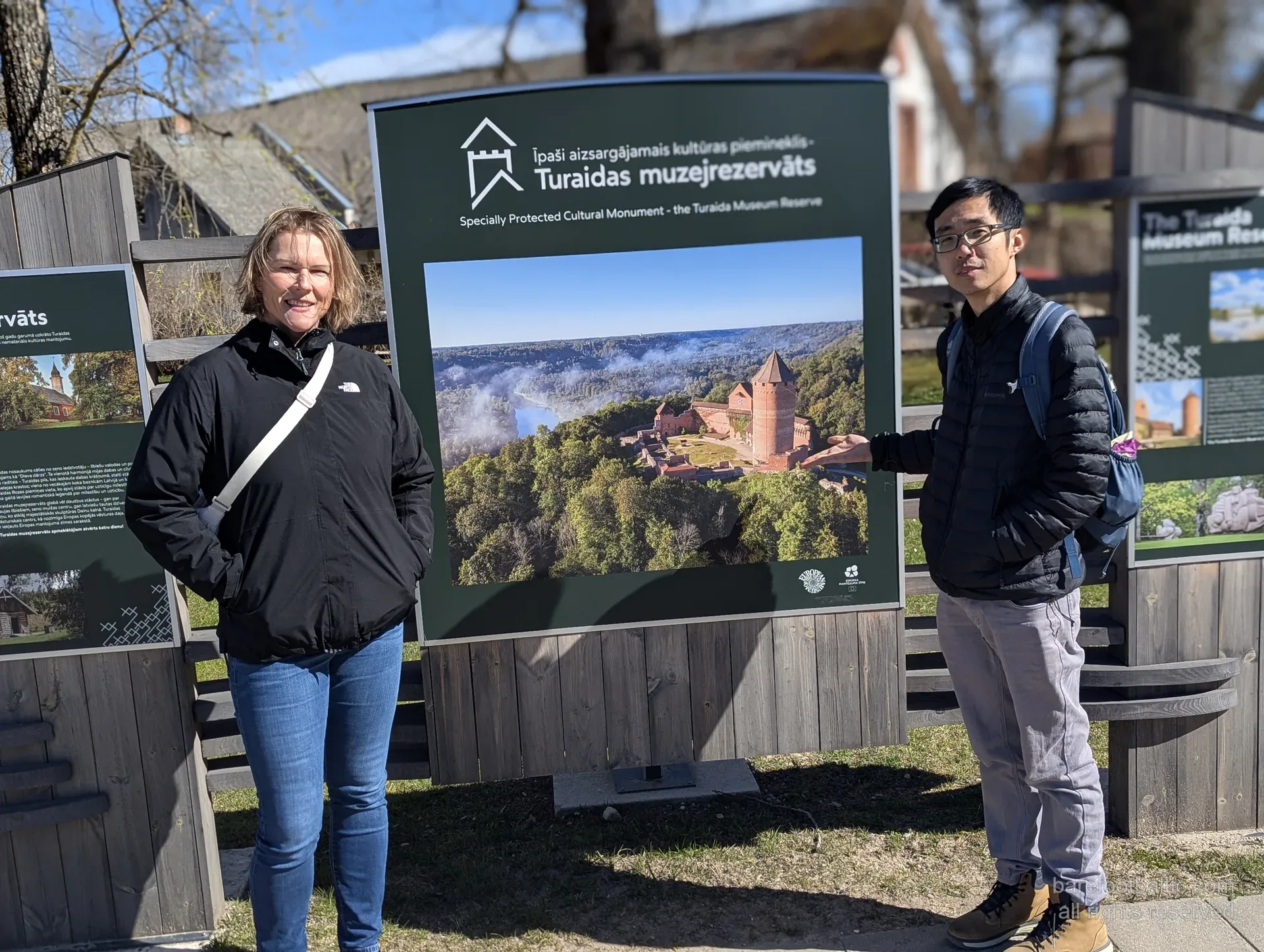
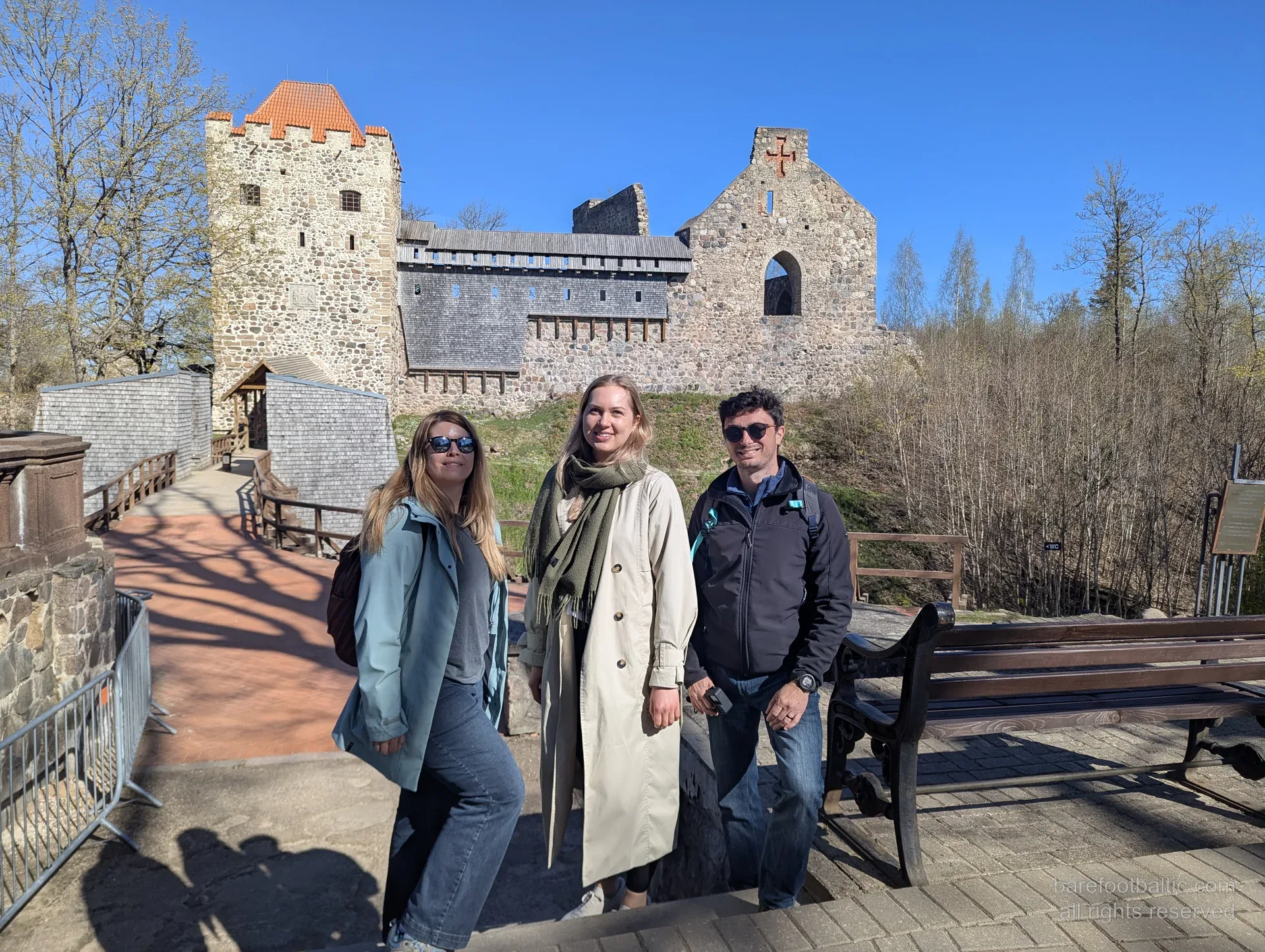
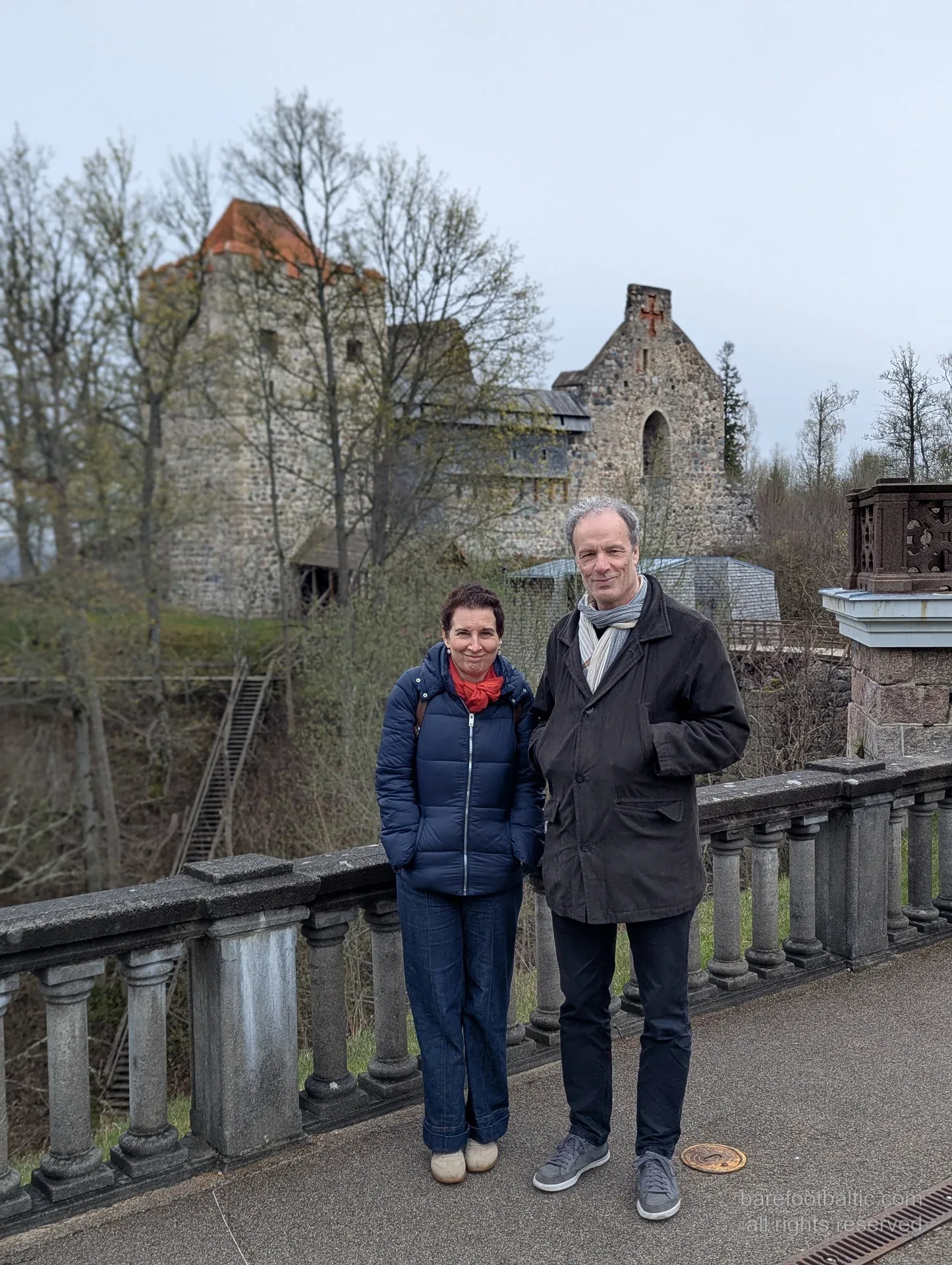
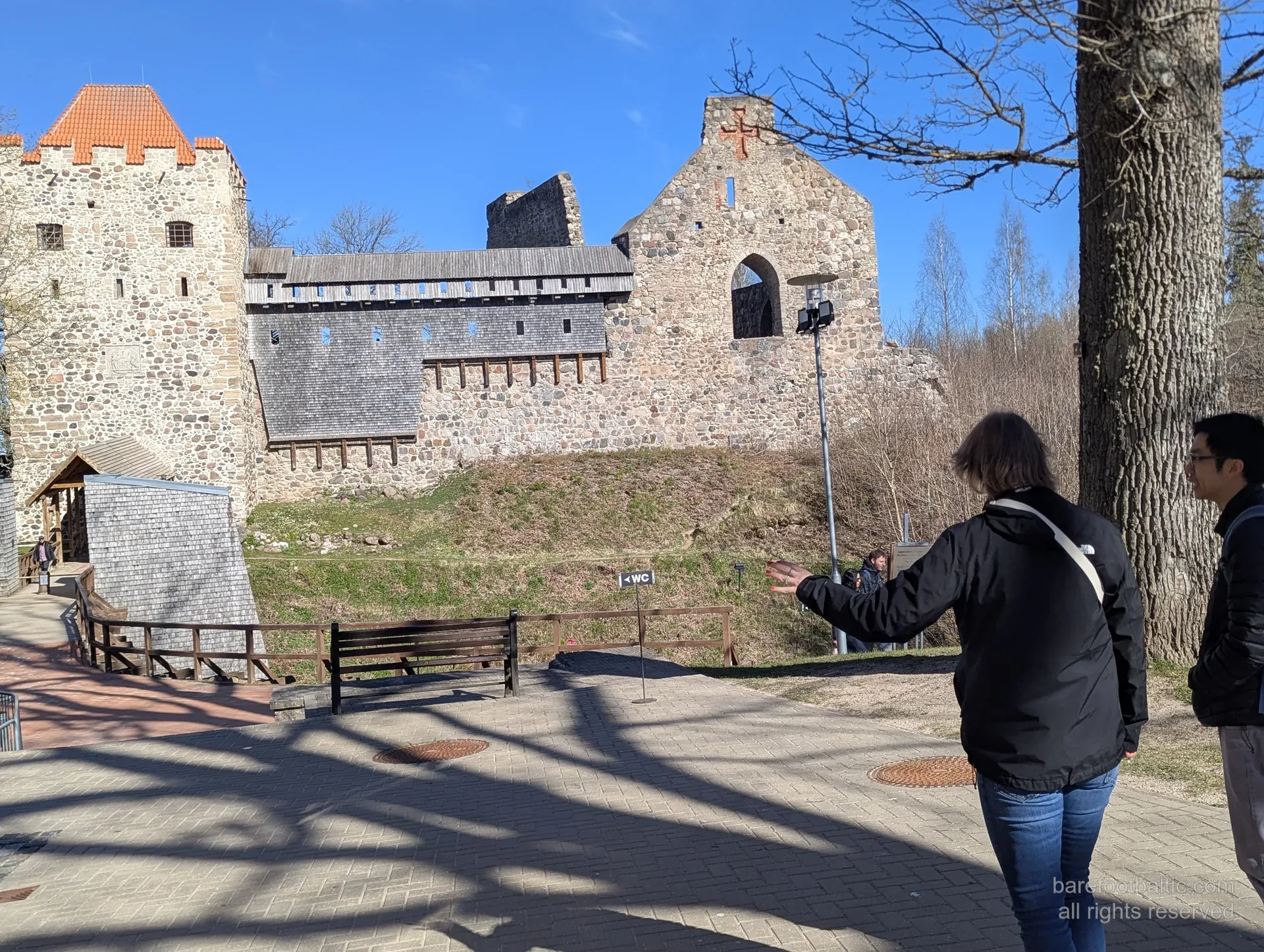
What to Expect
I’d love to welcome you on this excursion. My hope is to give you a well-planned day in Latvia, put together for our small group and well worth your ten hours.
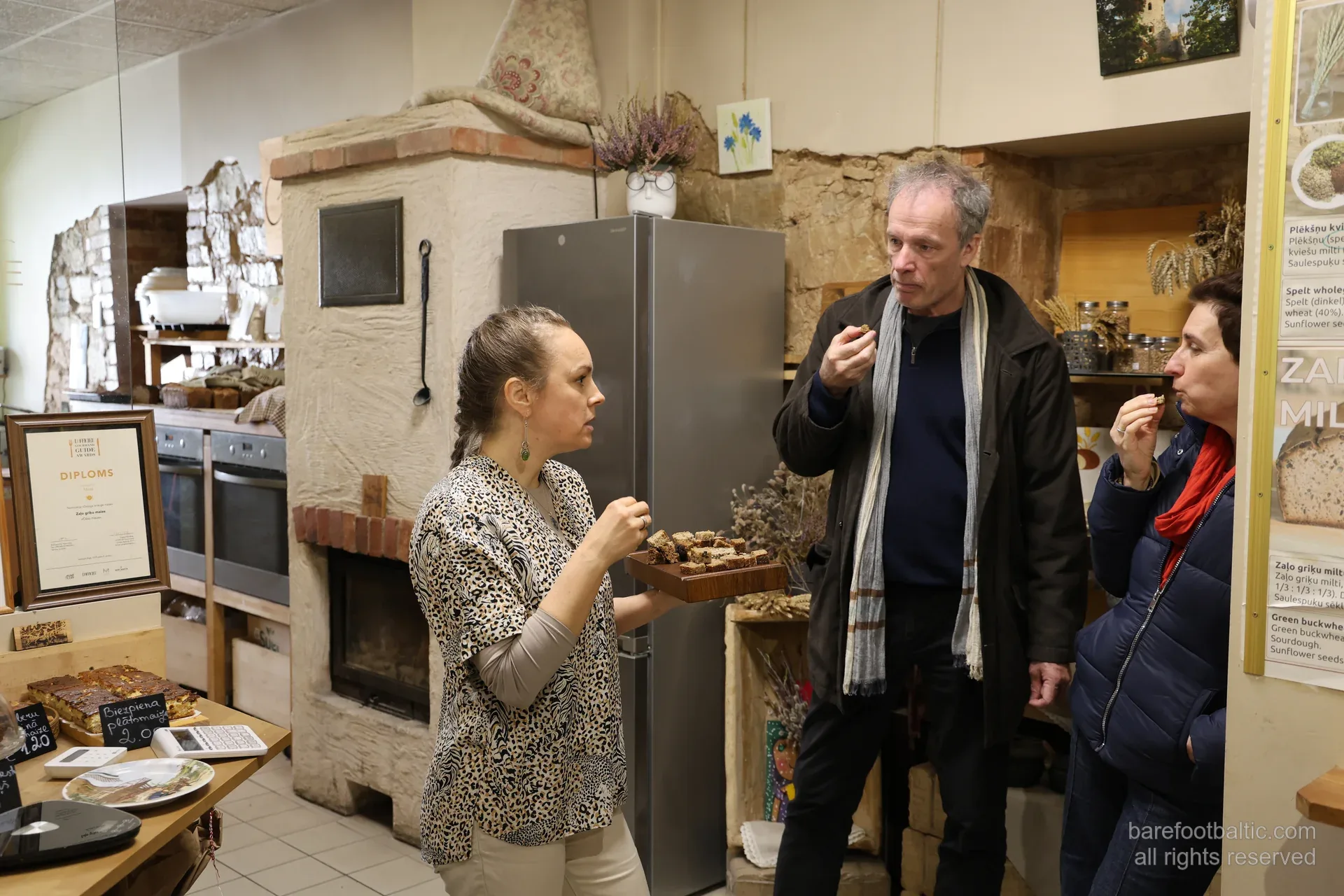
We drive east from Riga to Cēsis. We visit a local bread maker and walk through the old town.
Read more Read less
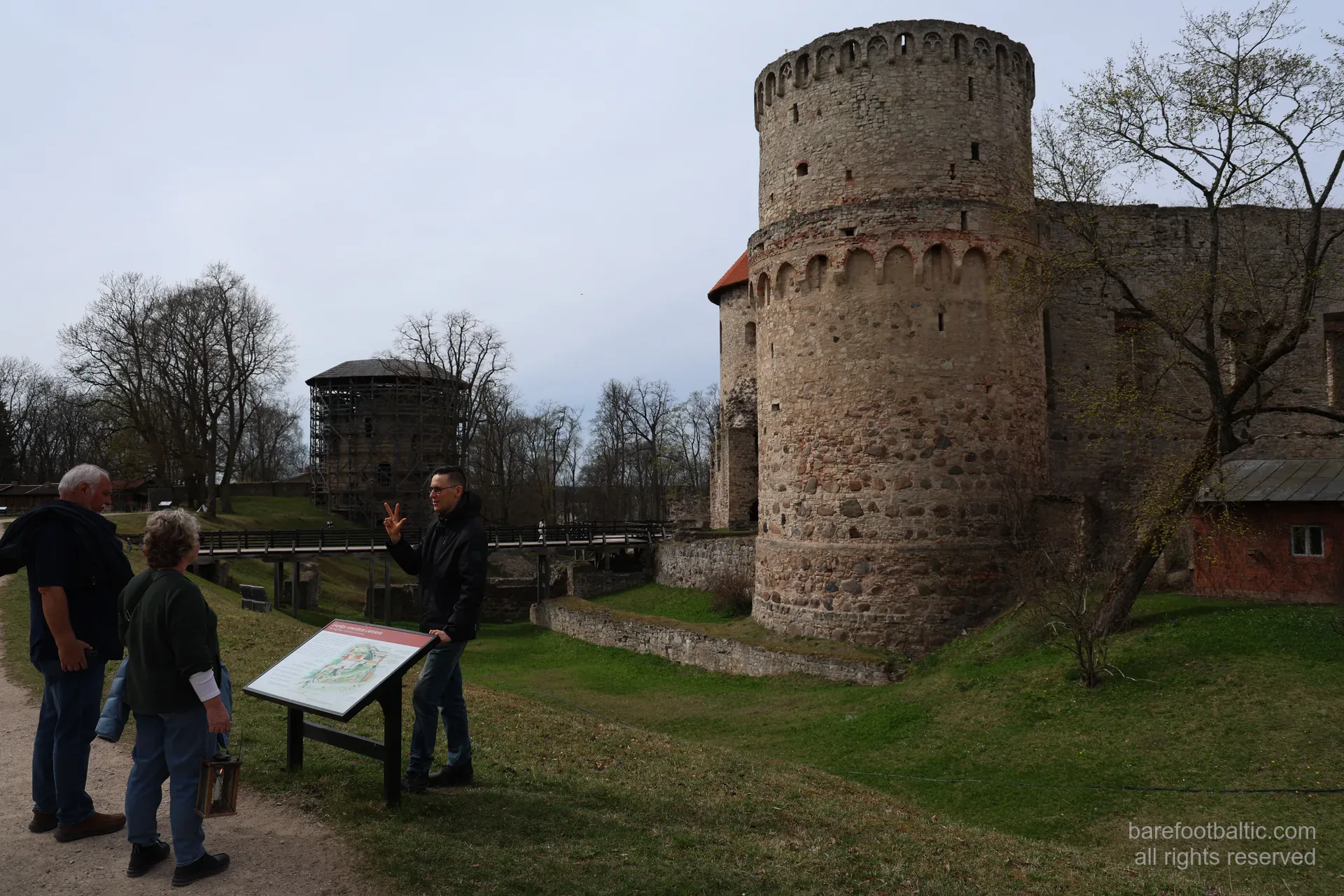
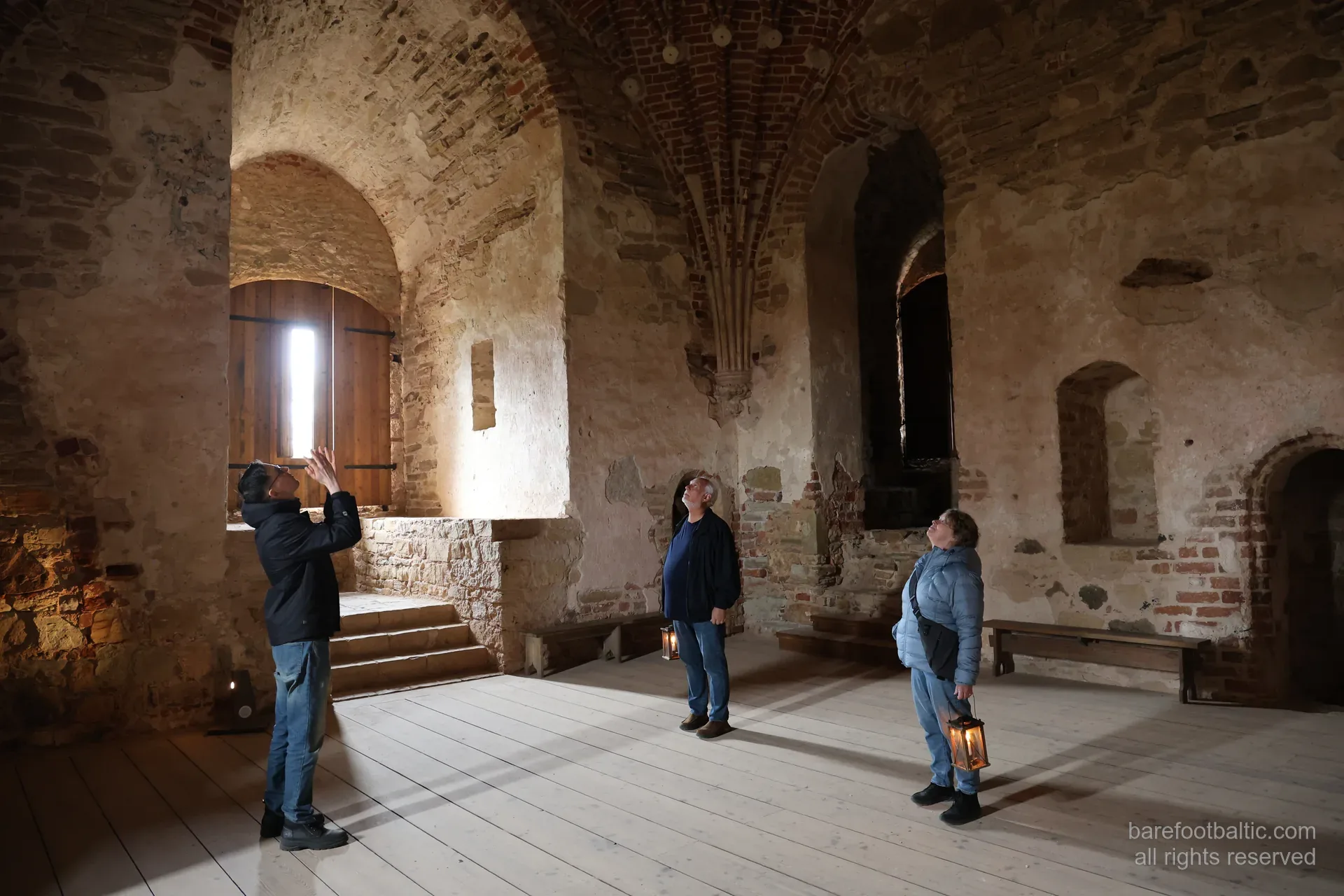
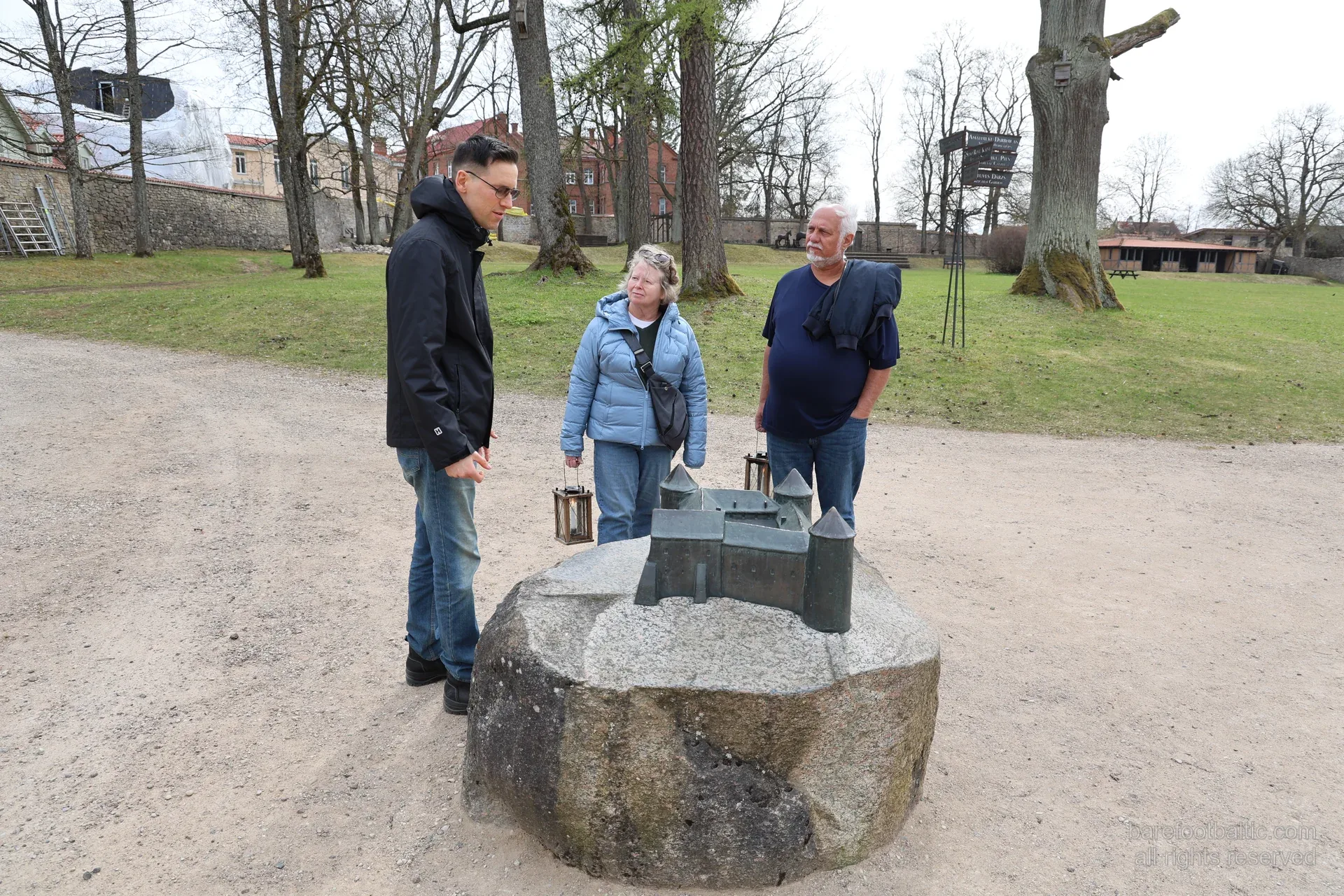
The Cēsis Castle visit itself is about one hour. We explore the medieval part of the castle, each of us carrying a candlelit lantern. I give a running commentary on the history of the castle, from the Northern Crusades that brought the Livonian Order warrior-monks to this region all the way to the arrival of Ivan the Terrible. During the summer months there are additional activities in the castle grounds.
We break for lunch at a local buffet restaurant (you pay for your order directly to the restaurant). If required, I offer assistance in choosing dishes and explain local delicacies on the menu. I’ll also talk about my favourite Latvian drinks and snacks in the van and suggest what to try during your stay in Latvia. When possible, I bring a small complimentary sample of a favourite Latvian sweet or drink for tasting. It isn’t part of the tour price.
After lunch we take a short drive to Turaida Castle, where you can climb the tower for a wide view of the Gauja valley and surrounding area. I tell you about the museum complex and the legend of Roze and Gutman’s Cave. Behind the castle is the Folk Song Hill, a hillside set with 25 granite sculptures by Indulis Ranka, opened in 1985 on the 150th birthday of Krišjānis Barons. Barons collected and published over 200,000 Latvian dainas, short four-line folk verses that hold the memory of an entire culture. This hillside became one of the gathering points of the late-1980s Singing Revolution that led to Latvia’s restored independence in 1991.
Then we make our way to the Sigulda Castle ruins, which are simpler than Turaida. For those who like, there are plenty of souvenir shops in the castle complex, including a cafe that does a cacao ceremony, which has become popular in Riga this year.
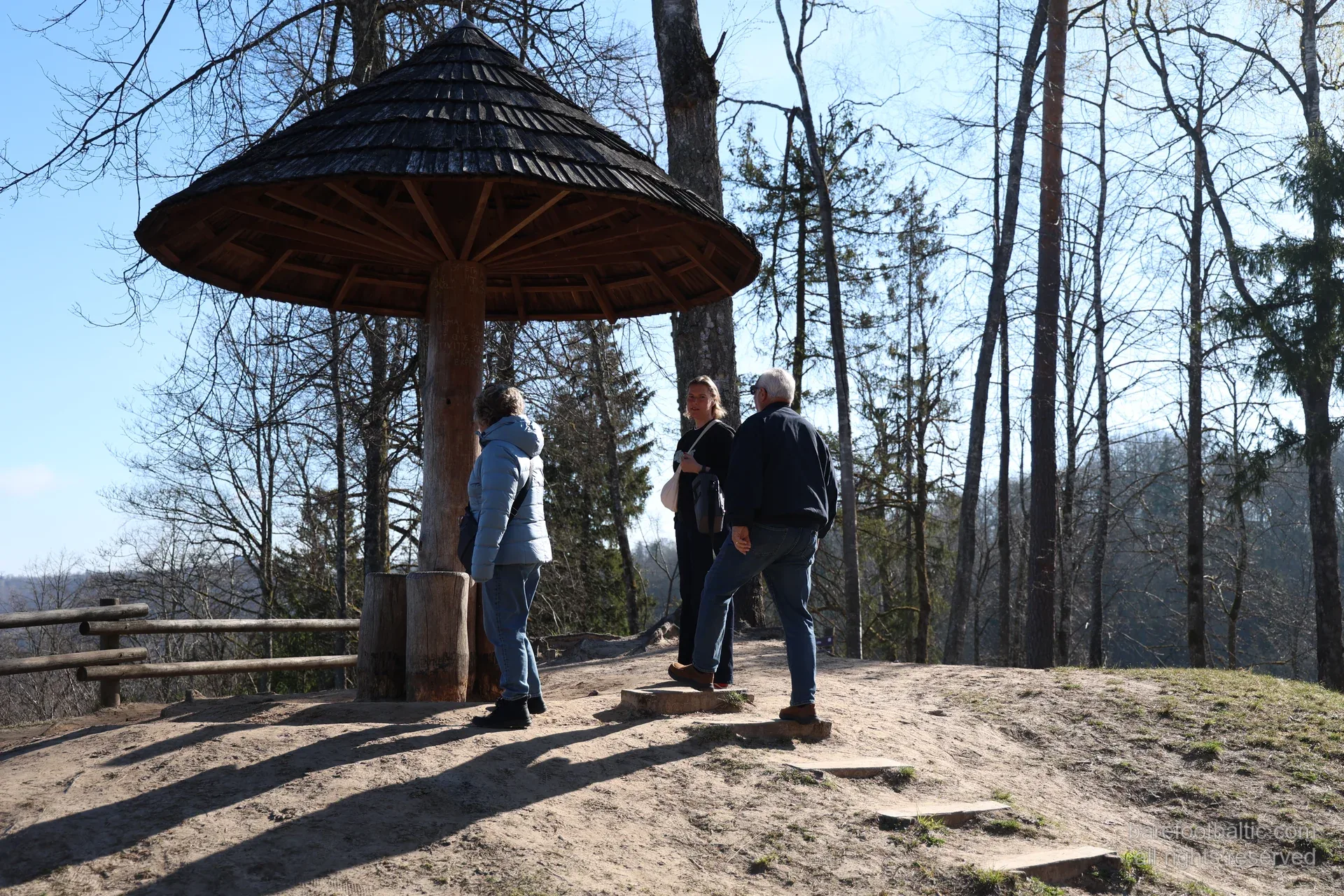
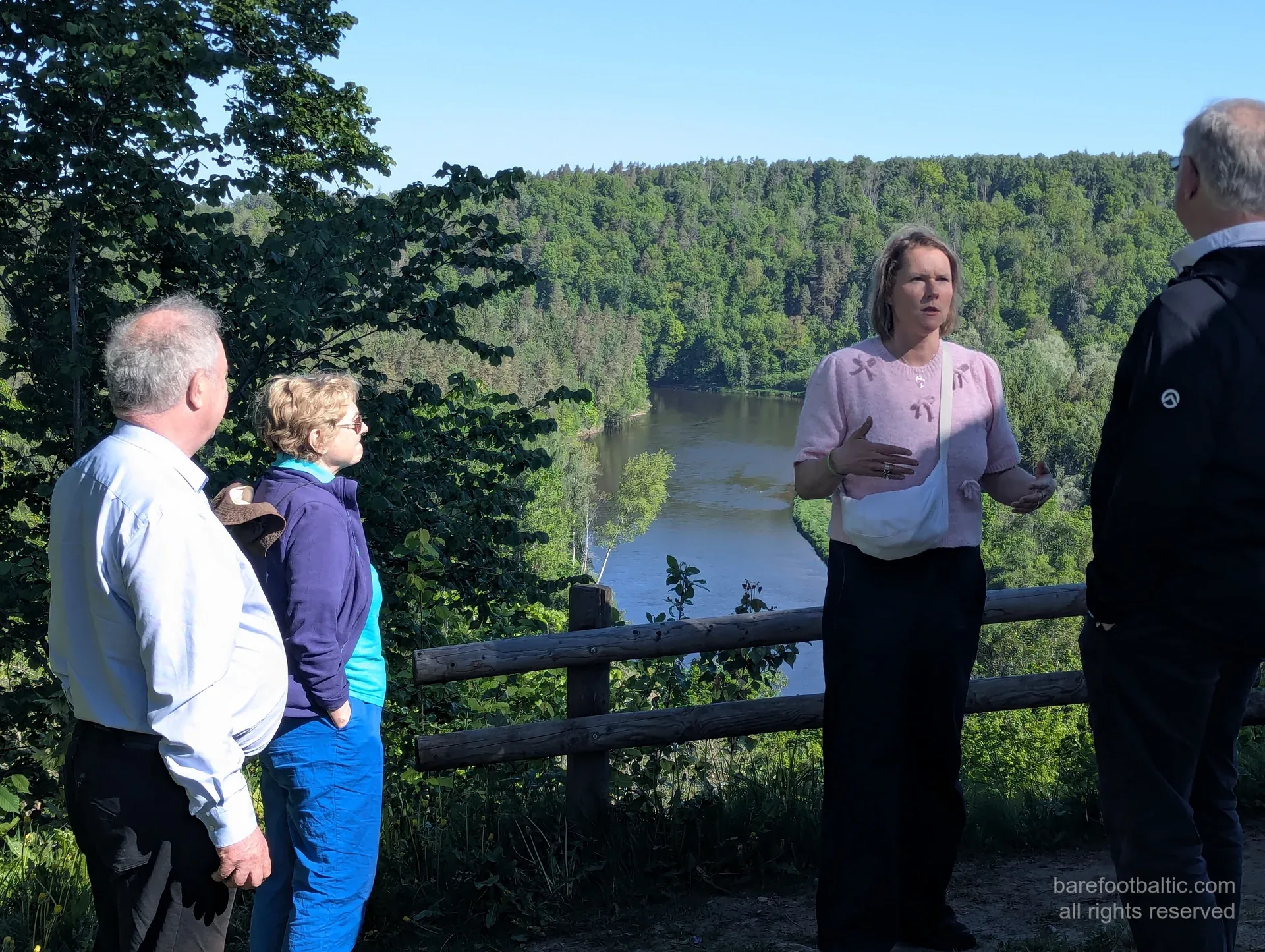
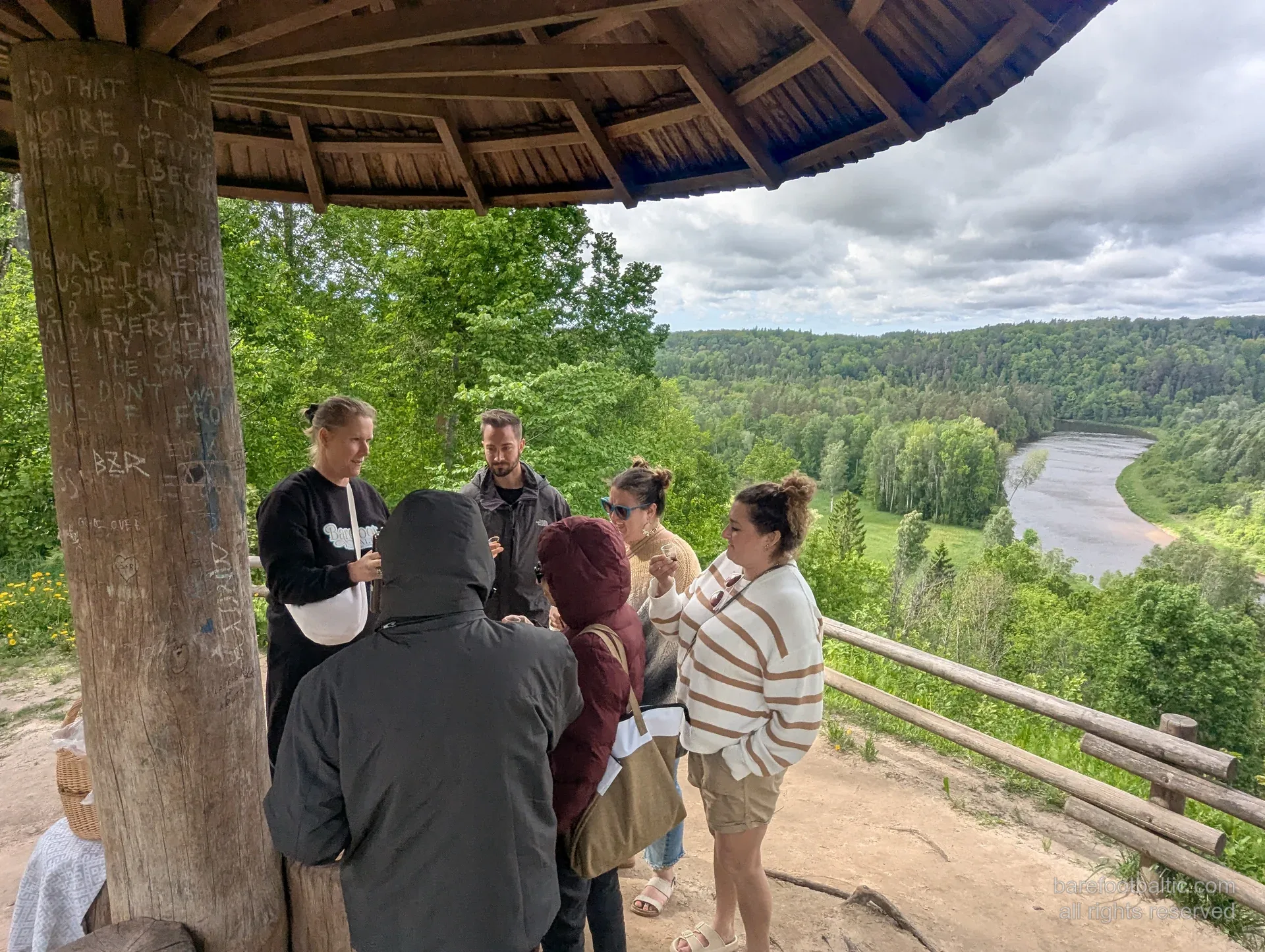
Finally we make it to the Emperor’s View, where Russian Tsar Alexander II stood in 1862 and looked out over the River Gauja as it winds through the valley. The viewing point was installed that year for his visit, 67 metres above the river. This is the main photography vantage point, the view that earned this landscape its “Switzerland of Latvia” nickname. We finish the day here.
We arrive back in Riga by early evening. By then, I hope you leave feeling you’ve used your day well, seen something special, and made warm memories of Latvia.
The route, on the map
The day's stops, in the order we usually run them. The exact sequence shifts a little day to day, depending on the weather and our timed slot at Cēsis castle.
Around 200 km round trip · 8 stops · Plus the occasional seasonal stop when there's a local market, festival, or something worth pulling in for
A few clips from our recent tours
13 clipsYour Day, Hour by Hour
8:30, Depart Riga
Pickup at the designated central-Riga meeting point (Triangular Bastion or Grand Hotel Kempinski). About 90 minutes east into Vidzeme, the upland region of Latvia. Live commentary on the drive covers the Livonian Order, the Hanseatic League, and the regional history of the Gauja Valley.
10:00, Local bread maker
We visit a local bread maker.
10:45, Cēsis Old Town walking tour & Castle
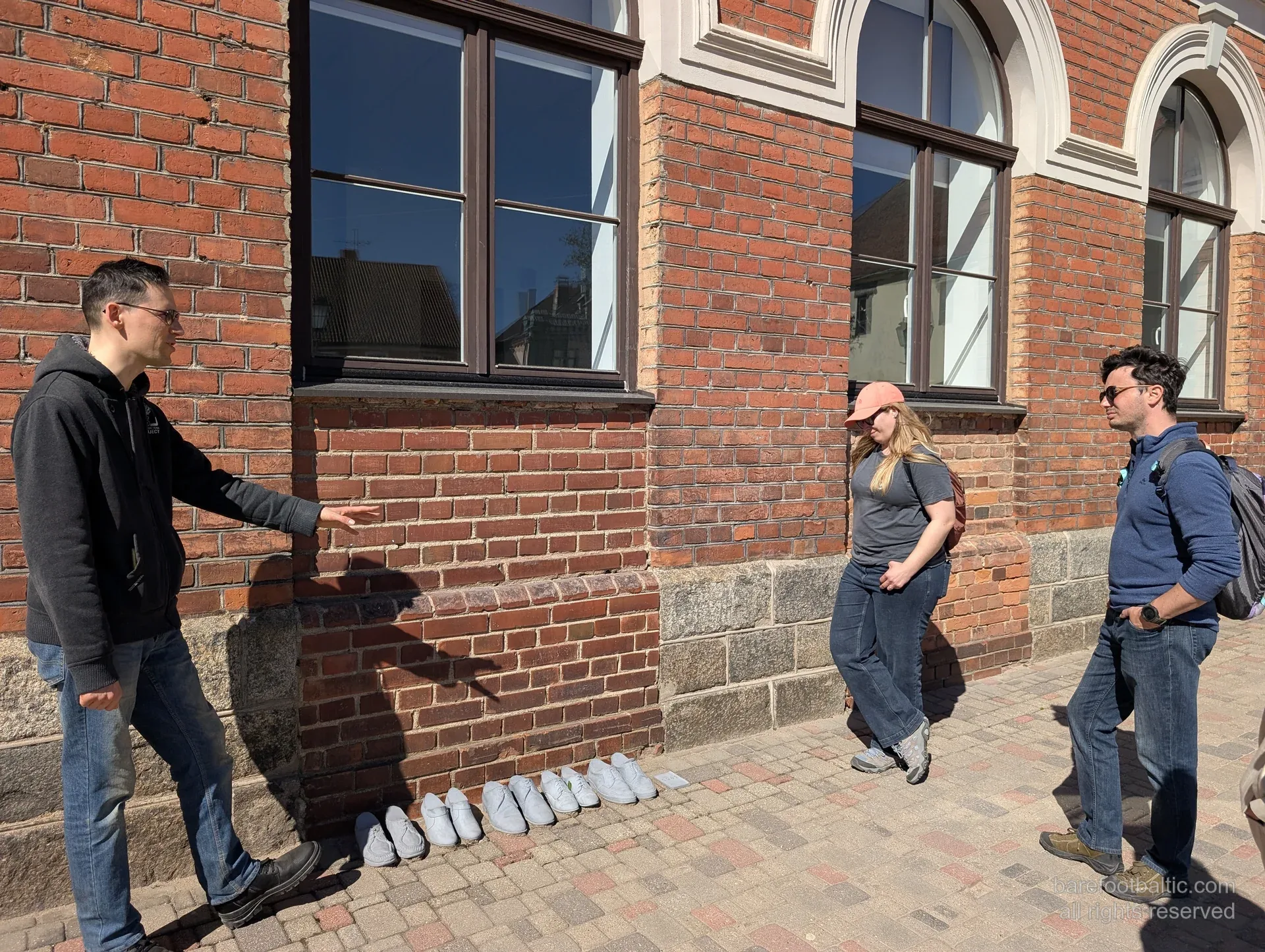
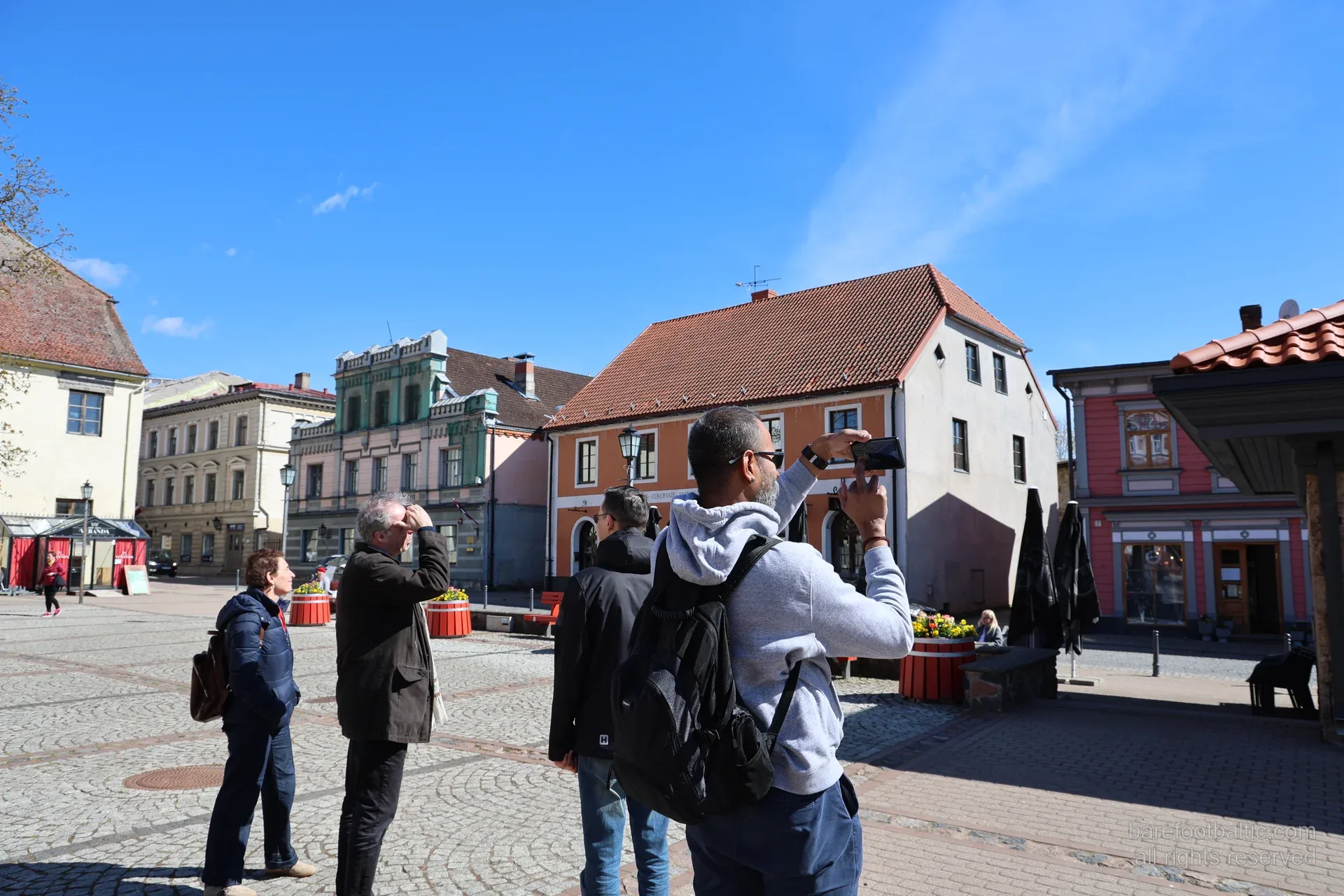
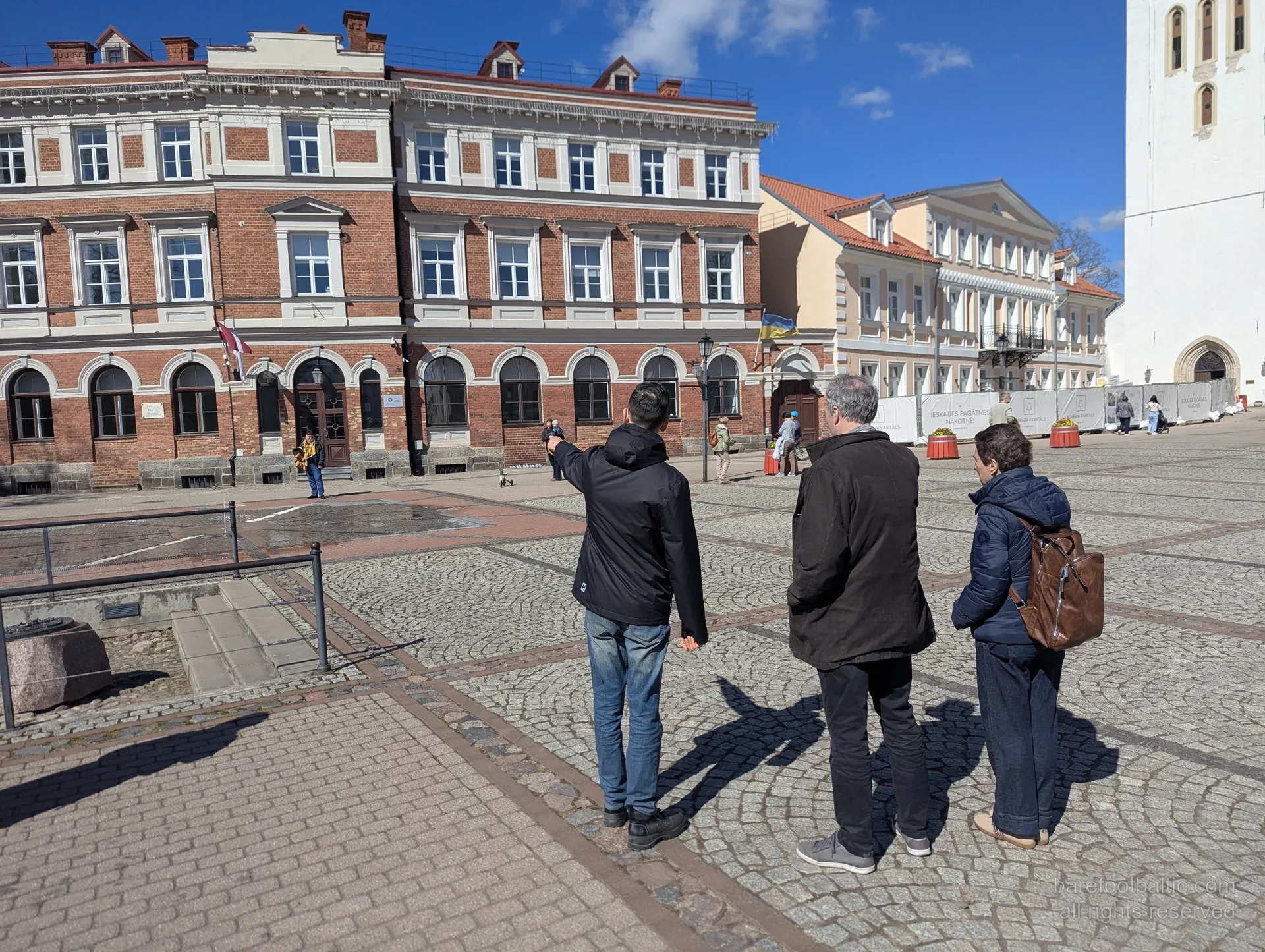
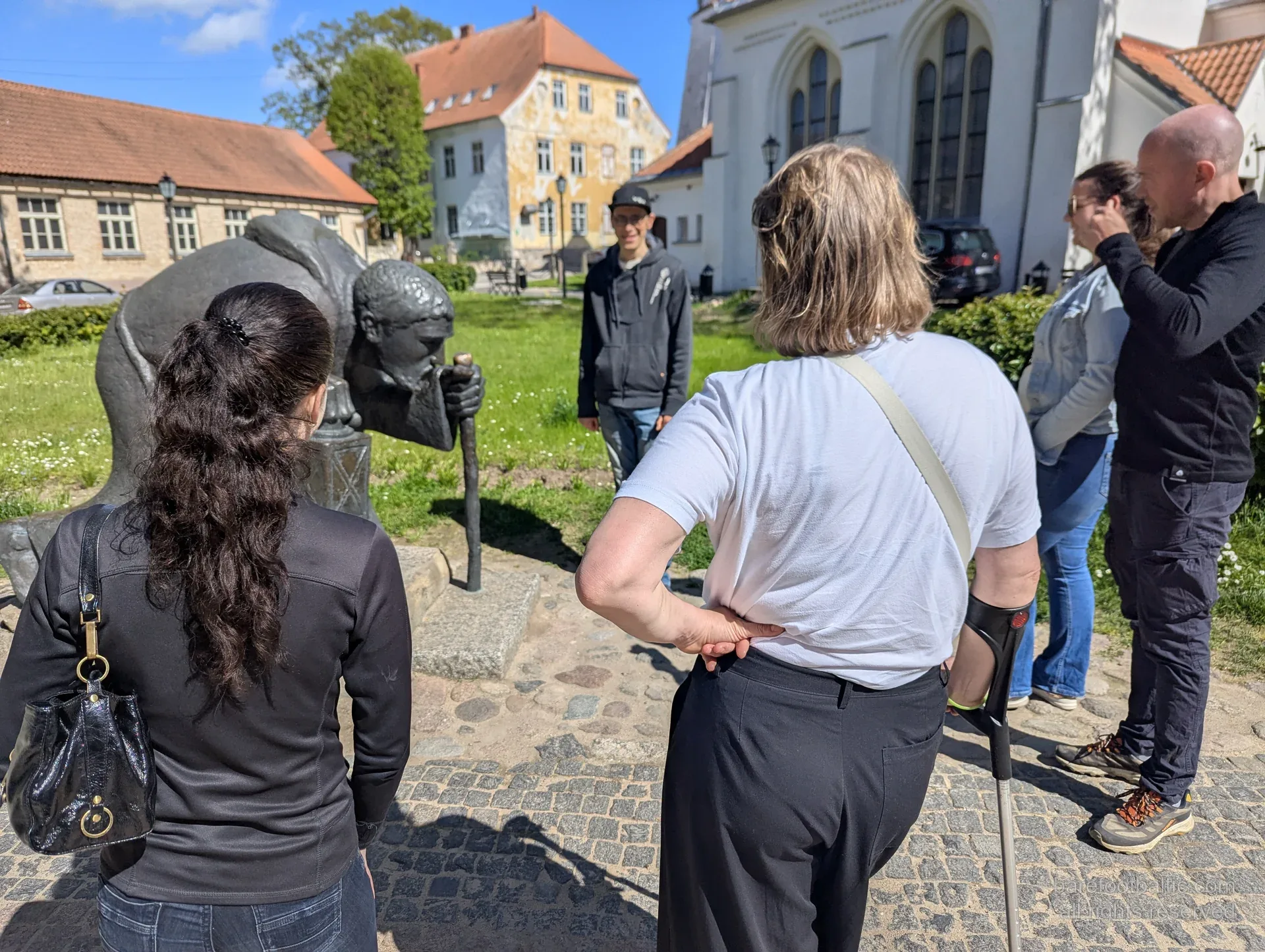
A guided walk through Hanseatic Cēsis Old Town, about thirty minutes. Vienības laukums, the wooden lanes around it, St John’s Church (early 13th century, one of the oldest medieval churches in Latvia, Livonian Order build), and the surviving guild streets. Daiga points out which buildings go back to the Hanseatic merchants and which are reconstructions, and where the German guild marks are. Then about one hour inside the 13th-century Cēsis Medieval Castle, where you walk the towers by candlelight with a real lantern in your hand, the way the residents of the castle would have moved around inside.
Show all 8 stops Show less
12:45, Latvian Buffet Lunch in Cēsis
Lunch at Pasēdnīca, a Latvian buffet cafeteria a short walk from the castle. Daiga walks you down the line and explains the dishes, the smoked items, pickles, salads, and traditional Latvian dishes such as grey peas with bacon (pelēkie zirņi ar speķi). You order at the counter and pay directly, at local prices. See our guide to Latvian food for context on the menu.
14:00, Emperor’s View & Sigulda Medieval Castle ruins
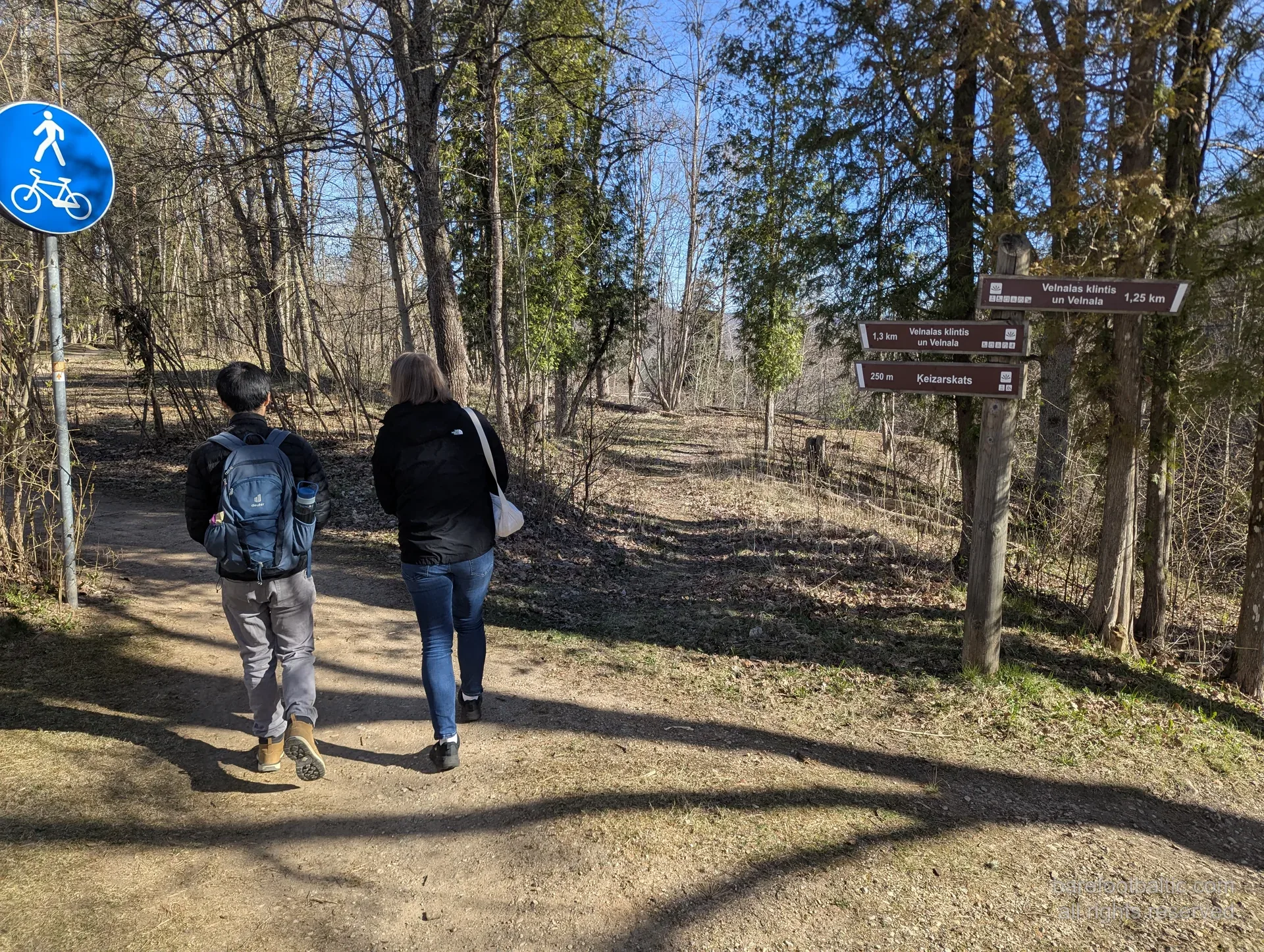
We start at Emperor’s View (Ķeizarskats in Latvian), the cliff-edge viewpoint where Russian Tsar Alexander II stopped in 1862. The viewing point was installed that year, 67 metres above the river. From there we walk to the 13th-century ruins of Sigulda Medieval Castle, a Livonian Brothers of the Sword stone fortress (1207), partially destroyed in the Great Northern War, with a view back across the Gauja valley toward Turaida.
15:15, Turaida Castle & Reserve
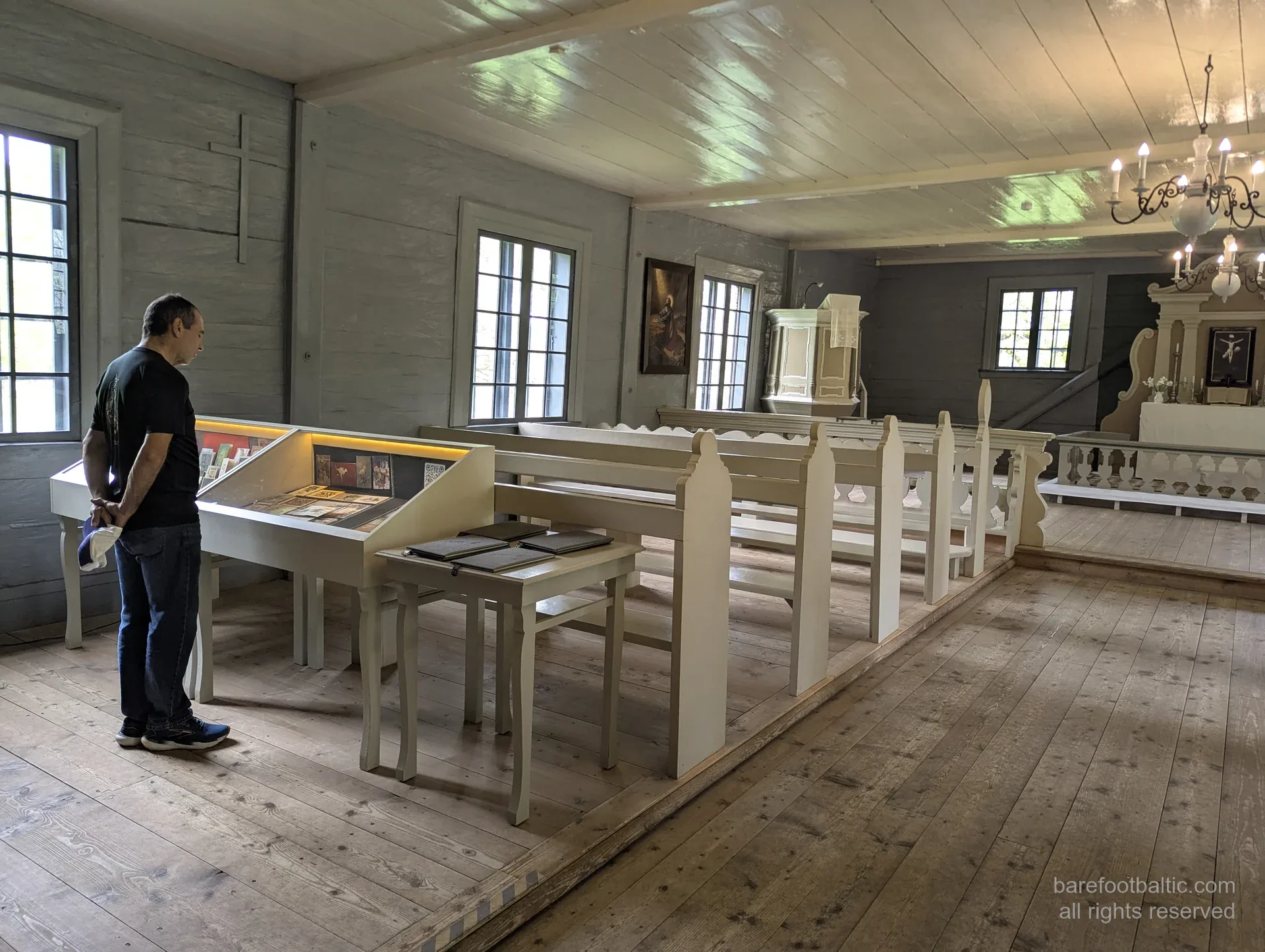
The red-brick Turaida Castle (1214), on a ridge above the Gauja. We climb the main tower for the view, walk the Folk Song Hill sculpture garden behind it (25 granite sculptures by Indulis Ranka, opened 1985 on the 150th birthday of Krišjānis Barons), and visit the wooden church and the restored folk buildings. The estate also has the “Nature’s Pearls” outdoor conservation trail, an interactive walk through the forest park with an insect hotel, heritage-tree markers, and a station on the hermit beetle (Latvia’s “umbrella species” for old-growth forests). Daiga tells the full Rose of Turaida legend by the wooden church here. We spend 90 minutes to two hours at Turaida. Gūtmaņa ala (Gutman’s Cave) is the largest cave in Latvia (10 m tall, 12 m wide, 19 m deep), with 350-year-old graffiti in the sandstone. We point it out from the bus as we drive through the valley. We don’t normally stop and walk down. If we’re running ahead of schedule, we can make the short visit.
16:45, "Switzerland of Latvia" Viewpoint
A photography stop at one of the named viewpoints along the valley rim, either Artists’ Hill (Gleznotāju kalns) or Paradise Hill (Paradīzes kalns), depending on the season and light. Back at the van, before we set off for Riga, Daiga talks about her favourite Latvian drinks and snacks and suggests what to try during your stay. When possible, she brings a small complimentary sample of a favourite Latvian sweet or drink for tasting. It isn’t part of the tour price.
~18:30, Return to Riga
About 90 minutes back to Riga. Drop-off at the same central-Riga points (Triangular Bastion or Grand Hotel Kempinski) by early evening.
What's Included
Included
Not Included
Good to Know
Meeting Point
We meet at 8:30 AM at a designated point in central Riga, and the exact details are shared when you book. Hotel pickup is available for most central Riga hotels with bus-accessible parking. Let us know where you’re staying and we’ll confirm.
What to Wear
Comfortable walking shoes are essential. Cēsis Castle has uneven medieval stone and stairs, and Turaida involves hillside walking. Dress in layers, especially in spring and autumn. Cēsis castle interior is deliberately unheated (you’re walking it as a 13th-century visitor, candle lantern and all), which is the point but not warm.
Accessibility
Some parts of the day involve stairs and uneven terrain, the Cēsis castle towers and the Turaida castle mound and tower. Please let us know in advance if you have mobility concerns and we’ll plan the best route. This is a moderate walking day, roughly 4 to 6 km total, spread across the day. For guests who can’t manage stairs at all, our Rundāle Palace day is the better pick.
Children
Kids of any age are welcome on this day. The candle lanterns at Cēsis, the bread tasting, and the Rose of Turaida story are usually the parts they remember. It’s a long day, so do tell us your children’s ages when you book and Daiga will plan pace, snack stops, and seating in the van with the group in mind. Child price is €70.
Cancellation
Free cancellation up to 24 hours before the excursion for a full refund. Cancellations within 24 hours are non-refundable. If we have to cancel for weather or vehicle reasons, you get a full refund or free reschedule, your choice.
Not Suitable For
This day involves moderate walking on medieval-castle surfaces, uneven stone, and a tower stair at Turaida. Not suitable for guests with mobility impairments or wheelchair users. Please message Daiga before booking with any mobility concerns to confirm the day will work for you.
What to Bring
Comfortable walking shoes. Weather-appropriate clothing (the Cēsis castle interior is unheated, and the Gauja viewpoints can be windy). Reusable water bottle (refills available through the day). Bring any snacks or drinks you know you will need. The castle candle lantern is provided. Any small tasting sample Daiga brings is complimentary, when available, and is not part of the tour price.
House Rules
No smoking in the vehicle. No outside alcohol or drugs. No littering in the castle grounds or national park.
Frequently Asked Questions
Book This Excursion
Book Direct with Daiga
Same tour, same guide, same experience, just a better price when you book directly.