Highlighted reviews from other travellers
Verified reviews from our GetYourGuide listing
Absolutely incredible! The Kemeri Bog boardwalk felt like stepping into another world—early morning mist over the pools, birds singing, and the wooden path winding through surreal landscapes. Our guide was knowledgeable and kept a great pace. Then Jūrmala’s sandy beaches and charming wooden architecture were the perfect contrast. Loved dipping my feet in the Baltic Sea! The whole trip was well-organized, peaceful, and refreshing. Only thing that could improve? Slightly longer stop for coffee in Jūrmala. But honestly—5 stars, highly recommend! 🌿🦢🌊
The trip was really wonderful and excellent. It was fun and worth my money.
The trip went smoothly and enjoyable:)
The trip was excellent.
My trip was so good and amazing, I loved it!.
The trip was really good.
What we’ve put together for you
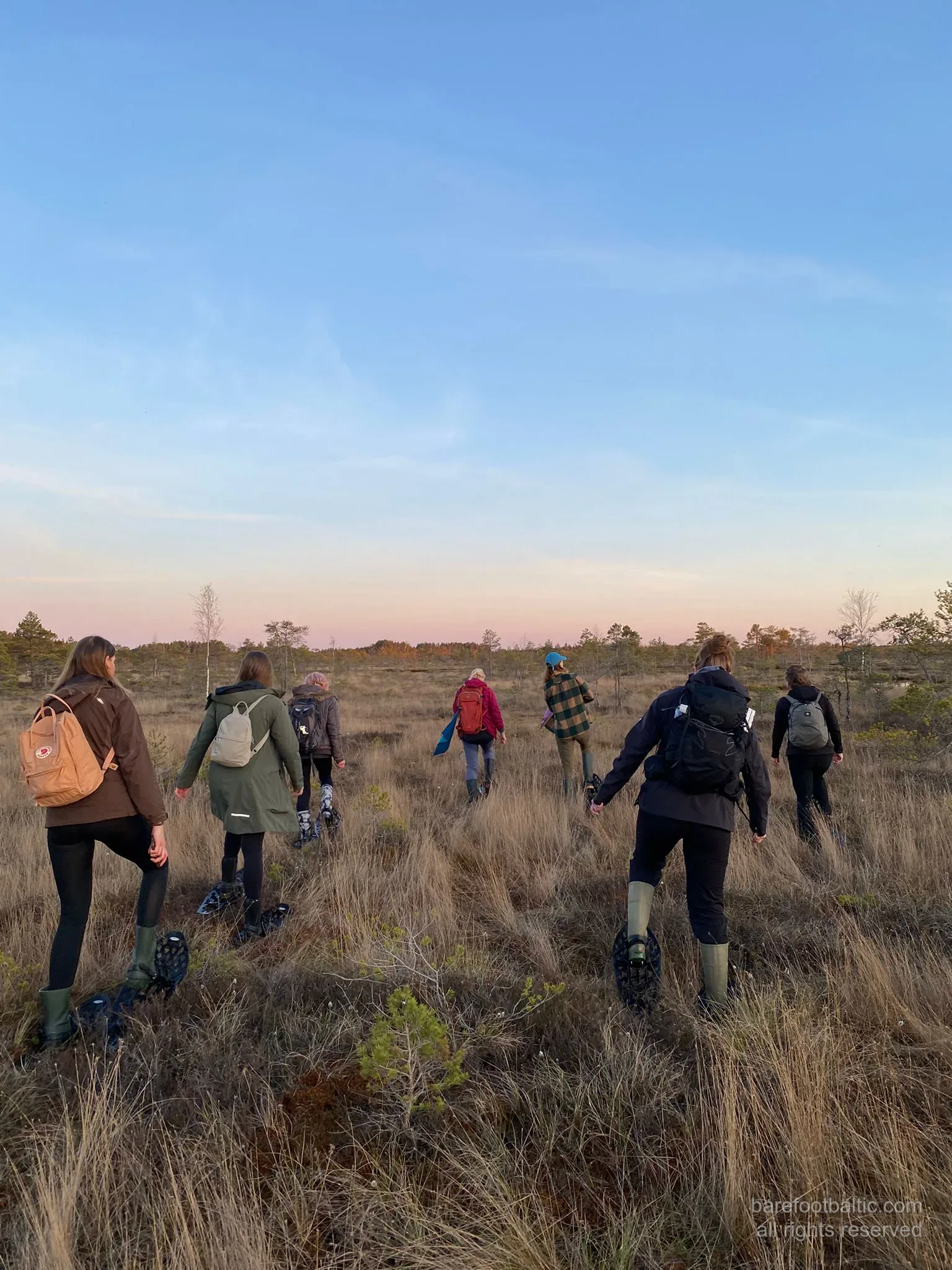
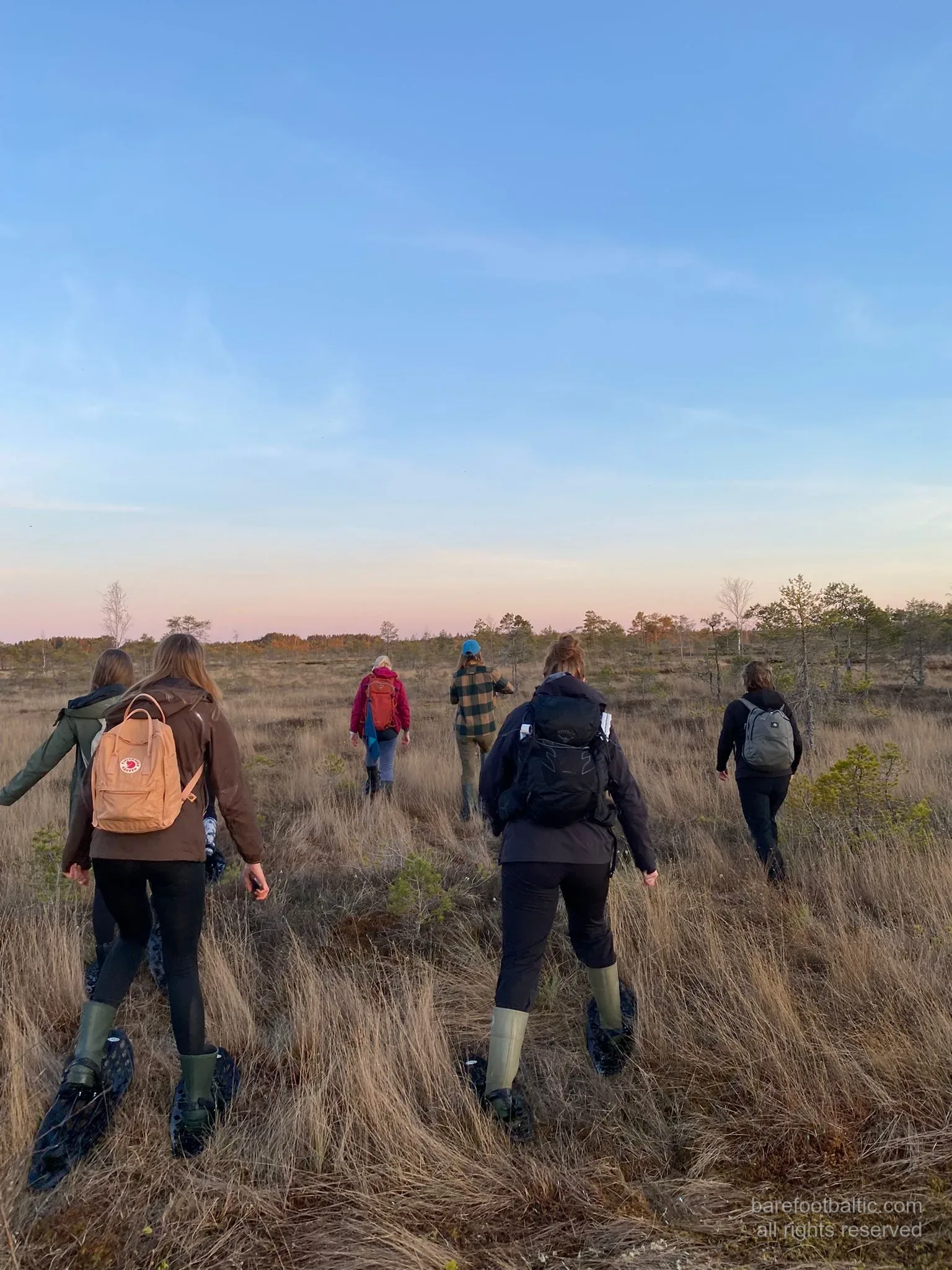
A four-hour walk into one of Europe’s rarest ecosystems
Four hours door to door, small group of up to eight guests, three time-slot choices of sunrise, mid-day, or sunset. We pick you up from your Riga hotel, drive about 50 minutes west to Ķemeri National Park, hike off the boardwalk and onto the open raised bog with you in bogshoes and our rubber shoes, pause at a small bog lake for a picnic stop and optional swim (we provide life vests), then hike back out. Bring your own snacks and water if you would like to eat at the lake. Our staff may bring a flask of hot tea and a small Latvian snack when they can, but that is a complimentary extra, not part of the published price. €66 per ticket, same price for adults and children. Hotel pickup, air-conditioned minibus, nature-enthusiast guide, bogshoes & rubber shoes sized to your booking, life vests for swimmers, mosquito repellent, and every park access fee, included. You pay nothing today. A 20% deposit goes out 48 hours before departure, and the rest settles at the van. Free cancellation up to 24 hours before departure.
When you hear the words carbon sink, what comes to mind? Almost everyone says rainforest. The world’s peat bogs cover only about 3% of the land surface yet store roughly 30% of all soil carbon on the planet. That’s twice as much carbon as is locked in every forest on Earth combined. Latvia is one of a handful of European countries that kept its raised bogs largely intact through the 19th and 20th centuries, while most of the UK, Germany and the Netherlands drained theirs for fuel and farmland. Today, EU peatland-restoration scientists treat Latvia as a working model. Come to Ķemeri and see what an intact ten-thousand-year-old bog actually looks like.
Read more Read less
Ķemeri National Park protects the Great Ķemeri Bog (Lielais Ķemeru tīrelis), one of the largest and best-preserved raised bogs in the Baltics. It has been growing upward for around ten thousand years, older than the Pyramids, older than writing, fed only by rainwater and building up at roughly a millimetre a year. The peat beneath your feet is between 5 and 15 metres deep. The landscape that sits on top is unlike anywhere else in Europe. A flat, treeless expanse of soft sphagnum moss, dwarf pines that may be 200 or 300 years old and still no taller than a Christmas tree, and dozens of small dark bog pools that reflect the sky like mirrors. Some sections of bog are slated for deliberate re-flooding under EU LIFE peatland-restoration projects to lock in the carbon for the long haul. Wonderful for the climate, but it means the level of off-boardwalk access we offer today may not stay available in a few years. If walking the open bog is something you’ve been meaning to do, this is a sensible season to do it.
Biodiversity, up close. Ķemeri holds 897 species of flowering plants, around 250 bird species, eight of Latvia’s nine woodpeckers, and roughly a quarter of all plants in Latvia’s Red Book of endangered species. The carnivore in the moss is the round-leaved sundew (Drosera rotundifolia), a tiny carnivorous plant smaller than a coin, with sticky red tentacles that trap insects and slowly digest them, an adaptation to the bog’s extreme nitrogen poverty. Charles Darwin spent years obsessed with it. In 1860 he wrote that he ‘cared more about Drosera than the origin of all the species in the world.’ Around the sundew you’ll smell wild rosemary (vaivariņš), Northern Europe’s iconic bog scent, intoxicating in a literal sense (medieval Germans put it in beer to make it stronger and were eventually banned for it). Listen for the trumpeting call of cranes across the open mire. In late summer, look for cranberries, cloudberries and the white tufts of cottongrass.
Why the spa industry was built here. Beneath Ķemeri lies a layer of dolomite bedrock. When acidic peat-water seeps down to meet it, the reaction releases hydrogen sulphide and dissolved minerals such as calcium, magnesium and iron. Over millennia, combined with the bog peat, these produced the therapeutic black mud that made Ķemeri famous. From 1836, Tsar Nicholas I personally funded a sanatorium here. By 1912 a direct railway line was bringing roughly 8,300 patients per year from Moscow. The 1936 “White Ship” sanatorium was, briefly, one of the most modern hotels in Europe. The whole Jūrmala spa heritage on the coast just up the road grew out of the same mineral chemistry. Same bog, same minerals, different town.
And it ends up in your skincare. The same bog-derived minerals that healed wounded Russian officers fighting Napoleon are, today, the foundation of a small but globally respected Latvian natural cosmetics industry. The most internationally recognised brand is MÁDARA (founded 2006, sold in over 30 countries, on the shelves of Selfridges in London). Their hero ingredient, fossil mud, is essentially what we walk on today. Peat that has been compressing for thousands of years. The brand’s name, madara, is the Latvian word for wild madder, a Baltic-meadow plant. Other Latvian skincare brands also draw on bog-derived peat extracts and humic acids.
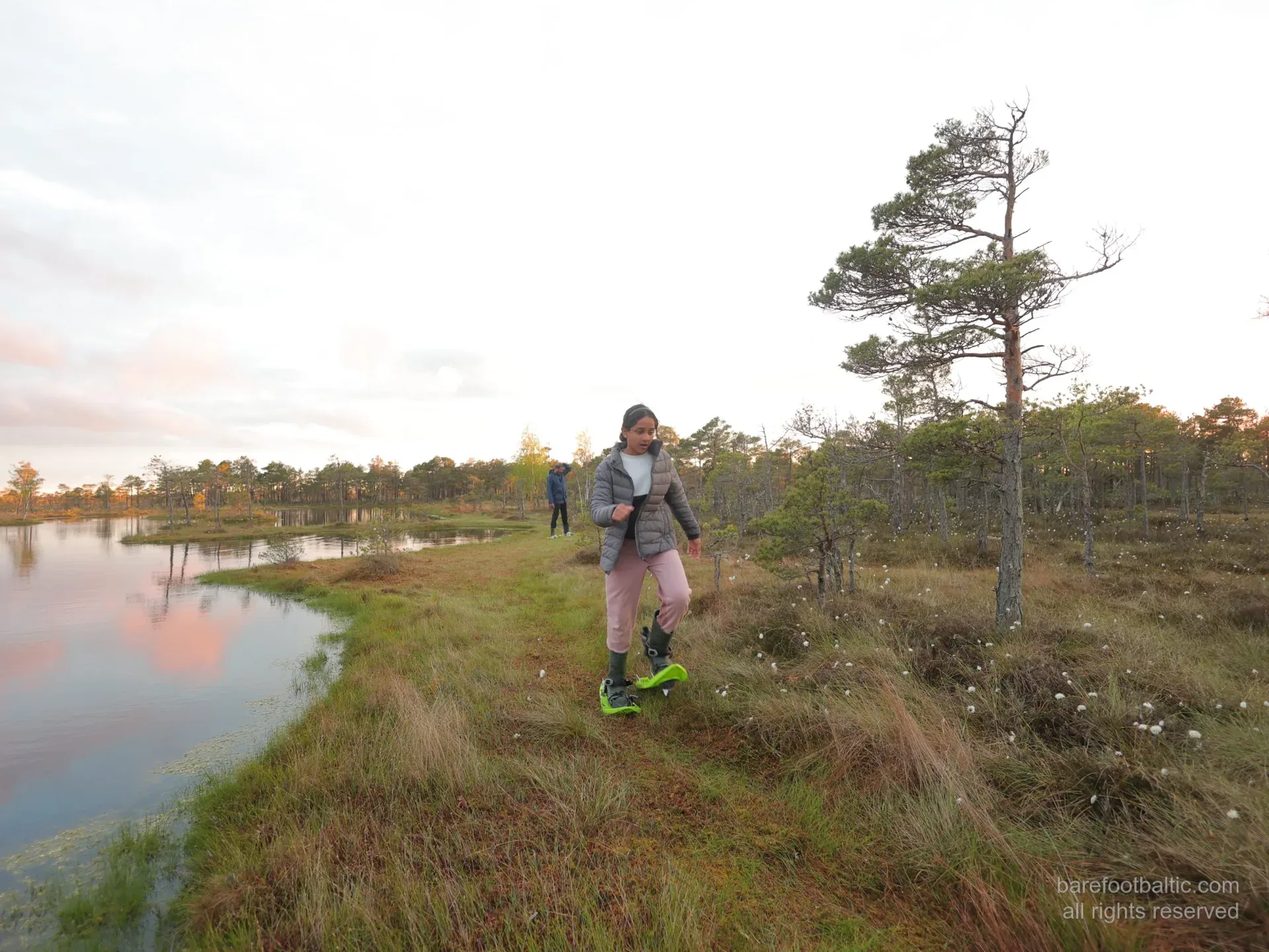
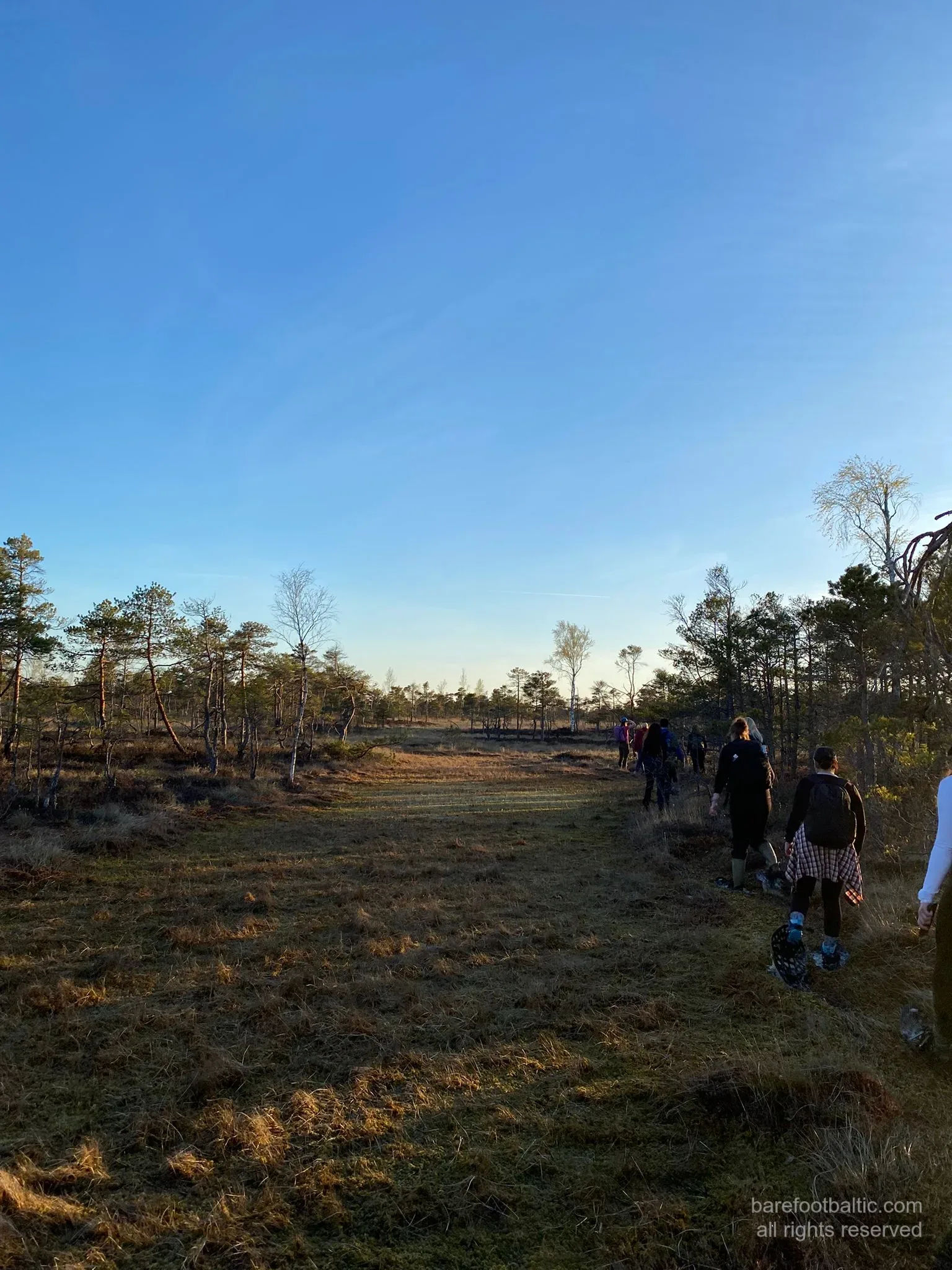
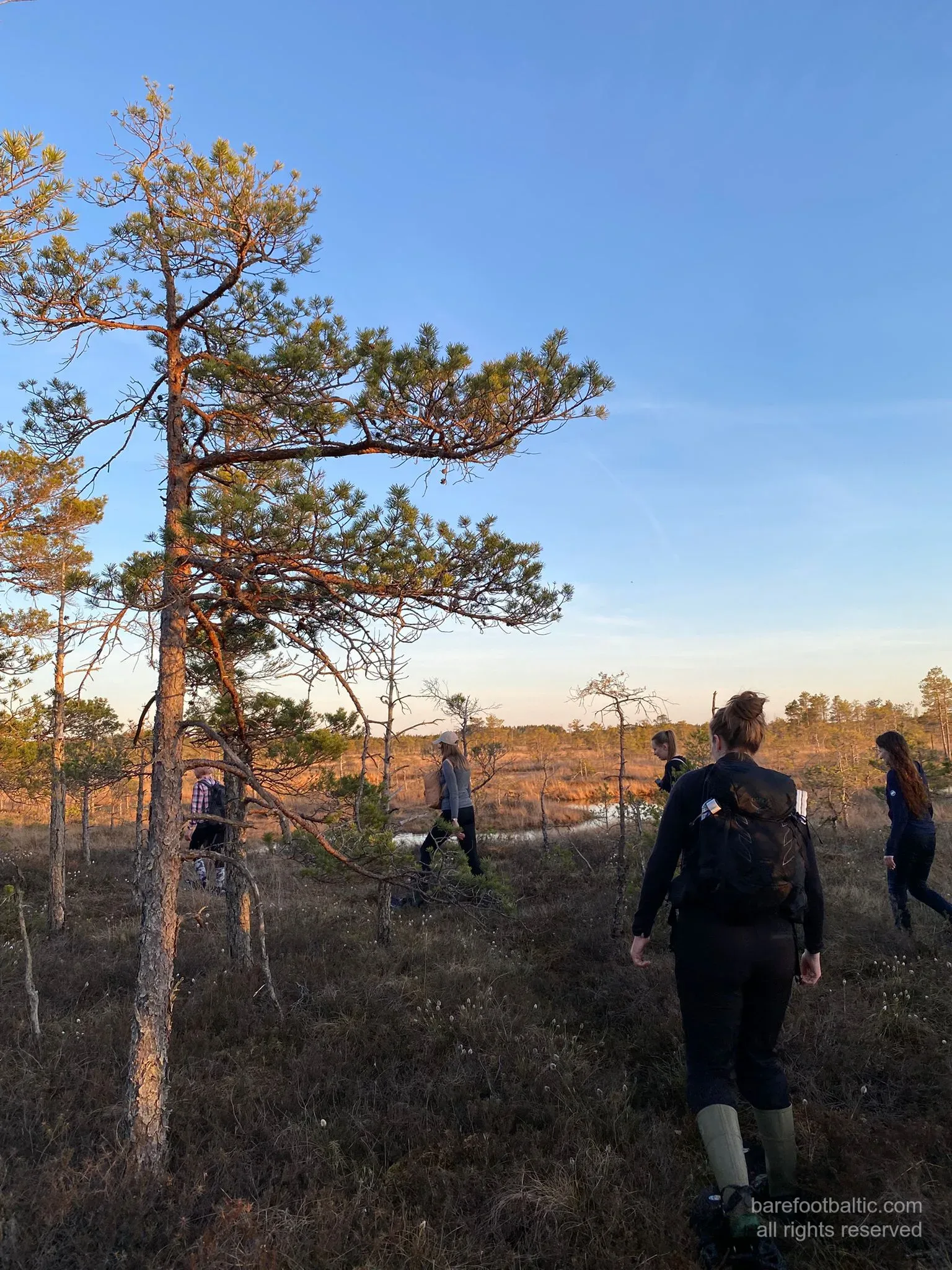
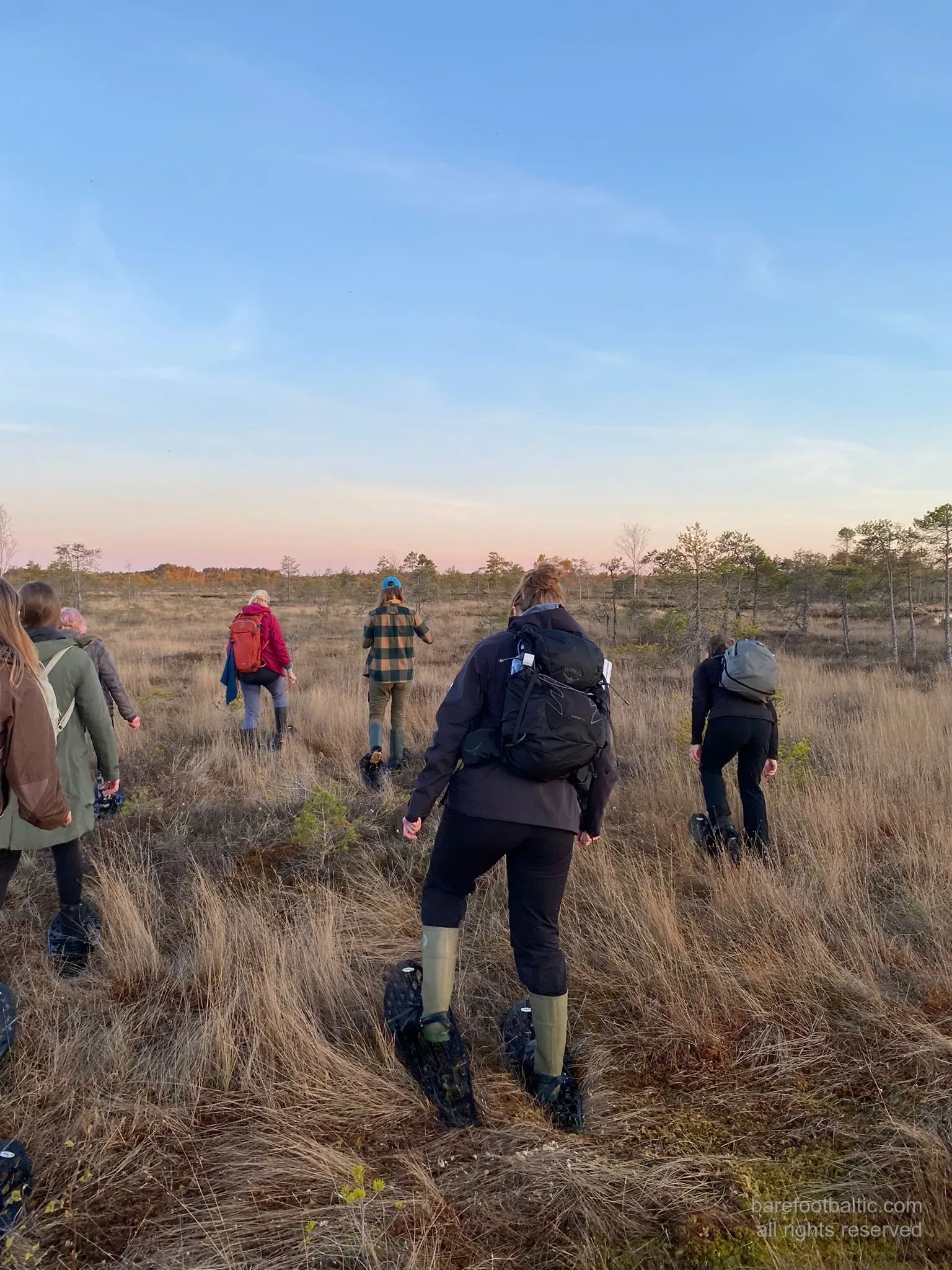
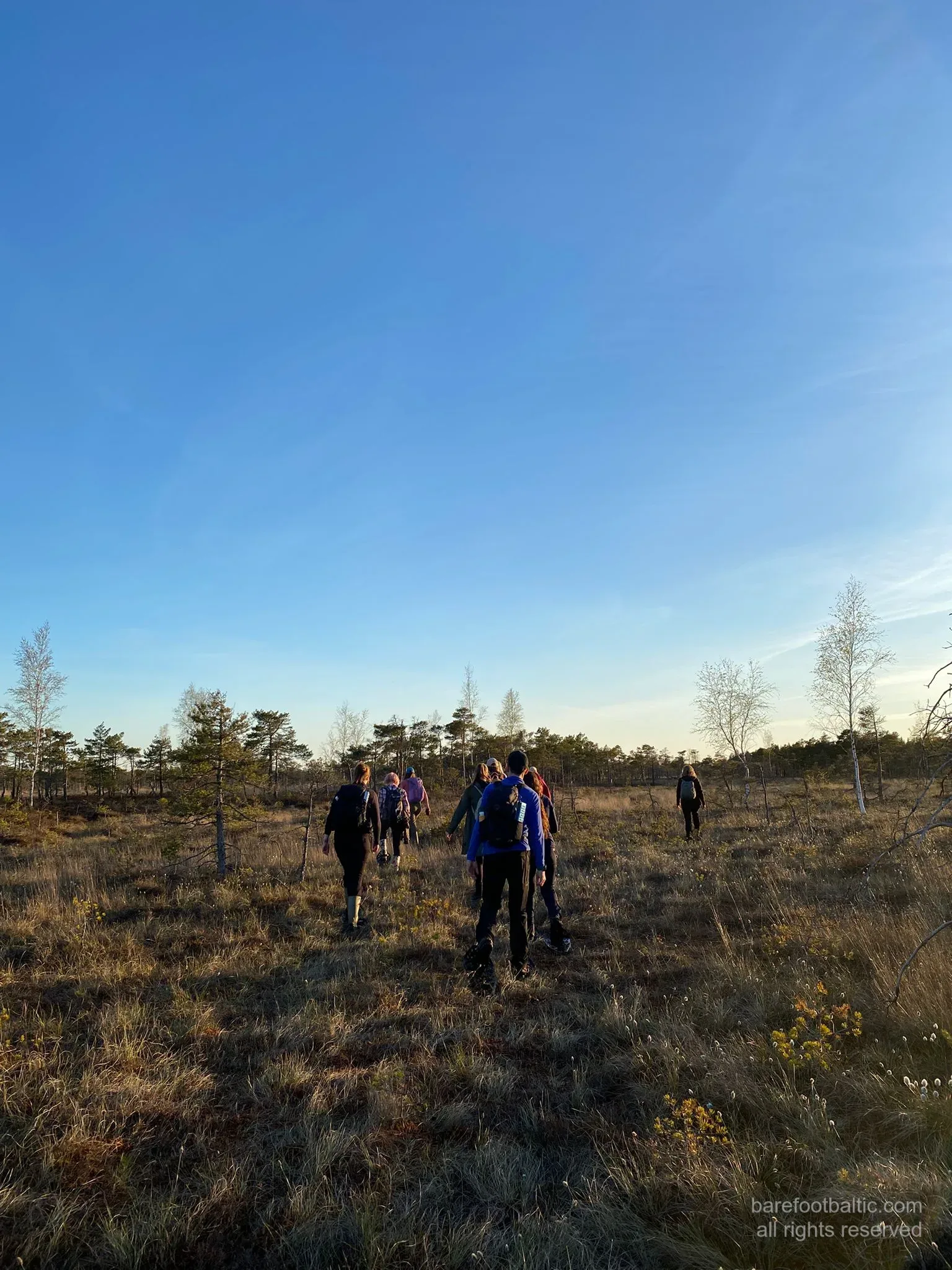
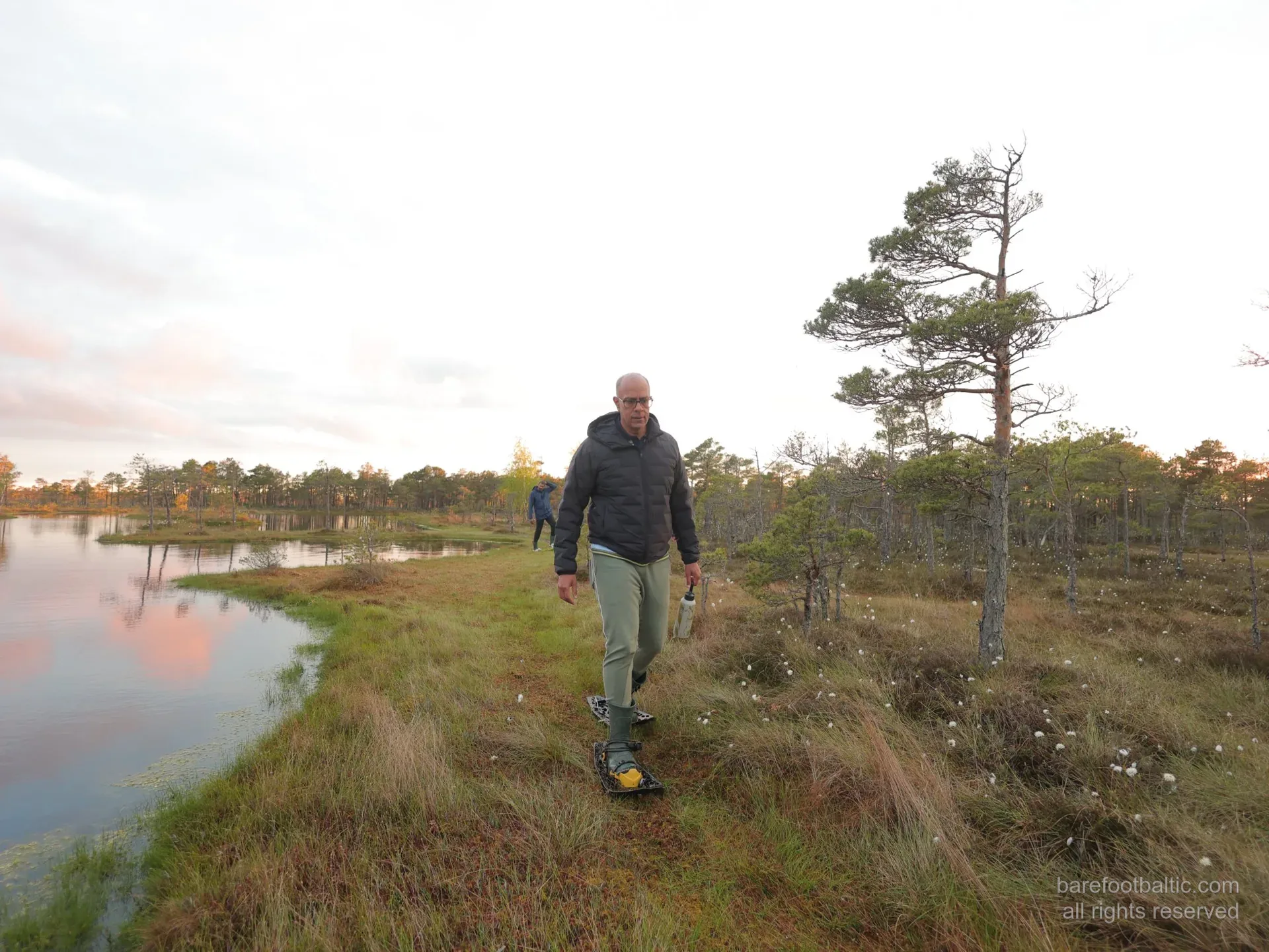
The off-boardwalk hike. We start with a short warm-up on the wooden boardwalk while your guide tells you what you’re looking at. Sphagnum, sundew, wild rosemary, dwarf pine, the cracked black peat. Then we step off and onto the open mire. The surface is a floating mat of living moss several metres thick, resting on dark water that goes down further still. Without our footwear, you sink to your knees. With rubber shoes sized to your booking, plus bogshoes that spread your weight across the moss, you don’t. You walk across the quaking bog, slowly, a little wobbly at first. The ground flexes under each step. Some pools ripple beside you. It is, in the most literal sense, walking on water. This section is the physically demanding part. The ground is uneven, the moss tussocks take some getting used to, and the moments when you’re entering and leaving the open bog are the most strenuous. In the middle, where the surface flattens out, the walking is mostly easy and the bog opens out around you.
The lake picnic stop, and an optional swim. Roughly halfway through the off-boardwalk hike we reach a small bog lake. We stop on the moss for a picnic break. Bring your own snacks and water. Our staff may bring a flask of hot tea and a small Latvian snack when they can, but that is a complimentary extra, not part of the published price. Anyone who’d like to take a quick swim in the antiseptic, mineral-rich, tannin-dark water can. We provide a life vest for every swimmer, and entry and exit are guided. The water is the same family of waters that built the Latvian spa industry, naturally antiseptic from the bog acids. In summer it sits at roughly 14 to 18°C. Three or four minutes is plenty. If cold open water isn’t your thing, give it a miss. Nobody’s pressured. Tell us at the time of booking whether you’d like to swim so we can pack a vest in your size.
The risk, and back at the van. The bog is a wild ecosystem with deep peat, dark water, weather that changes, and a few short physically demanding sections. We’ve had no casualties. But the bog is not a cakewalk, and we ask you to listen carefully to your guide, follow the route they walk, and stay close. By joining the activity you accept inherent risk. We are not responsible for outcomes that arise from a guest not following our guidance. We’ll send you a short waiver to read in advance. Late evening departures see noticeably more mosquitoes than mid-day or sunrise. We provide a generic repellent, use it at your own risk. Long sleeves and trousers help. At the van afterwards we check the kit, answer any last questions, then drive you home.
The route, on the map
Riga out to the bog, a four-hour out-and-back. About 50 minutes’ drive each way, then around two and a half hours on the mire (boardwalk warm-up, off-boardwalk hike, bog lake picnic stop and optional swim, hike back), then the drive home. No Jūrmala detour, no other towns. The day is focused on the bog.
Around 100 km out-and-back · 4 hours total · A small-group tour, focused on the bog
A few clips from our recent tours
18 clipsYour four hours, step by step
Hotel pickup in central Riga (slot of your choice)
We collect you from your hotel at the start of your chosen slot. Early morning for the sunrise hike, mid-day for the gentlest mosquito conditions, or late evening for sunset over the pools. Exact pickup time is confirmed the evening before and depends on the season. Hotel pickup is included for major hotels in central Riga with bus-accessible parking. For smaller guesthouses or apartments deep in the Old Town we’ll arrange a nearby pickup point a short walk from your accommodation.
Drive west to Ķemeri National Park
About 50 quiet minutes on the road. Your guide uses the drive to introduce the day. What a raised bog actually is, why Latvia’s peatlands matter on a planetary scale, the chemistry that turned this place into a Tsarist spa town, and what you’ll be looking for when we’re out on the moss.
Boardwalk warm-up & safety brief, then off-boardwalk
We start with a short warm-up on the wooden boardwalk so your guide can introduce the ecosystem at close range. Sphagnum moss, dwarf pine, cottongrass, the smell of wild rosemary, and the tiny carnivorous sundew right beside the boards. This is also the moment we run through the safety brief and ask each adult to sign the short risk-acknowledgement waiver.
Then we step off the boardwalk and onto the open bog. You wear our rubber shoes (sized to your booking) plus bogshoes that spread your weight across the moss. The walking is wobbly at first, the moss flexing under each step, and the entrance to the open bog is the physically demanding section. Uneven, springy, hands-out-for-balance kind of ground. Once you’re on the open mire it flattens out and the walking becomes easy. Conversational pace, fully guided.
Show all 6 stops Show less
Picnic stop in the middle of the bog, optional swim
Roughly halfway through, we reach a small bog lake. We pause on the moss for a picnic break. Bring your own snacks and water if you would like to eat there. Our staff may bring a flask of hot tea and a small Latvian snack when they can, but that is a complimentary extra, not part of the published price. Anyone who’d like to take a quick swim in the antiseptic, mineral-rich water can. We provide a life vest for every swimmer regardless of how strong a swimmer you are, and entry and exit are guided. Three or four minutes in the water is plenty. The bog lake sits at roughly 14 to 18°C in summer. Tell us at the time of booking whether you’d like to swim so we can pack a vest in your size.
Hike back out (golden hour on sunrise & sunset slots)
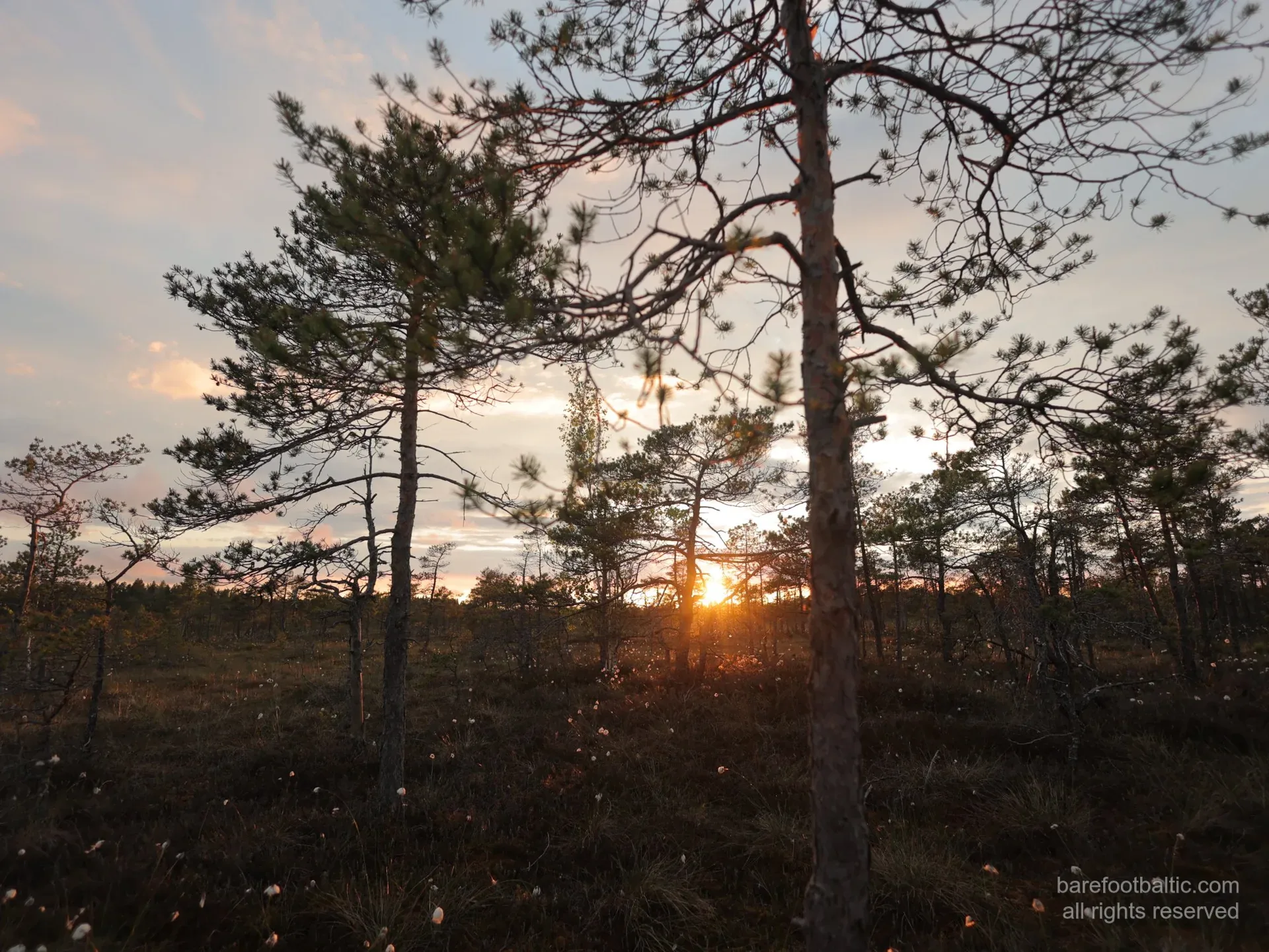
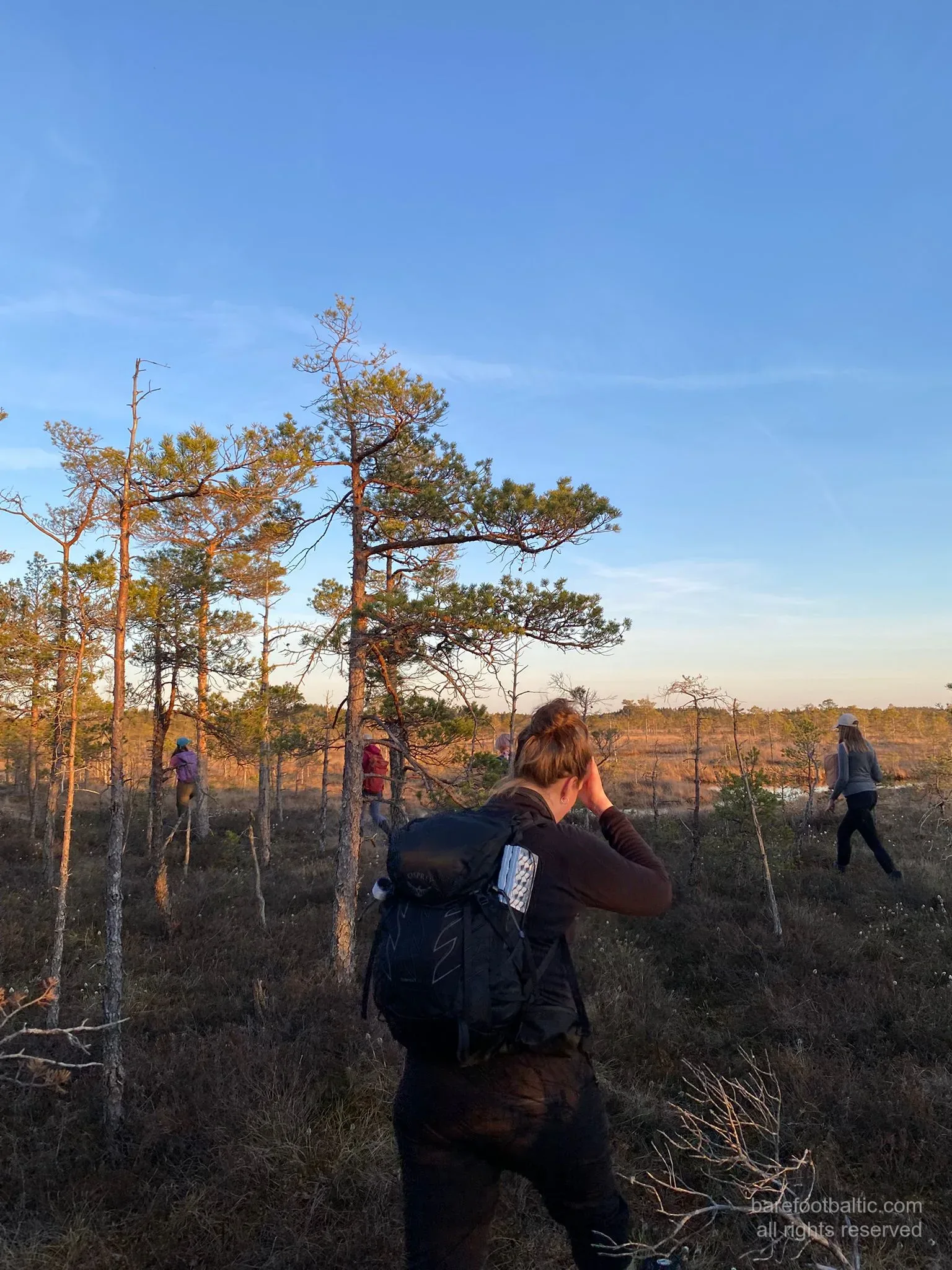
Hike back the way we came, with the light shifting as we walk, especially on the golden-hour slots. We plan the route on sunrise and sunset tours so the most photogenic stretch lines up exactly with the best light over the pools. About two and a half hours total on the bog from car park to car park, walked at a relaxed pace.
Return to the van, drive back to Riga
Back at the van we remove the bogshoes, check that all kit is accounted for, and your guide answers any last questions. Then we drive you back to your hotel in central Riga. Total tour time, four hours door to door.
What’s Included
Included
Not Included
Good to Know
Choosing Your Time Slot
There are three slots. Early morning (sunrise hike, the most photogenic and the quietest), mid-day (the easiest to wake up for, gentlest mosquito conditions), or late evening (sunset hike, equally photogenic, more mosquitoes). Tell us your preference at the time of booking. The golden-hour slots are highly sought after and tend to fill first.
What We Need at Booking
We need three things from you when you book, beyond the date and group size. (1) Which time slot you prefer. (2) The exact shoe size for each guest who’d like rubber shoes, without your size we can’t guarantee a fit. (3) Whether you’d like to do the optional bog-lake swim, so we can pack a life vest. The booking form on this page asks all three.
What to Wear & Pack
Closed-toe shoes you don’t mind getting damp. Our rubber shoes go over them. Layers, even in summer. Dawn at the bog is around 10 to 14°C and the air is damp. Long sleeves and trousers help with mosquitoes, especially on the late evening slot. Swimwear and a small towel if you plan to do the optional swim, bring your own. Bring water and any snacks you would like for the picnic stop. Bring a light waterproof if rain looks possible. We provide bogshoes, rubber shoes, life vests and mosquito repellent.
Accessibility & Fitness
The off-boardwalk hike requires steady balance on uneven, springy ground. The boardwalk warm-up is flat and accessible to most mobility levels. The open-bog hike is gentle in the middle but physically demanding at the entrance and exit, where the moss tussocks are uneven. It is not suitable for guests with significant mobility issues. Please tell us in advance about any mobility needs and we’ll plan with the group in mind, or recommend an alternative if it doesn’t look like a fit.
Risk & Liability Waiver
This is a wild-ecosystem activity that comes with inherent risk. Deep peat, dark water, weather that can change. We’ve had no casualties, but the bog is not a cakewalk. Before we step off the boardwalk we ask each adult to read and sign a short waiver confirming you understand the risk and agree to follow your guide’s instructions. Parents/guardians sign for children. By joining the activity you accept your own risks. We are not responsible for outcomes that arise from a guest not following our guidance. We send the waiver text in advance so there are no surprises on the day.
Children
Children aged 3 to 14 are welcome at the same €66 ticket price as adults. Let us know your children’s ages and shoe sizes when you book and your guide will plan pace and breaks with the group in mind. The off-boardwalk hike is more physically demanding than a normal walk and not suitable for very young children. The lake swim is a parental judgement call. Life vests are provided for swimmers of all ages.
Cancellation
Free cancellation up to 24 hours before the tour for a full refund. Within 24 hours: non-refundable. If we have to cancel for weather reasons (thunderstorms or heavy rain that would make the bog dangerous), we offer either a full refund or a free reschedule, your choice.
Weather
The bog works in most weather, and soft drizzle does it no harm. We cancel only for thunderstorms or heavy rain that would make the bog unsafe. Unsure? Message us the night before and we’ll tell you what the forecast looks like.
Frequently Asked Questions
Photo credits
Many of the photographs on this page are the work of generous photographers who have shared them under free licences. We’re grateful to them all.
Unsplash photographers
- Katrīna Eglīte, cotton grass
- Liga Meijere, aerial autumn boardwalk
- Marina Šurniene, boardwalk crossing the bog pool
- Denis, bog walker on the boardwalk
- kiryl, Ķemeri sulphur spring rotunda
- Raimond Klavins, Jūrmala beach sunset
- Krišjānis Kazaks, Jūrmala beach pathway
Pixabay & Pexels
Licensed & in-house
Several Jūrmala photographs (beach pines, swing, bench, picnic, bicycle rack, town sign, Orthodox church) and the spring bog aerial are licensed from iStock. Bog-shoe and sunset bog photographs are © Barefoot Baltic / SIA Ronda Sprints Solutions.
If you are the creator of any photograph used on this page and would like attribution updated or the image removed, please contact Daiga.
Book This Excursion
Book Direct with Daiga
Same tour, same guide, same experience, just a better price when you book directly.